Basically all the same place.
When was the last time you felt like the world you walked on was not your own? Perhaps gazing up at a monolithic cliff face or into the infinite depths of a dark ocean. An empty horizon so vast or a city street so alien that you’ve never felt farther from home. A dreamscape that you could not conjure in a thousand lifetimes. A true feeling of speechlessness when you try and dig and grasp at a word that can capture the absurdity of what you’re witnessing but it just won’t come. There is more than one way to achieve this feeling. The complicated but most authentic way I think is to travel to the far, hidden corners of the globe (surprise, you’re reading a travel blog). The cheaper way is to have six margaritas and watch Interstellar.
What I didn’t expect from Peru is the vast empty desert stretching over 1,000 miles. So close to the Amazon rainforest. Not a desert of cacti and shrubs and tumbleweed. Just sand, dirt, and rock. Not a speck of green as far at the eye could see. We didn’t expect this on our four day bus ride down the coast from Lima to Cusco. But I was pleasantly surprised.
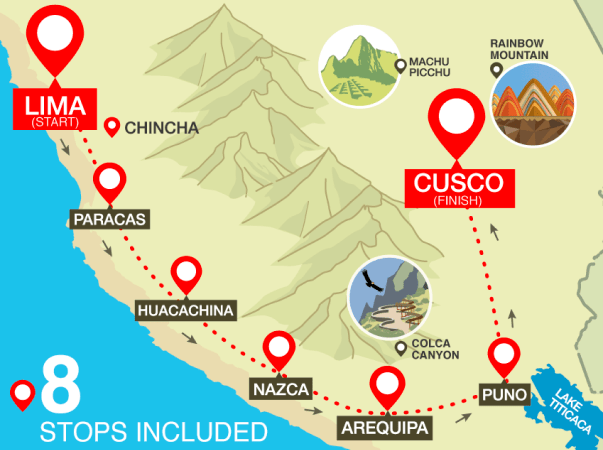
The bus picked us up in Lima at 5am on Friday. We made stops at various points of interest over the weekend, the first being an old plantation that is now a hotel. I thought it would be sort of weird to sleep in a place of former oppression. Like in the house of an old dictator or something. Nevertheless it was interesting, especially the tunnels the former owner dug underneath his property in case he ever needed to escape. Just as a policy, if you aren’t a world leader and you find yourself digging escape tunnels under your house, you are guilty of something terrible. Actually, that still applies to world leaders.
Peru is not a country of great infrastructure. Few highways, many dirt roads, hanging wires in narrow streets. That makes driving a tour bus in and out of these small towns all the more impressive. It seemed every day there was a dozen near misses between two walls or another car or people or cats or dogs. But our driver confidently made his way with three inches of clearance on either side and never broke a sweat. He was nearly perfect the entire trip.
Now, “perfect” and “nearly perfect” are very different assessments when we are talking about driving an enormous bus. On the first day as we rounded a tight corner, I saw a guy standing on his porch, staring doubtfully at the bus. His concern was warranted, because we clipped a wire hanging outside of his house and yanked it out of the wall. The man yelled, “Oh! El cable!” Our driver did not notice, nor did anyone else on the bus, so we kept going. Hard to say what that cable was for. Hopefully that man just lost TLC and not something important like internet or the sports channel.
On we drove, to the dismay of the locals, stopping next at a Pisco distillery, where we had lunch and sampled plenty of the product. Pisco is a liquor that I would describe as something between Tequila and Rum. It is very popular in Peru, and is used to make Peru’s signature drink: the Pisco Sour. Basically like a sour margarita. We may have had a few of those as well during our time in Peru.
By afternoon we rolled into Paracas: a desert, tourist town by the ocean. Our bus took up the entirety of the road as we inched forward in traffic to our hotel. The front desk informed us that our room was on the ground level. When I asked where, he gestured to the right of the front desk. I saw a door and window and realized I was looking into our room, just as anyone else would be as they checked in.
I also couldn’t help but notice a steady trail of ants from down the hall leading under the door to our room. I wasn’t sure that the Spanish word for ants was so I showed the man at the front desk a google translate screenshot reading: hormigas. Then I pointed to the single file line of insects marching to our bedroom. He seemed like he understood, and hurried off to another room. After a minute he returned with a can of RAID. Then he handed it to me with a smile. I suppose I wasn’t expecting such a “self-serve” form of hospitality at a hotel, but nevertheless he had solved my problem so I thanked him and set out to exterminate the ants myself.
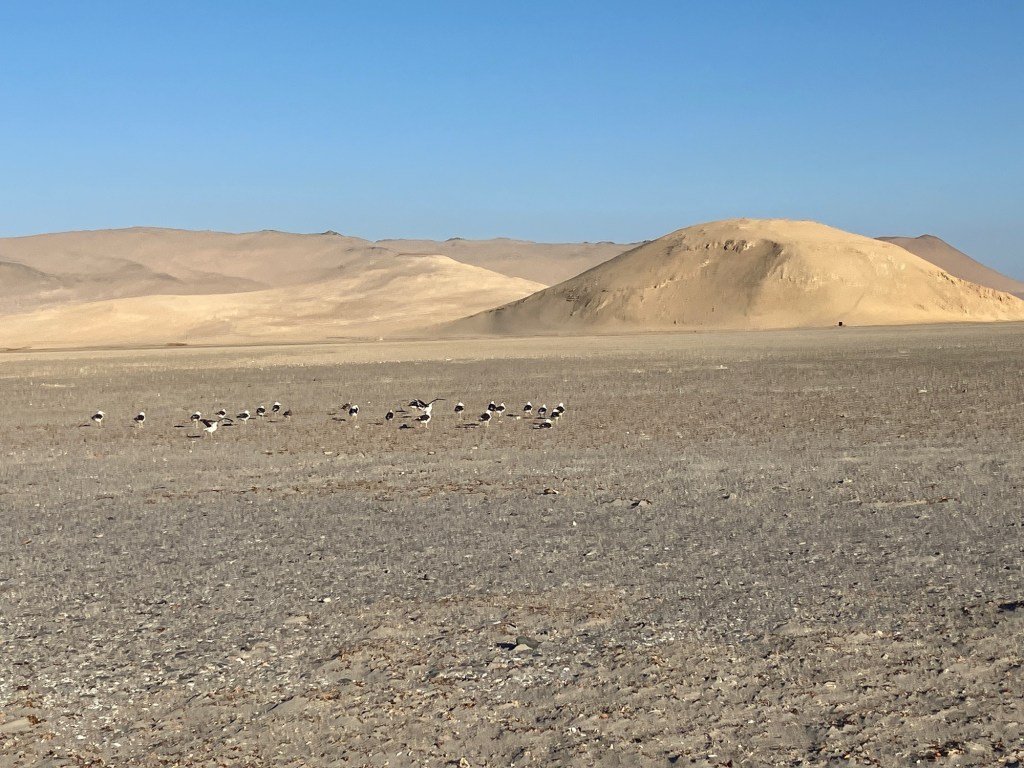
Late afternoon we took a bus into the nearby national park. The road was paved with salt to be more natural, but honestly how much more natural could it be than pavement because that was the bumpiest road in the entire world. We rattled in our seats like an amber alert ridden phone for maybe an hour. And where we stopped was astonishing. Like truly surprising, the lack of life we saw. Not one blade of grass. No animals, aside from the washed up carcasses. Not even a tumbleweed.
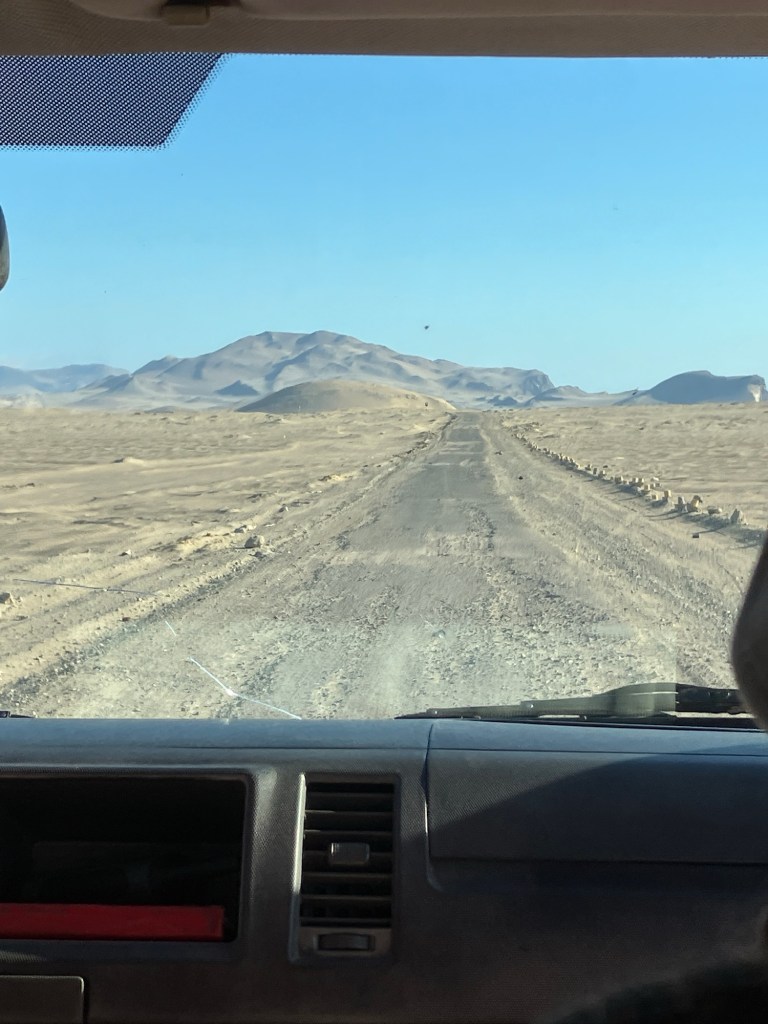
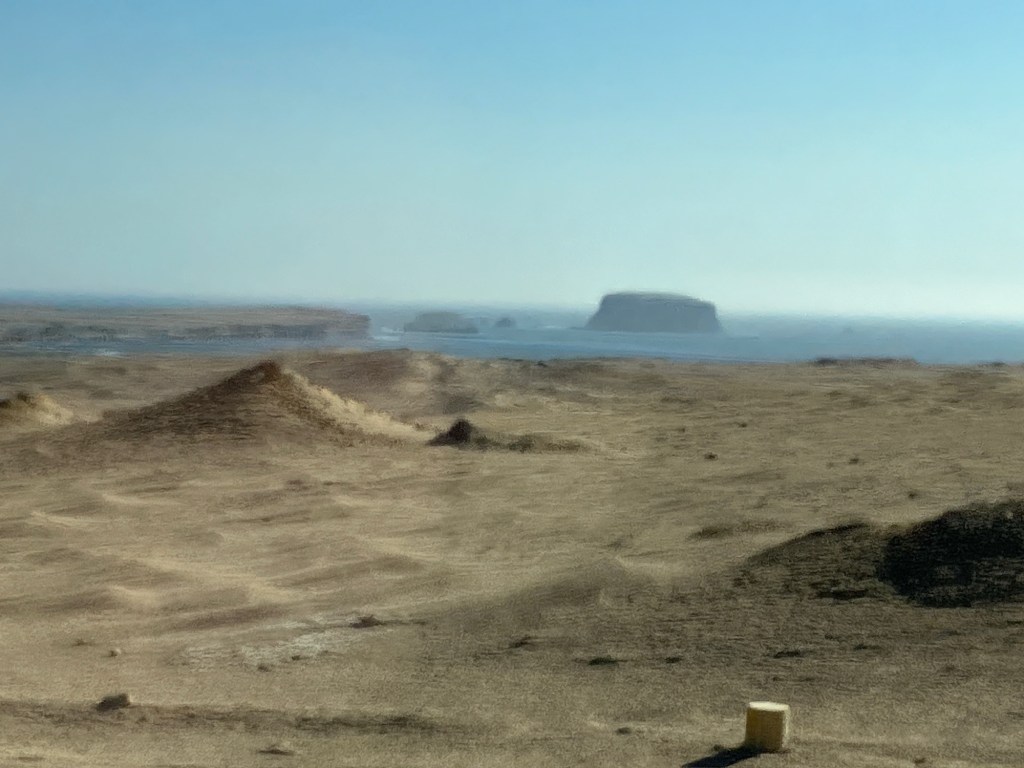
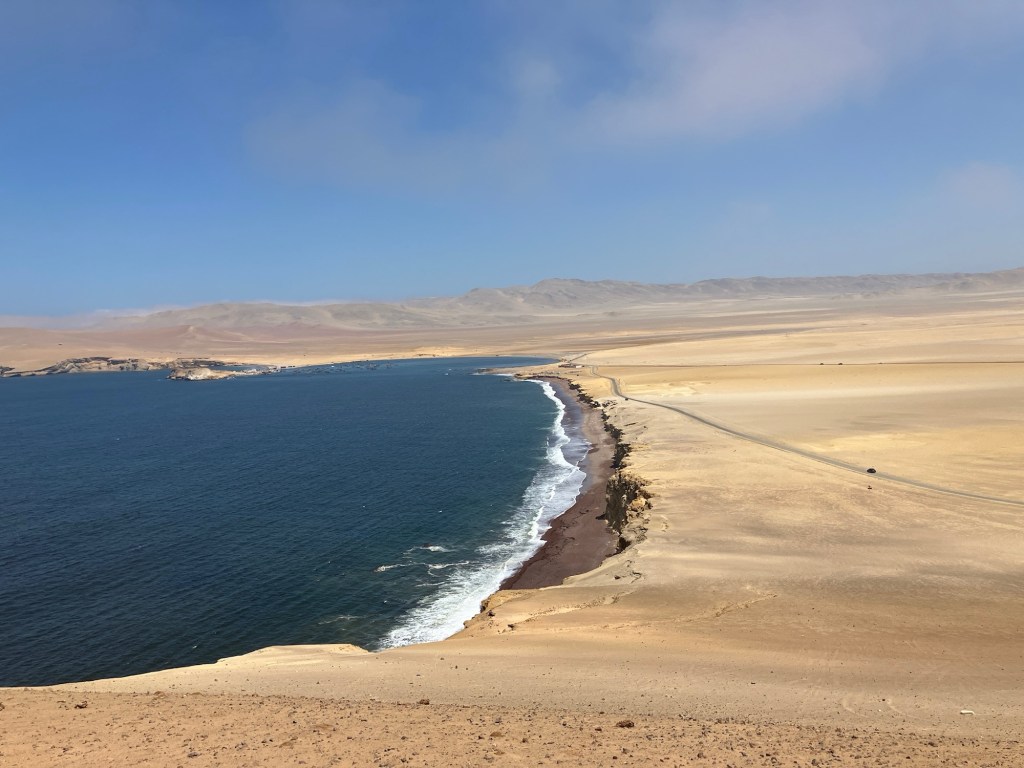
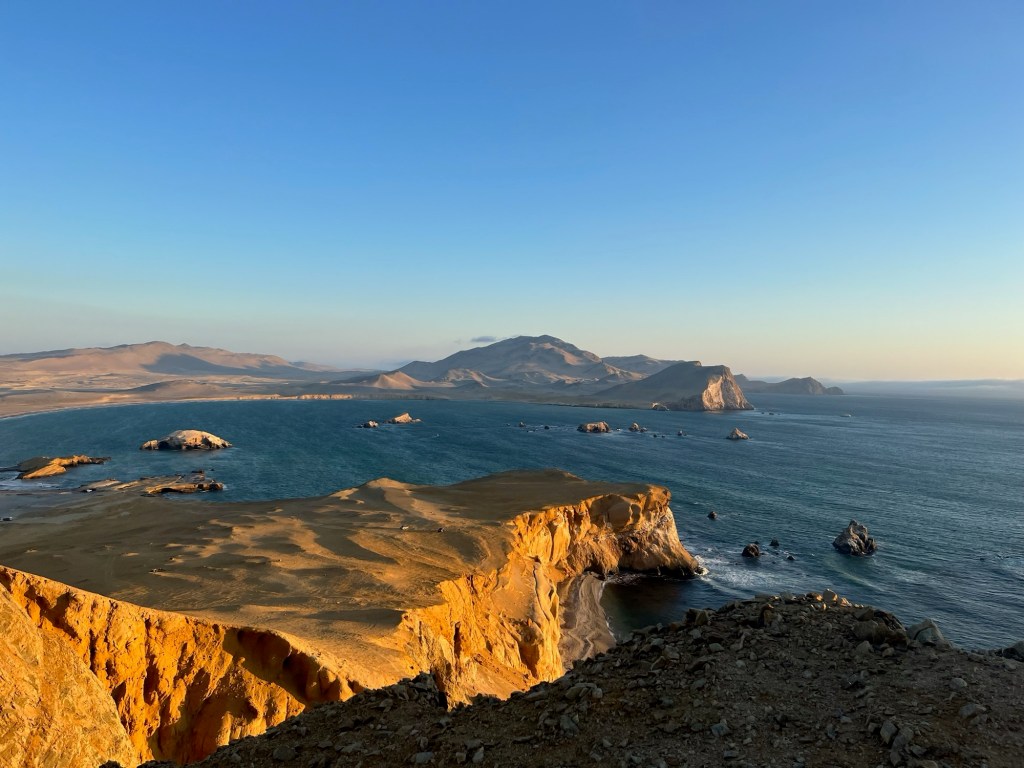
We stood on the on the dry coast, gazing at the deep blue waves rolling in. The ocean was exceptionally blue, and it seemed so due to the juxtaposition of the land around us. Behind us was only pale brown sand and craggy rock formations. So much of what gives the Earth life washed freely upon the dirt but none ever fell from the sky. It was absolutely barren and beautiful. It truly felt like another world. Like if an astronaut on Mars climbed a hill and was shocked to see a sprawling body of water in front of them.
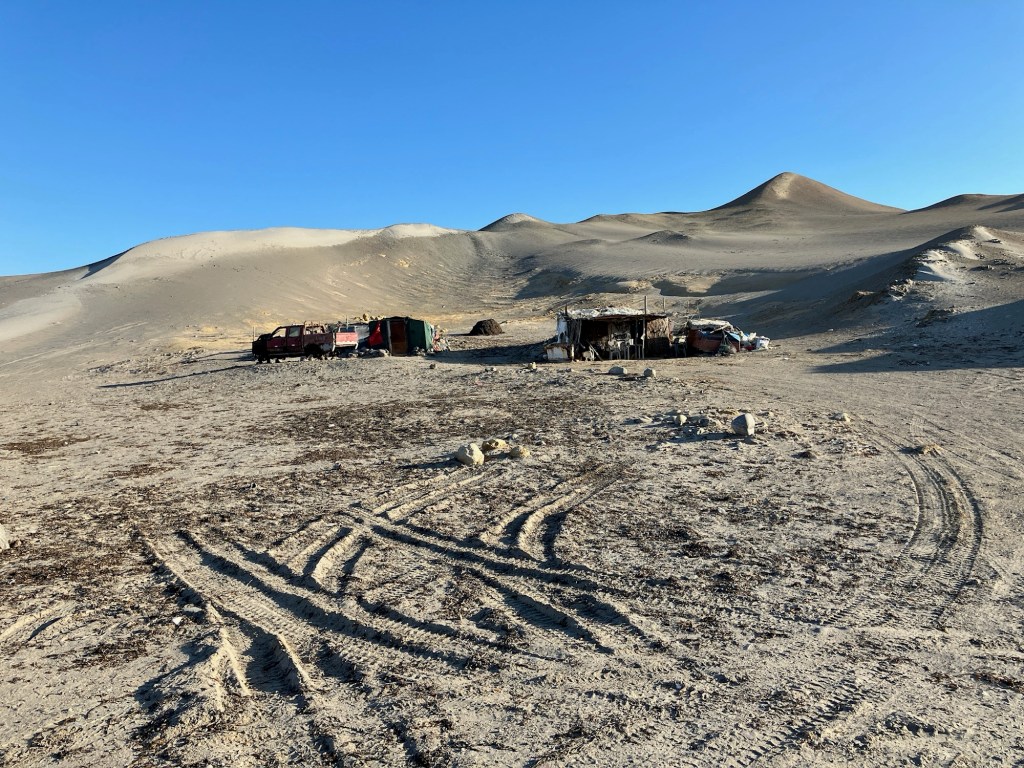
Monika and I walked along the water for a while collecting sea shells. Thousands of the largest and pristine shells I’d ever seen in one place. We also saw the corpses of a sea turtle and a seal. From the looks of it they washed up there a long time ago. Strangely, some Peruvians lived out there. Not far from the shore lived a man and his dog in a shack. He collected sea weed from the water and sold it in town. Supposedly a few people had been grandfathered in before it became a national park.
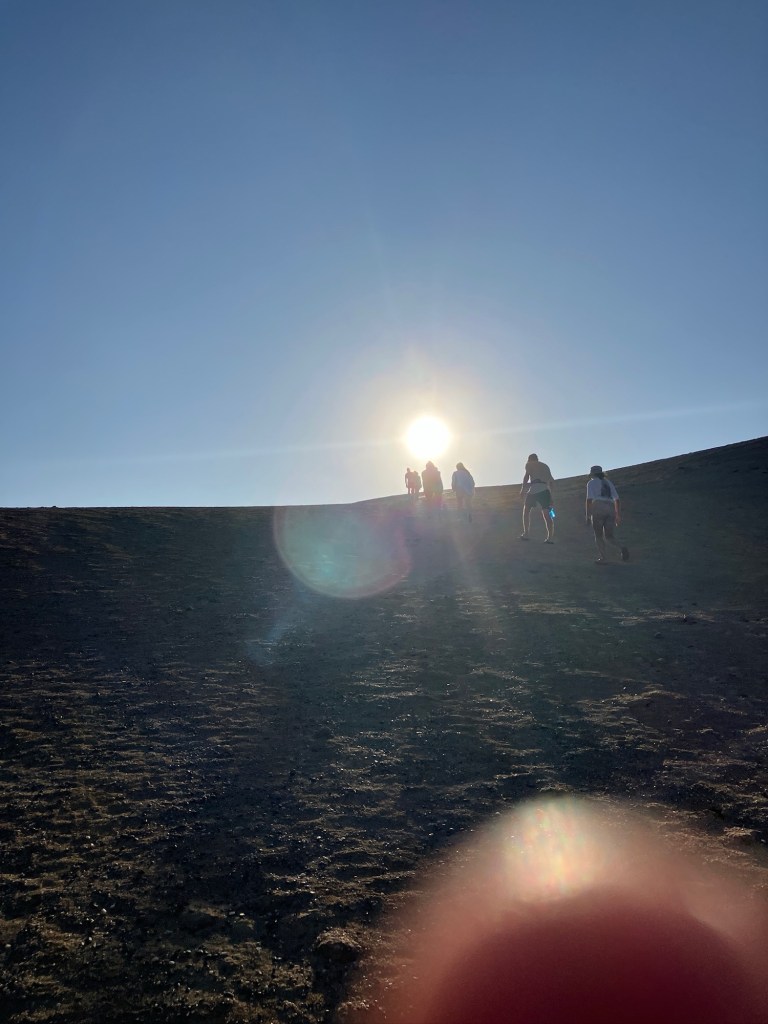
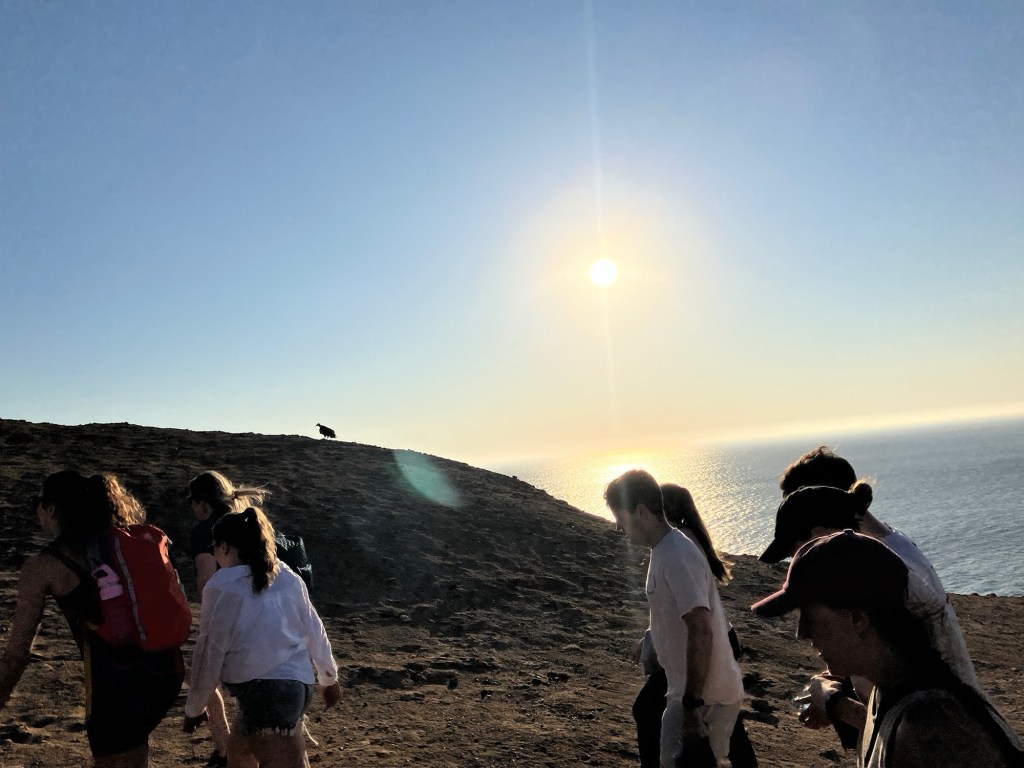
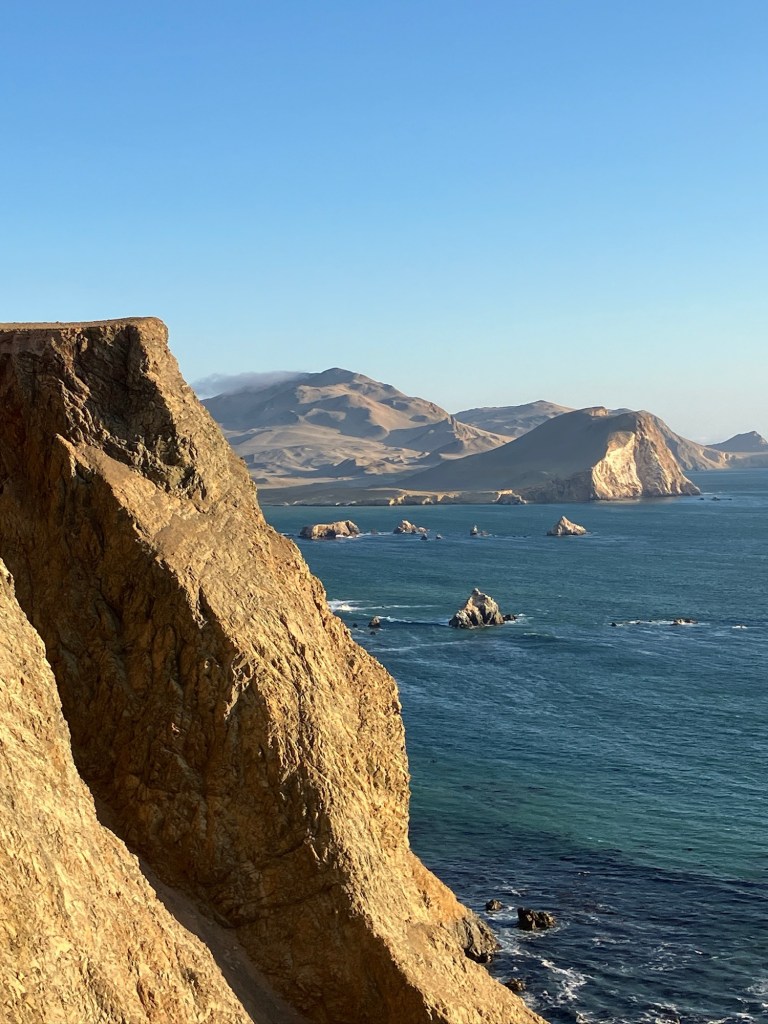
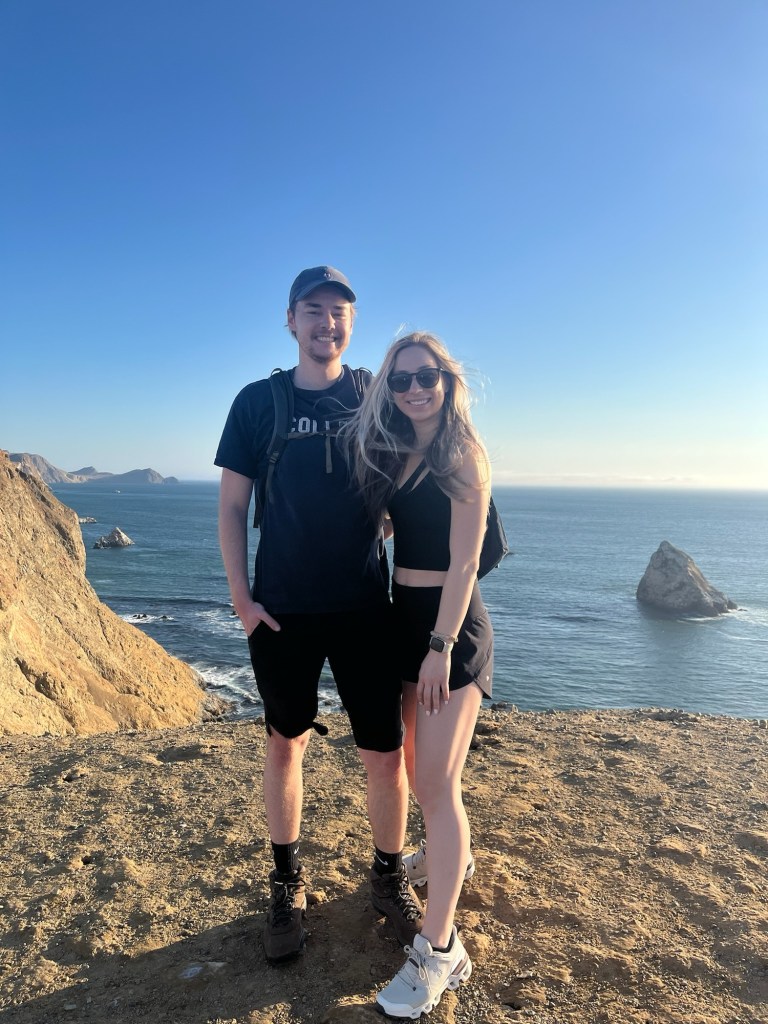
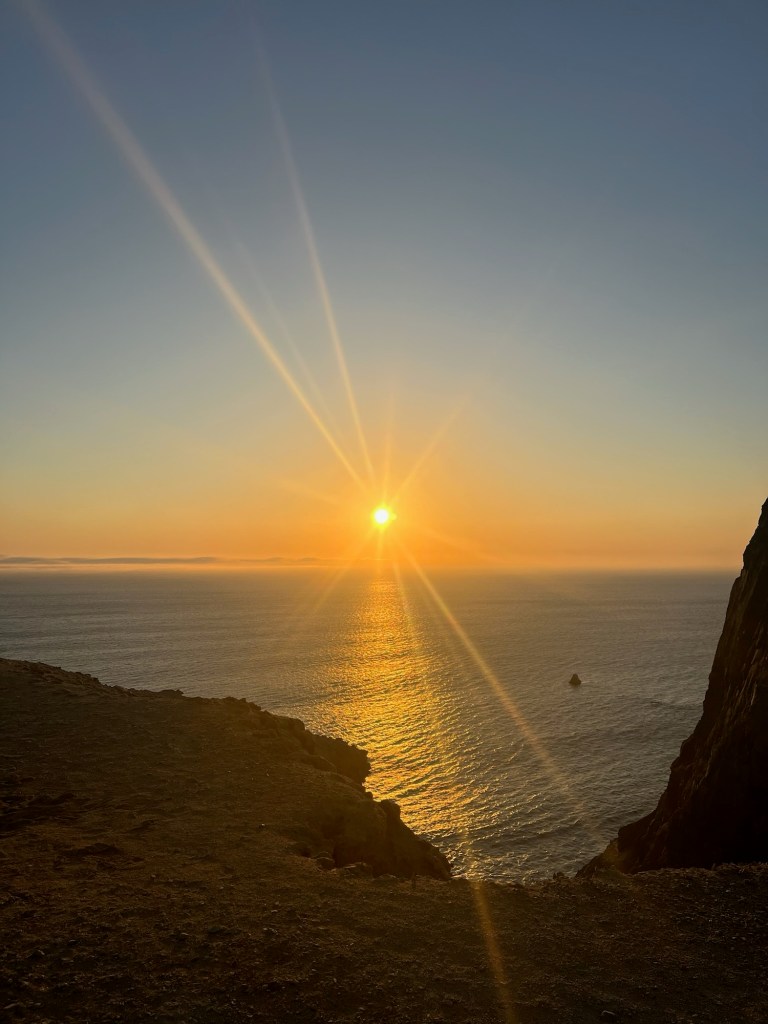
The bus had left, but one man remained to show us the way. We hiked up a steep ridge to behold the views from above. This gave us views of the surrounding sea cliffs and rock spires piercing the ocean surface. The ridge we walked along was high. Can’t say for sure how high, but it would take at least ten seconds for something to hit the water. For a while we walked along this ridge until sunset. The rock formations over the water were stunning. Like something out of Star Wars. I couldn’t believe -and still can’t- that it was the same country that shared the lush Amazon rainforest. The speechless feeling I attempted to describe to hook my readers was what I felt in Paracas National Park.
Nothing much to report that evening except for walking around to find a night cap and avoiding the late night live music in our hotel. The beach was trashy and everything gave me Jersey Shore vibes, despite never having been there. It was the week of Semana Santa and the weekend of Easter, which is a huge party week for Peruvians. Not sure why. So a lot of Peruvians had made their way to Paracas to celebrate. It had been a long day on a bus, and I wanted a quiet bar with a beer to wind down. Somehow, I picked the loudest bar of them all, but was won over by the friendly restaurant dog.

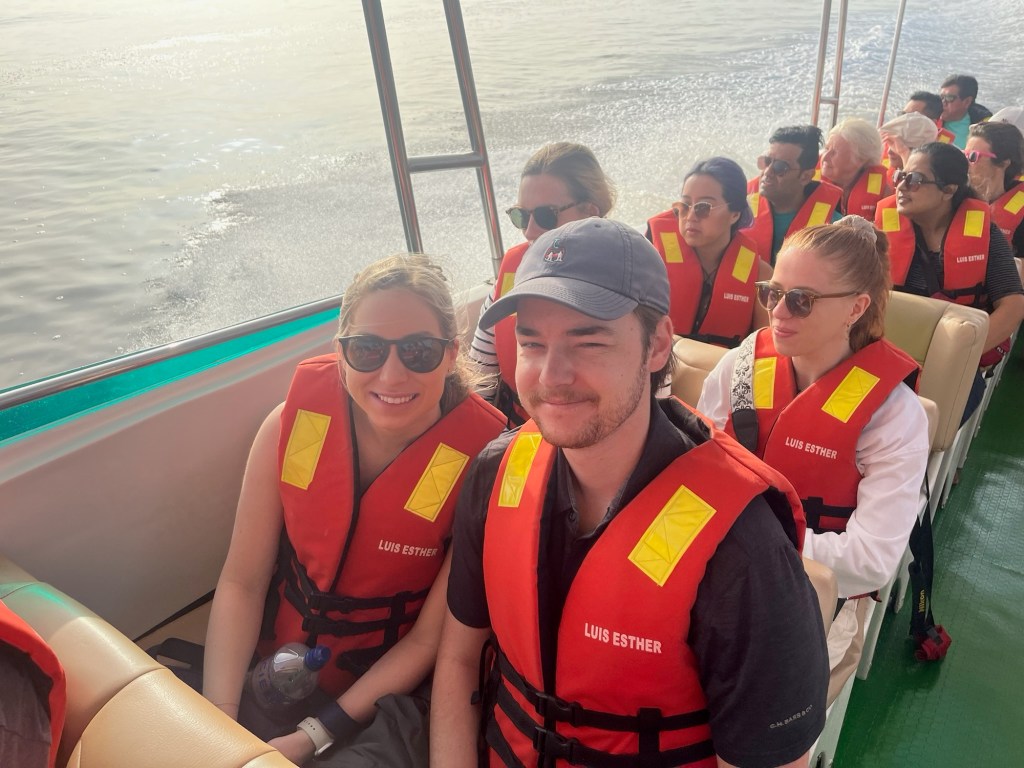
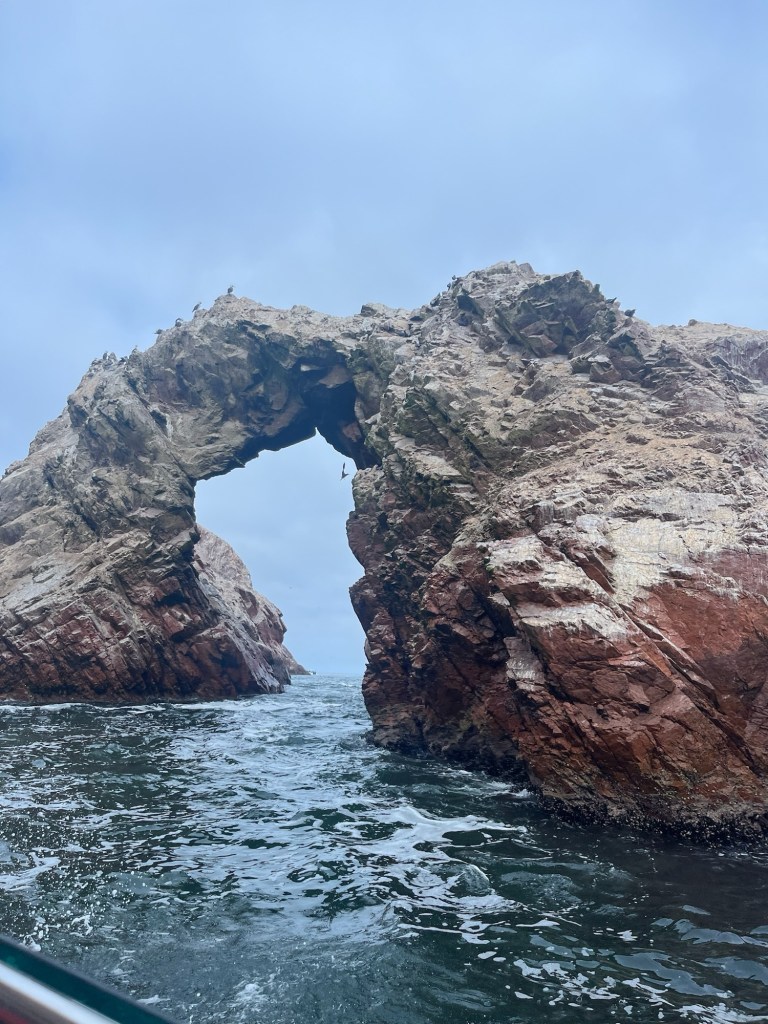
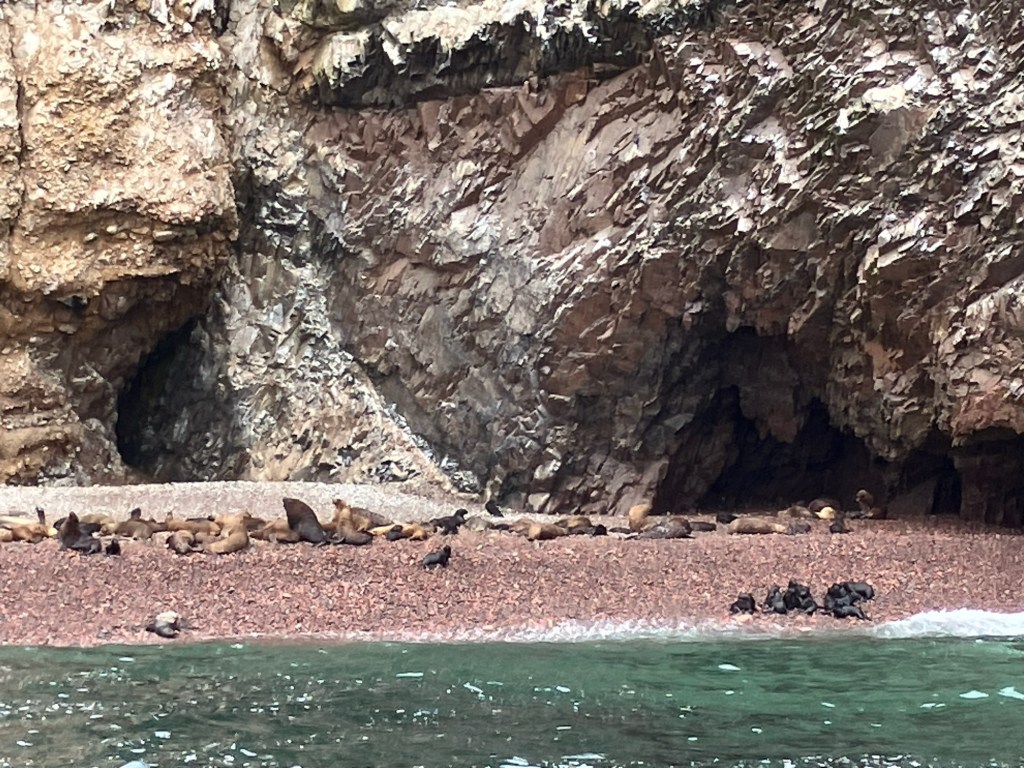
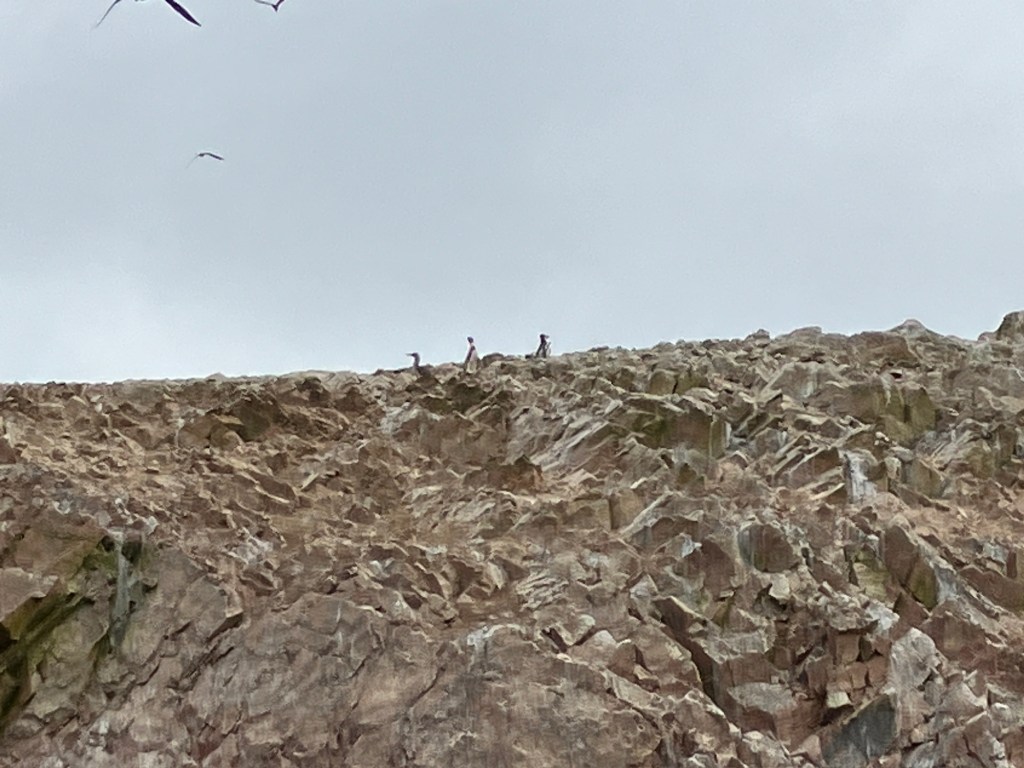
Early the next morning we took a boat ride out to some islands. Nicknamed the “mini Galapagos” for its abundance of wildlife. Mostly pelicans, but the real highlights were two penguins and baby sea lions playing in the water.
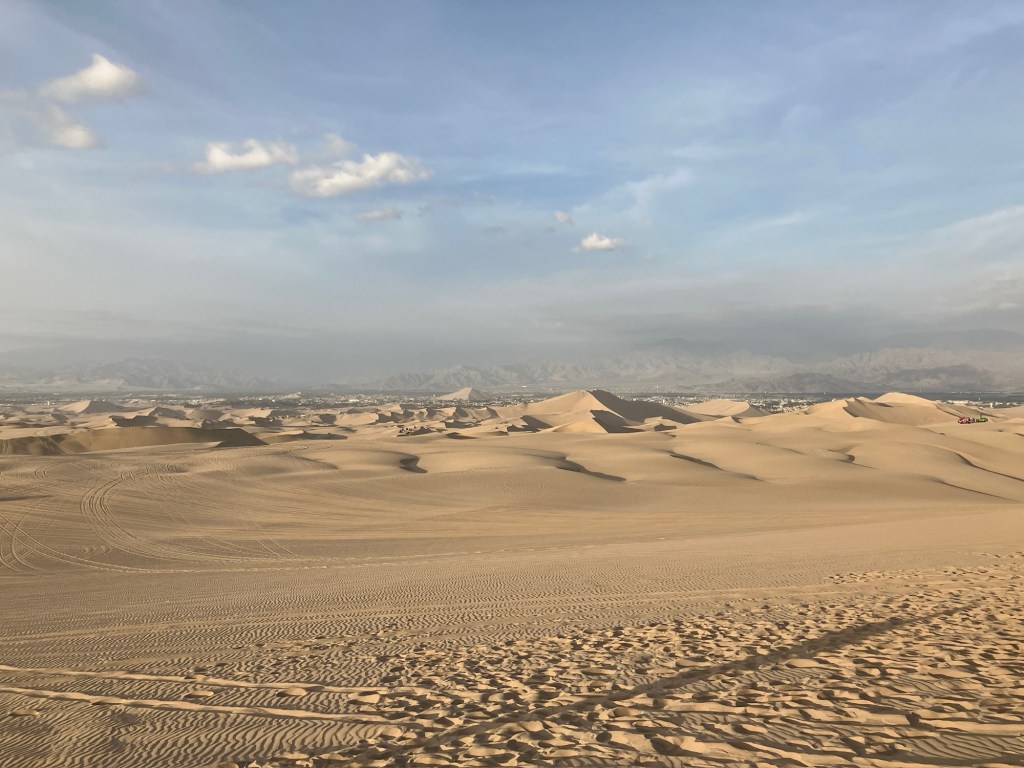
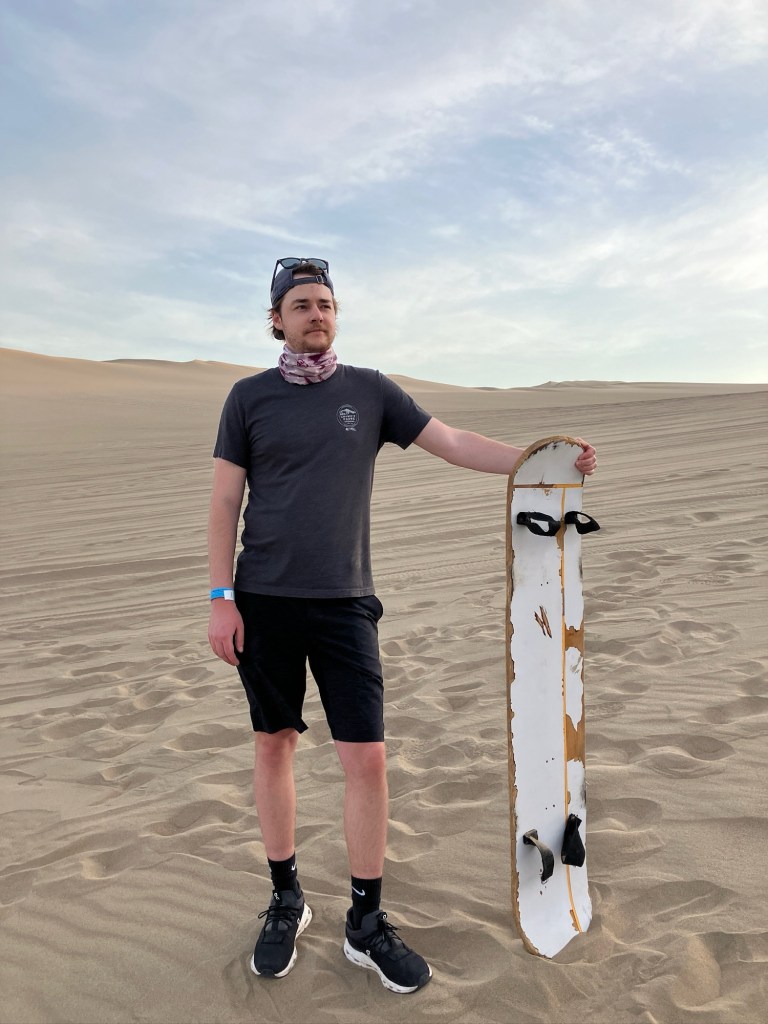
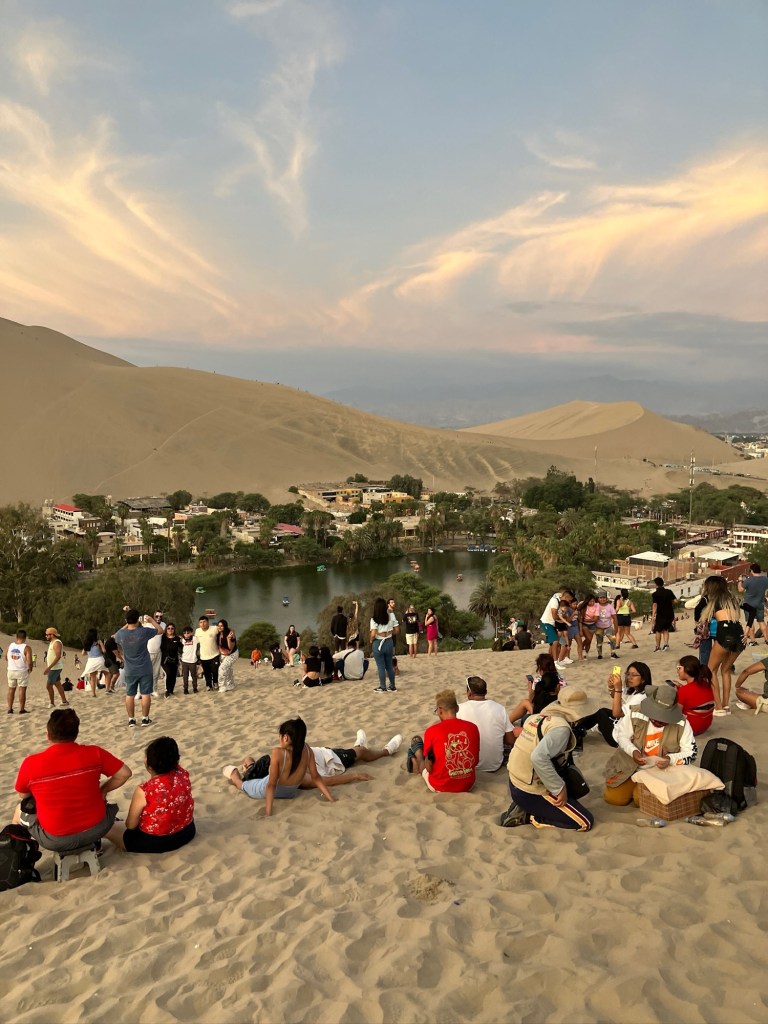
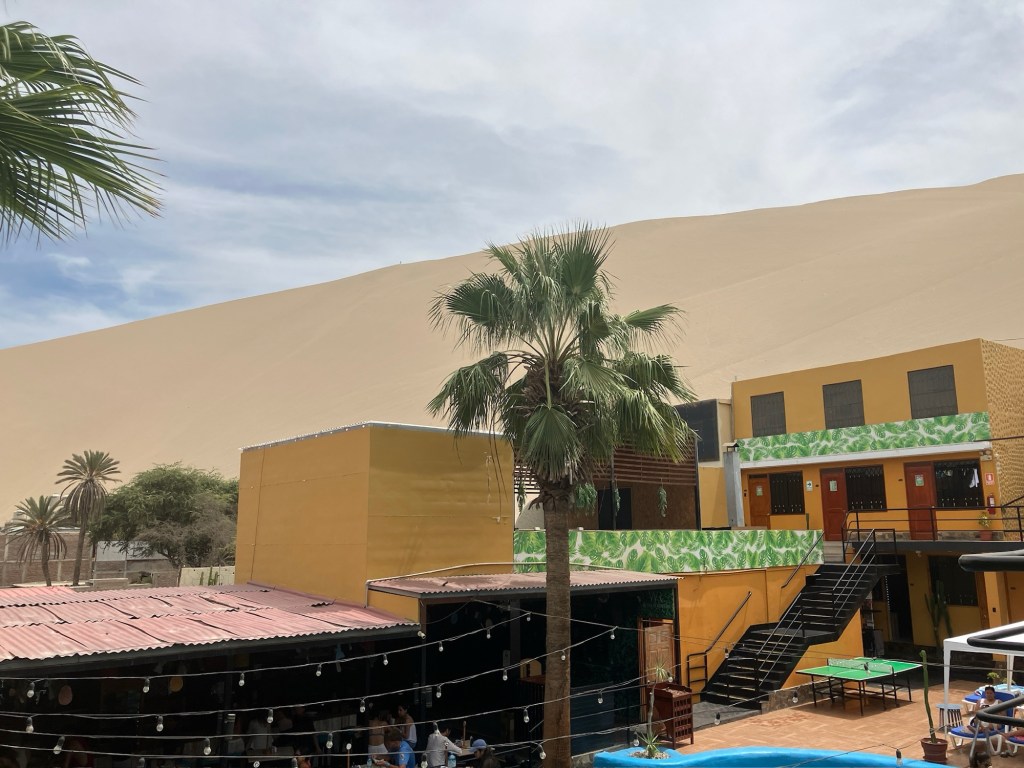
Our next and final stop of the day was not too far. The Huacachina Oasis is a famous attraction in Peru, and the amount of Peruvian and non-Peruvian tourists reflected that. The Oasis is just that: a little pond in the middle of the desert. But that is underselling it. Huge sand dunes surround it on all sides so when you are standing at the water, you feel like a bug trapped in a sandbox. Hotels and shops had been built around it to form a little tourist town. But we hadn’t arrived there yet, let me back up.
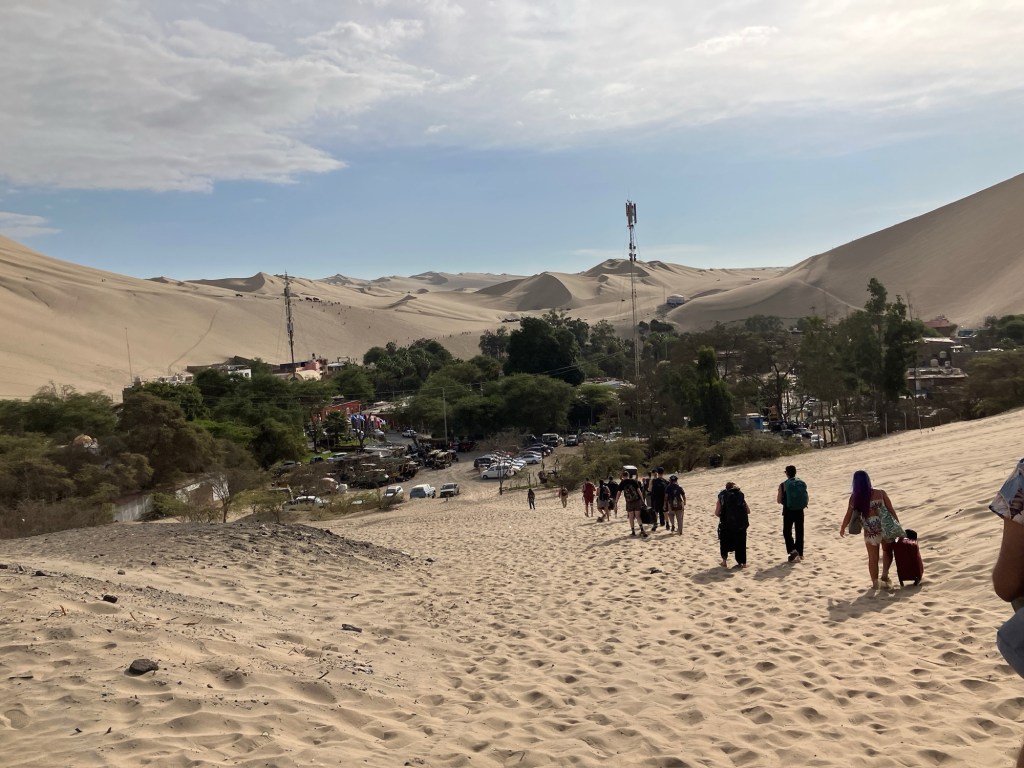
Our comically large tour bus was stopped before entering the town by the police. They said it is far too busy this weekend for buses so we would have to take a cab or walk in. Because it is well-known that buses cause way more traffic than individual cars. I think most everyone decided to walk because how bad could it be? Well those big dunes I mentioned – we were at the bottom of one. The road in was paved, but had no sidewalks. So thirty-ish tourists with all their bags began trudging up this hill in an amorphous mob, attempting to hug the right side of the road while cars whizzed by us with little regard for pedestrian safety.
The hill was large and the day was hot. At the top, years later, we were rewarded with the splendor of the Oasis displayed before us. The splendor did not last for we were then punished, as we saw the the way down was much steeper and all sand. I was feeling particularly chivalrous that day, so I hoisted Monika’s pink roller bag along with my own and began the careful descent on the loose sand. As sweat poured into my eyes and my legs wobbled trying to find purchase, I couldn’t help but laugh. And I’m sure a few locals laughed as well. I must have looked ridiculous.
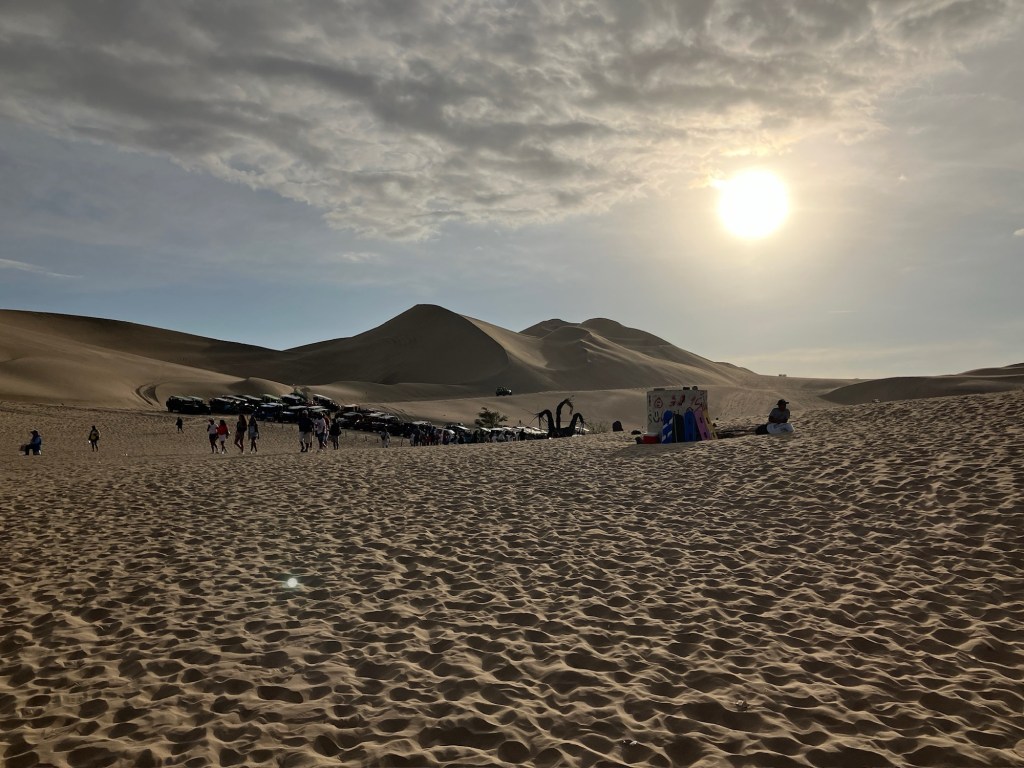
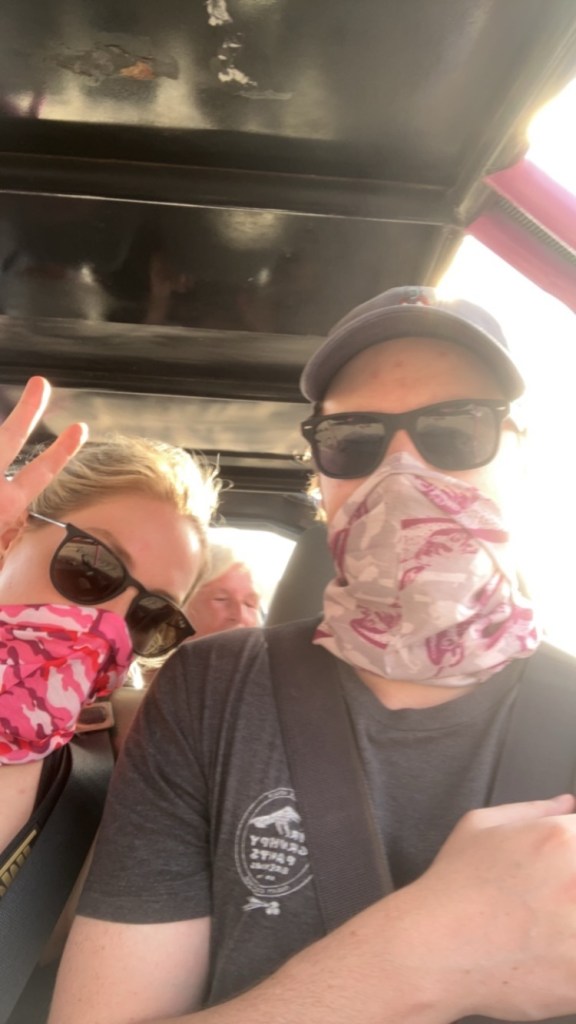
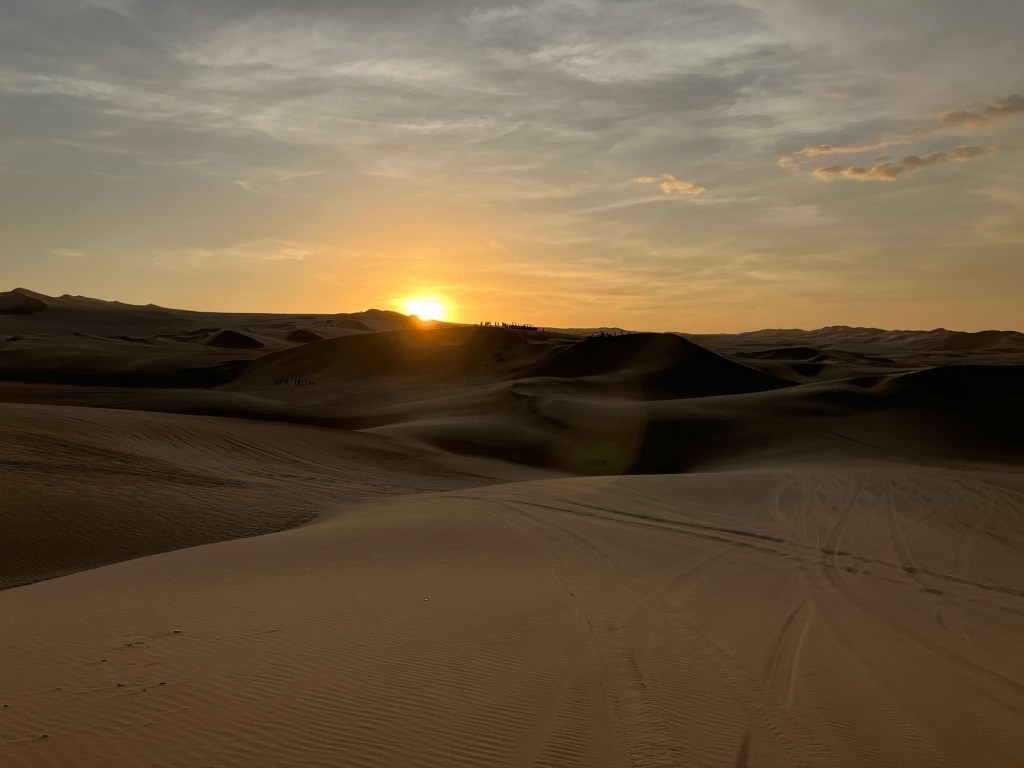
We made it to the hostel with no major incidents. We had only a moment or two to catch our breath before we were off to our next activity: dune buggy-ing. Dune bugging? Grammar is hard. Basically this guy, whose expression and sunglasses made him look like the Peruvian Terminator, zipped us around in a ten person dune buggy for about an hour. These dunes were steep, but our driver showed no hesitation. He incited screams from his passengers as drifted on 60 degree slopes and floored it full speed on the way down. Monika and I sat in the front seat with our sunglasses and face covers. The sand blasted us and stung every inch of exposed skin. It might be the most fun I’ve ever had. At the end, I tipped him and told him, “Bueno manejando” and it was the only time I saw him smile the entire day.
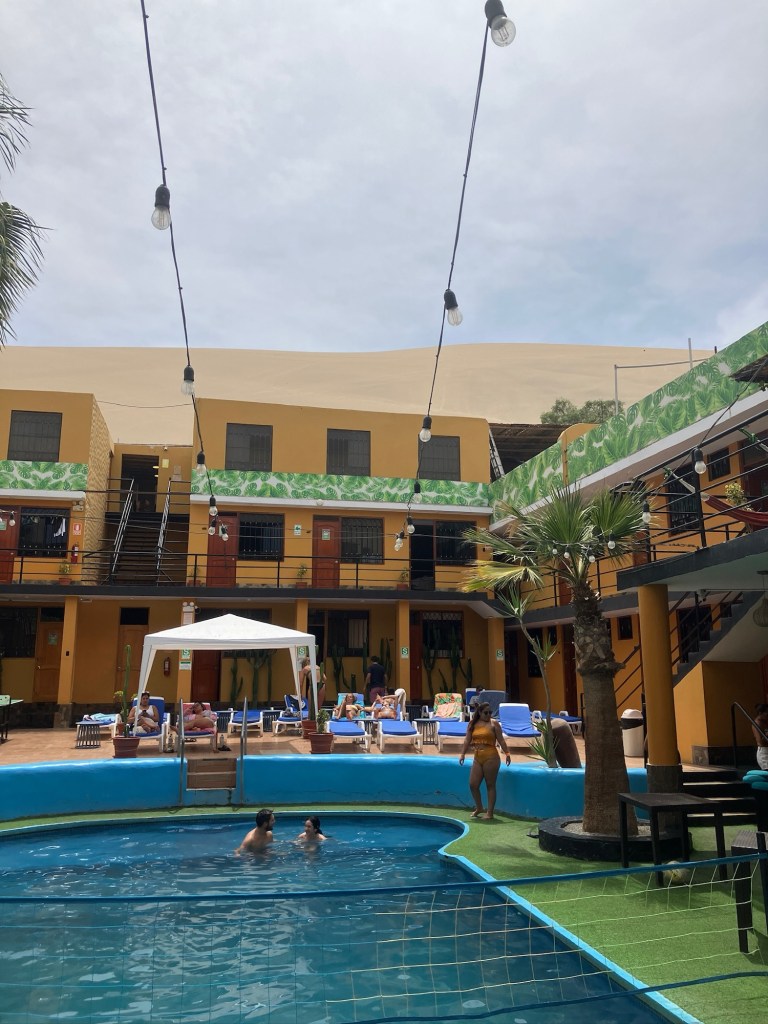
Our hostel was named the Irish Rover, and it was a party hostel on a party weekend. Our choices that night were: try to get to bed early after a long day and inevitably turn into an old cranky couple at the kids and their loud music all night, or join them. We hung out with some people from our bus. Some were from the UK, three others were from South Africa, the Netherlands, and Singapore. Stories were told, games were played, drinks were drunk. The bar was crowded and the music was loud, but the hostel was an open-air rectangle surrounding a pool, which gave plenty of space to move around. Of our new companions, Monika and I found out we were among the oldest at 27. Most the others were 22 or 23. That information really cut deep. I’m about the age where a running back’s knees start to give out. However there was one guy who was 38. But he didn’t act a day over 25.
Our guide on the bus through this journey, Paulo, was also staying at the hostel. We of course tried to get him to party with us and he begrudgingly obliged. He was stressed, clearly, from trying to keep track of everyone. The bus was technically hop-on, hop-off, so there were new people at every destination. On top of this fluctuating roster, he also managed the excursions people did throughout the trip. When something went wrong, even out of his control, they went to Paulo to complain. He handled it all like a champ, but we thought he deserved a shot or two.
And it’s funny, growing up seeing tour guides as these wells of knowledge. Wise gate keepers of a foreign land. It could be ziplining, a precarious hike, or out in the middle of the ocean, we put our lives and our faith in these individuals. Part of growing up, I’ve realized, is they are also all 22 or 23 years old. Paulo is 23. Here I was at a party hostel, earlier that day considering going to bed at 8pm with a pillow over my head. I can still hang, but every year it gets a little harder. I’m sure any readers of an advanced age will chuckle at the thought of 27 being called “old”, but sometimes the gap between 23 and 27 seems bigger than the gap between 30 and 50.
To further demonstrate my age, I awoke with a wicked hangover. Which is exactly what you want during a 36 hour overnight bus ride. That bus that morning, was so god damn hot, I thought I had died and went to Hell as punishment for getting drunk on Easter. The AC didn’t kick in for at least two hours, and I wouldn’t wish that stretch of the journey on my worst enemy.
For miles and miles the landscape looked like the surface of Mars. It never rained. In fact it rained so little, that people two millennia ago were able to create the Nazca Lines by simply digging up the red top soil to reveal white rock underneath, and they still exist today. The Nazca Lines are huge drawings in the ground of plants and animals. What is perhaps most curious about them, outside of no one knowing who or exactly when they were created, it that the shapes can only be observed from high in the air. And where they are drawn, there is not a mountain or a tree for miles. So the creators of them could not behold the Lines themselves.
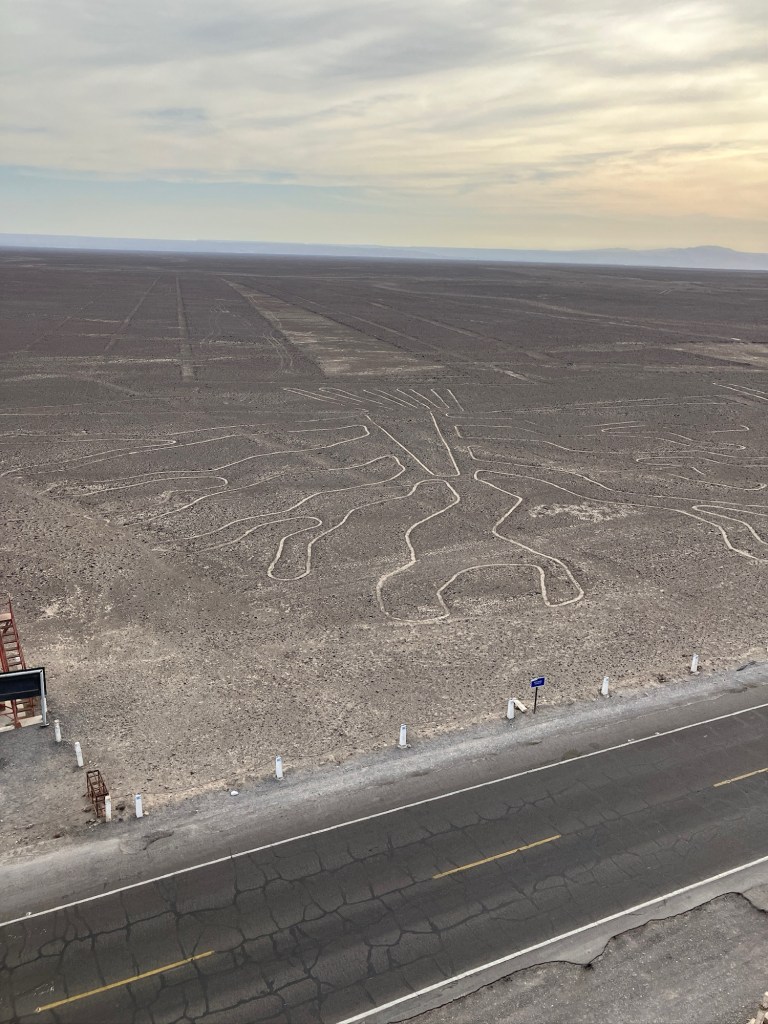
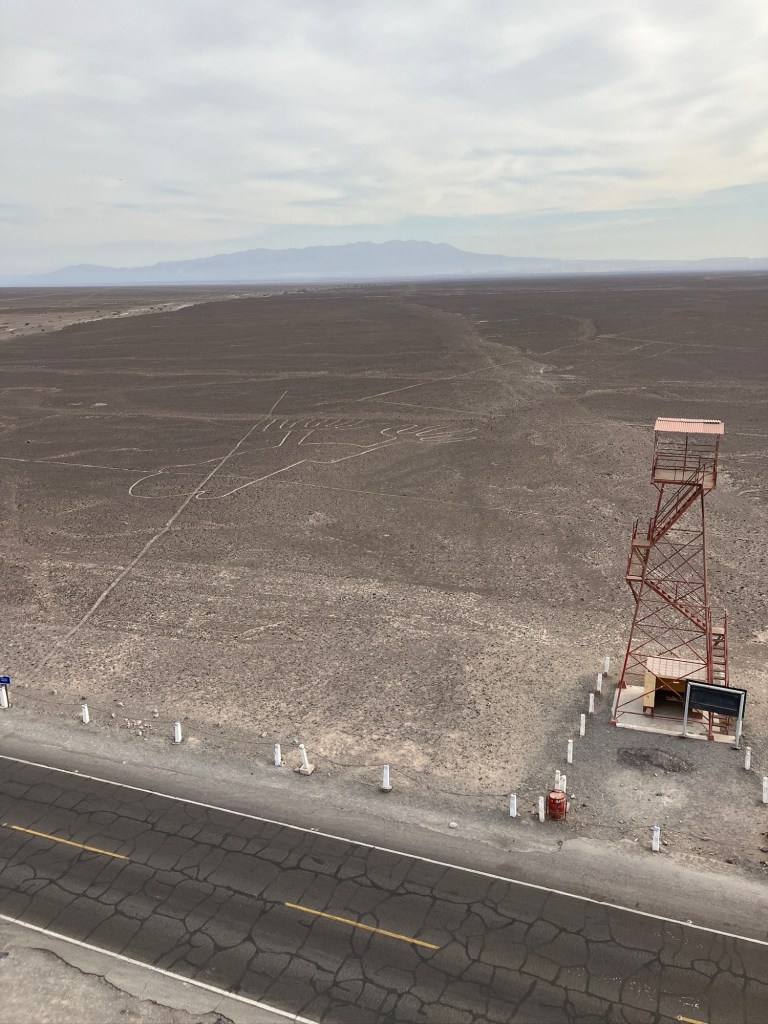
A frustrating fact about them is how little attention they received for thousands of years. No one cared to uncover the mystery behind them. This is evidenced by the fact that the Peruvian government built a road right through the middle of several of them, ruining them forever. There are miles of unused land around them that a simple bend in the road could have easily circumvented them. The rest are near perfectly preserved simply due to the emptiness that surrounds them.
They might have been destroyed entirely if not for Maria Reiche, a German-born mathematician and archaeologist who dedicated her life to studying and preserving the geoglyphs. So thank you to Maria.
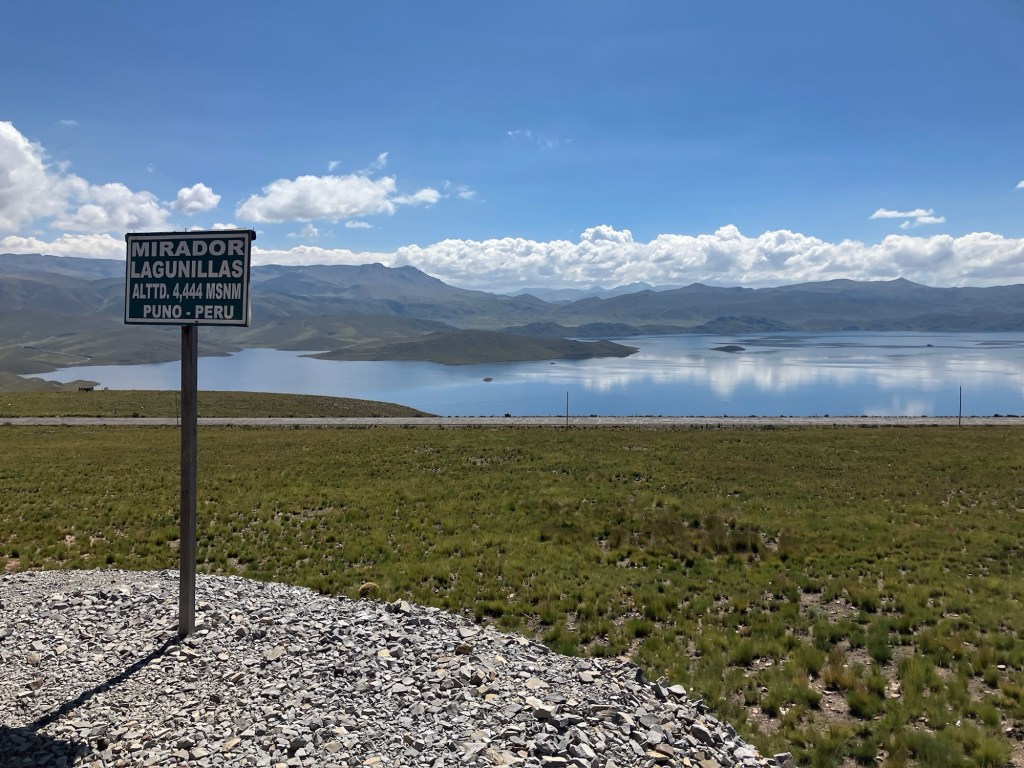
We drove through the night and made minimal stops the rest of the journey. By morning, we had left the desert and began to ascend into the mountains. Our breakfast stop was at 14,000 feet. It was basically a small shack where a family sold pastries off the side of the road in a beautiful valley. I was out of breath walking from the bus to the building. It was crazy to think the bottom of this valley was near the highest point in all of the lower 48 States.
One more interesting culture shock was in rural Peru, very few of the toilets had toilet seats. I don’t think I need to explain how this could make some situations somewhat tricky.
We didn’t arrive into Cusco until 7pm that Monday. We left Lima at 5am on Friday. It was a long, long journey. But very worth it. It was a great way to see so much more of Peru than you would staying in the cities or even going to Machu Pichu. The company is called Peru Hop. If you are going from Lima to Cusco, and you have the will-power to turn down the cheap, one hour flight, I highly recommend this bus ride. Next for us was indeed the world famous Machu Pichu trek. It took us five days and 45 miles. Aside from the knee pain, waking up at 4:30am every day, and my generally poor physical conditioning, it was one of the coolest experiences of my life.

 The Odysseys of an Average Person
Leave a comment