I arrived alone to my hotel. Exhausted from the longest two days of travel in my life, I wanted nothing more than a quiet hotel room and a soft bed. To my great dismay, the only thing standing between me and my room was an entire Arabic wedding. They danced to loud, foreign (but admittedly catchy) tunes and were impeccably dressed. The stairs to my room were on the other side of the dance floor. Tables and chairs blocked all other pathways. The only way out was through.
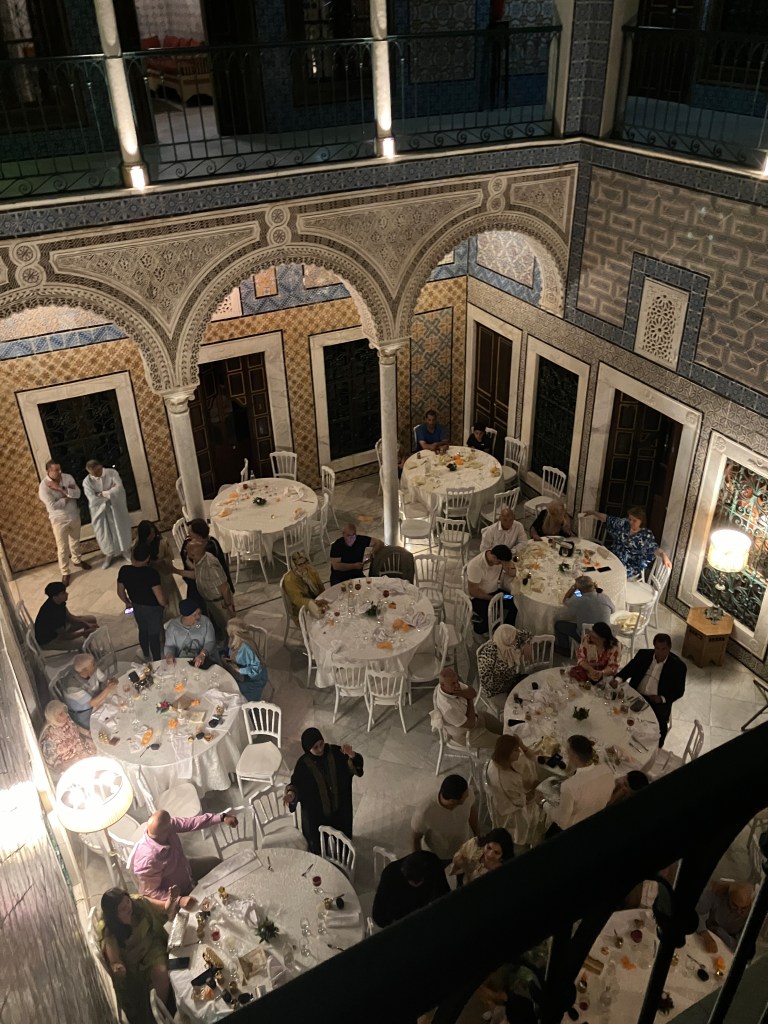
Lugging my bags and side-stepping as politely as I could, I parted the sea of dancers, pardoning myself in a language I’m certain few of them understood. If I was a betting man (and I am), I would say the crowd could smell me before they saw me, even above all the other smells. I was nearing three days without a shower and unchanged clothes. Greasy hair spilled out from under my sweat stained hat. I was embarrassingly underdressed for the occasion that I neither planned for nor was invited to.
While I avoided eye contact, I felt a hundred stares on me as I made my way through. Thankfully, the party continued as planned. I was afraid they would be so disgusted they would cancel it on the spot.
As I stepped into my room, the music wasn’t any quieter. A dreadful thought came over me. There was no alcohol at that wedding. Arabic countries only drink coffee. They weren’t getting sleepy, they were just getting started.
But that fear was also unfounded as they were done before 11pm. Thank Allah.
Ten hours later I awoke. While I relished the idea of being alone in a far away country, laying in bed with nothing to do and no one to contact me, that wouldn’t really make a good travel blog. I decided I would walk around for as long, or as short, as I desired. The freedom of solo travel. But first, to find the hotel breakfast.
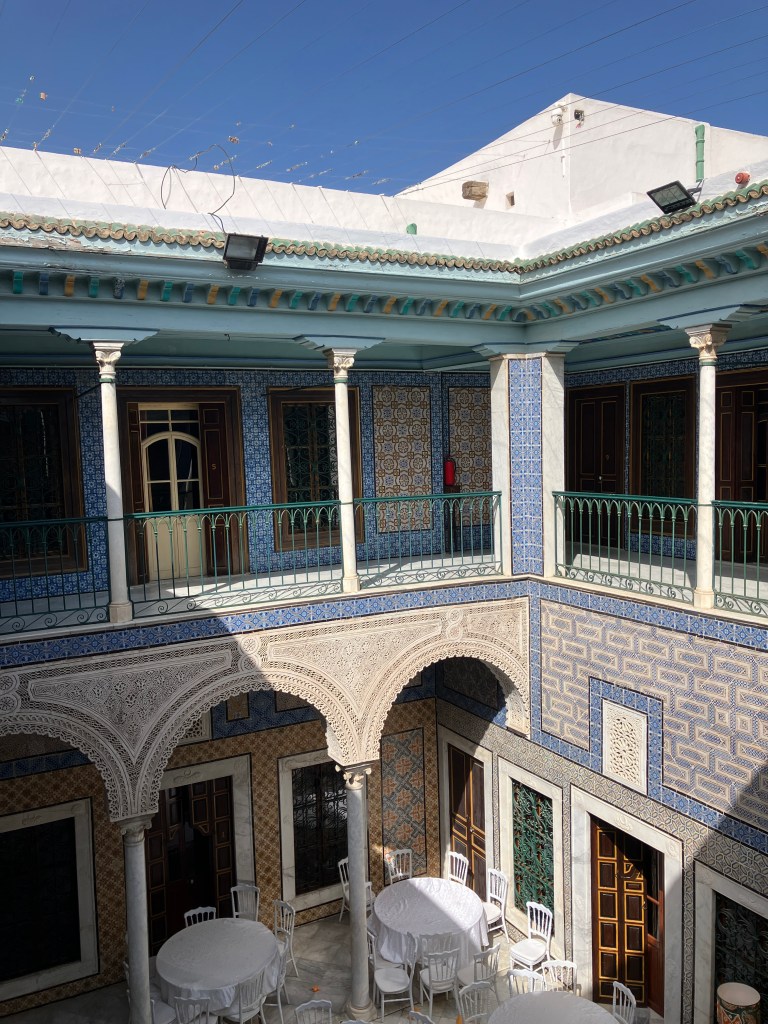
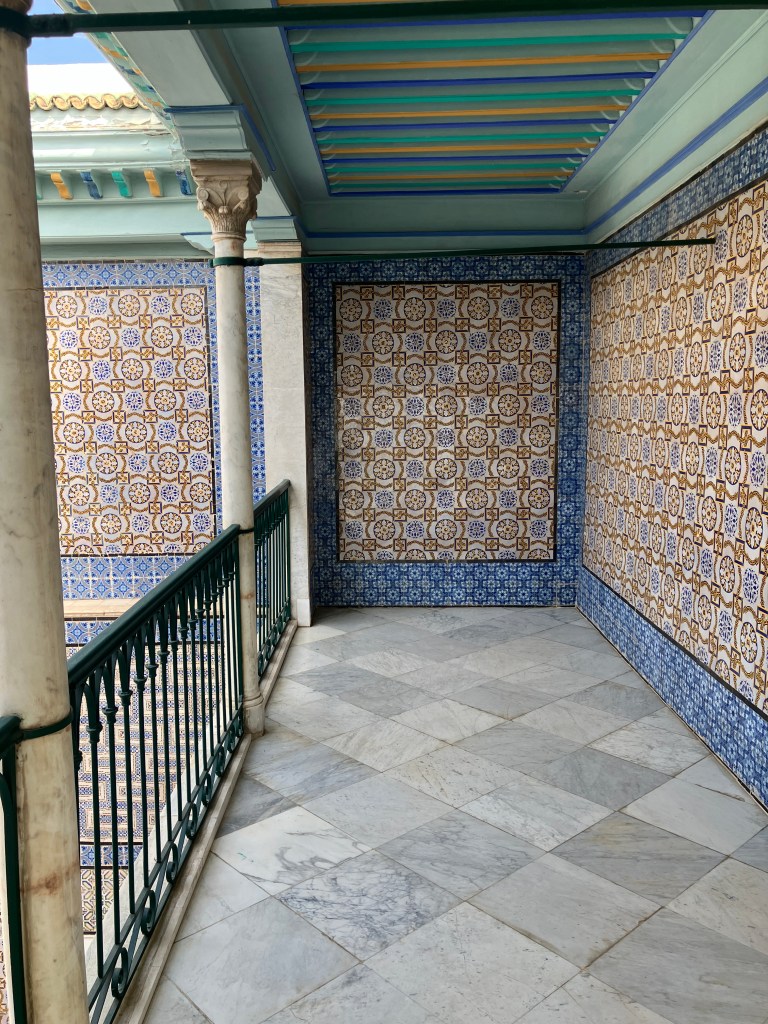
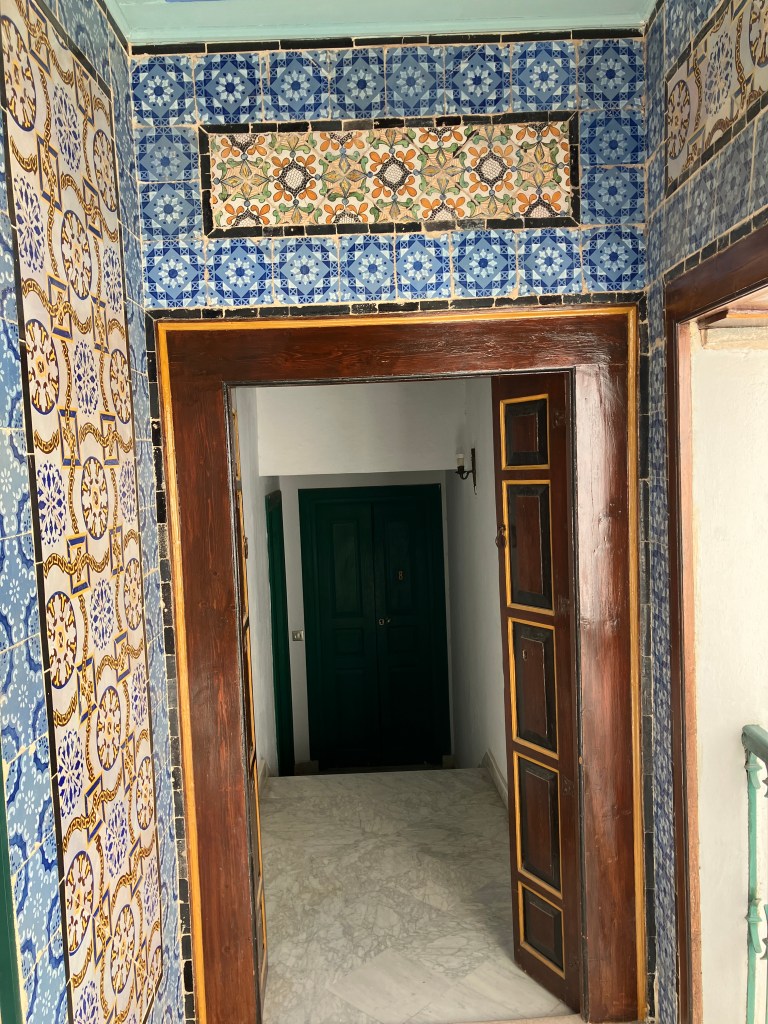
My hotel was a former palace of some fancy prince from a million years ago (fact checked). And like most old palaces, it had a peculiar layout. As I mentioned, the only stairs to my room were through the main courtyard (no fire codes back in the day, and maybe not today either). It took some time to find the breakfast area, through several hallways and unrelated rooms. I think I might’ve been outside at one point. Eventually I did find it up a narrow staircase.
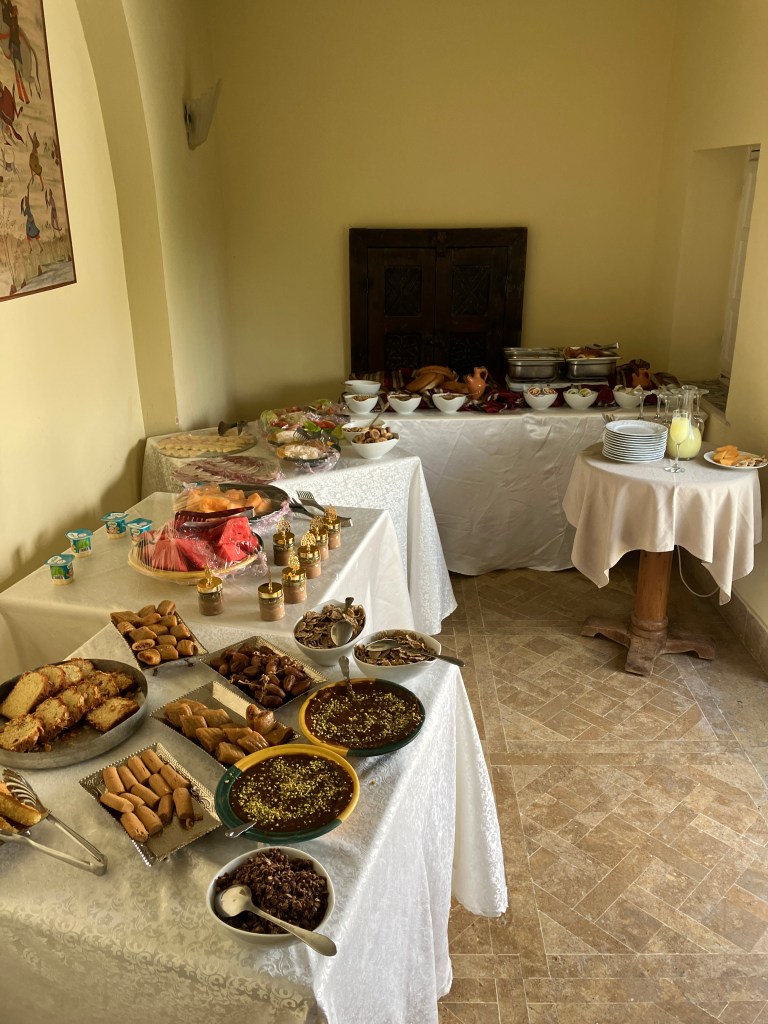
In a cozy room where the walls had an appearance of stone covered in plaster or clay, I was presented with a handful of strange options. The fruit I understood. The pastries and something that looked like scrambled egg soup were less clear to me. However I was pleasantly surprised, and had it again the next three mornings.
So with no agenda I set off into the streets. Immediately, I was lost.
It was like someone put dry wall over the hotel door the second I stepped out of it. I was in old town Tunis. The streets were narrow and the walls were high. Whatever the opposite of a grid layout was, this was it. There was very little signage, and the few signs I did see were in Arabic.
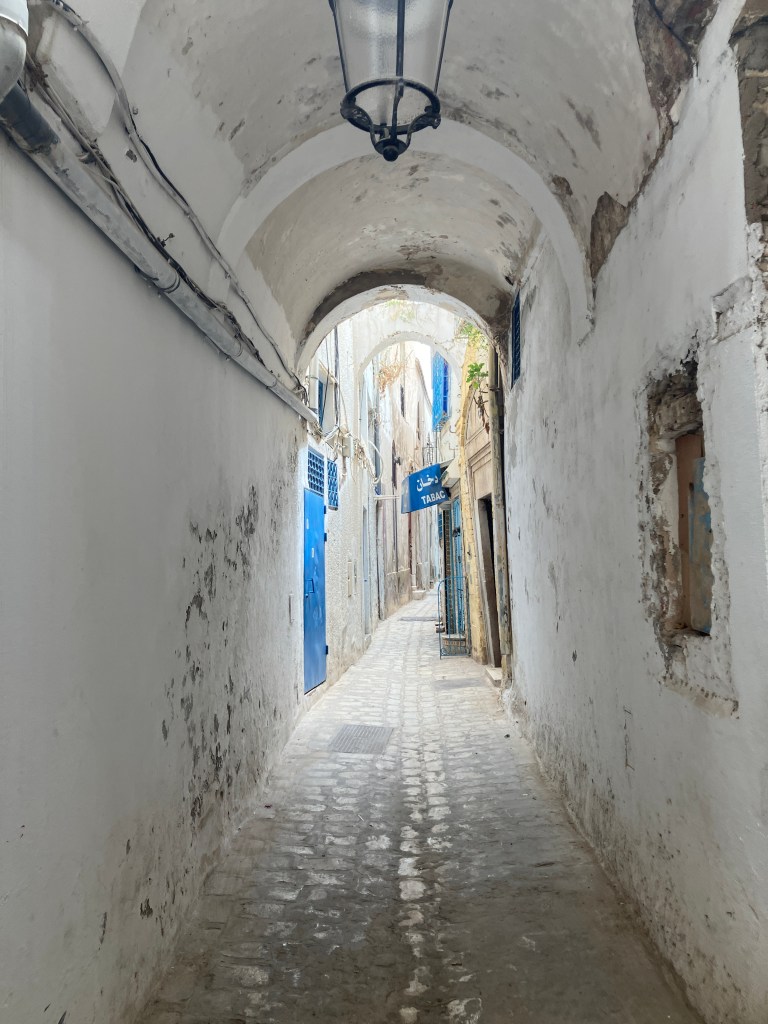
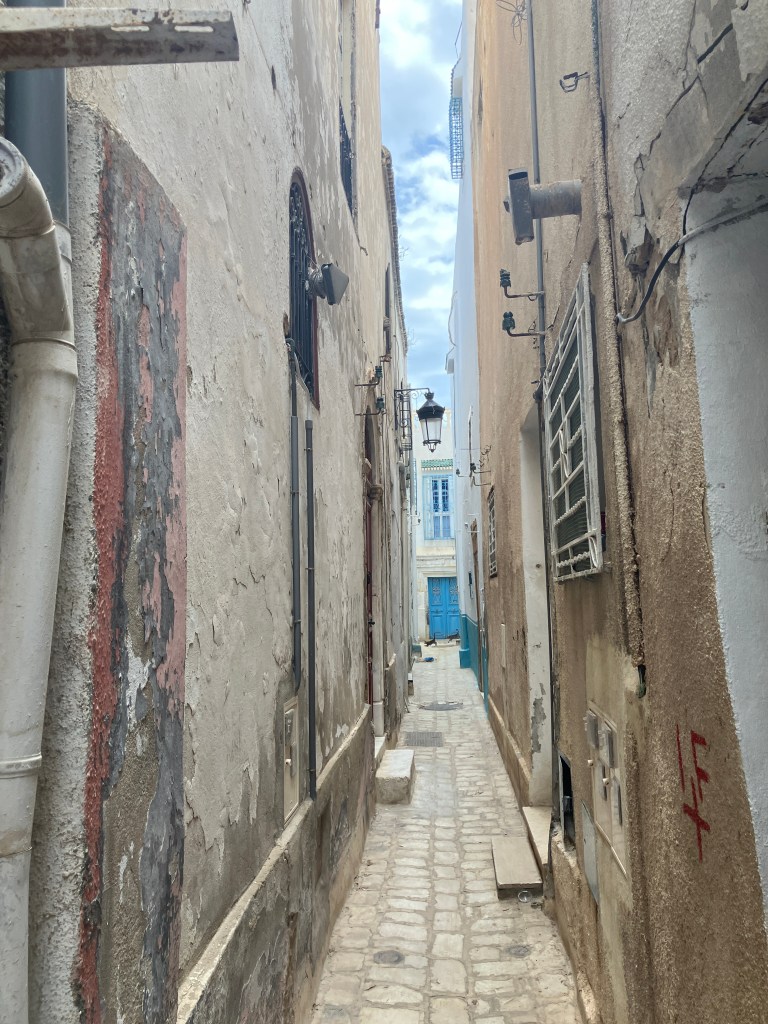
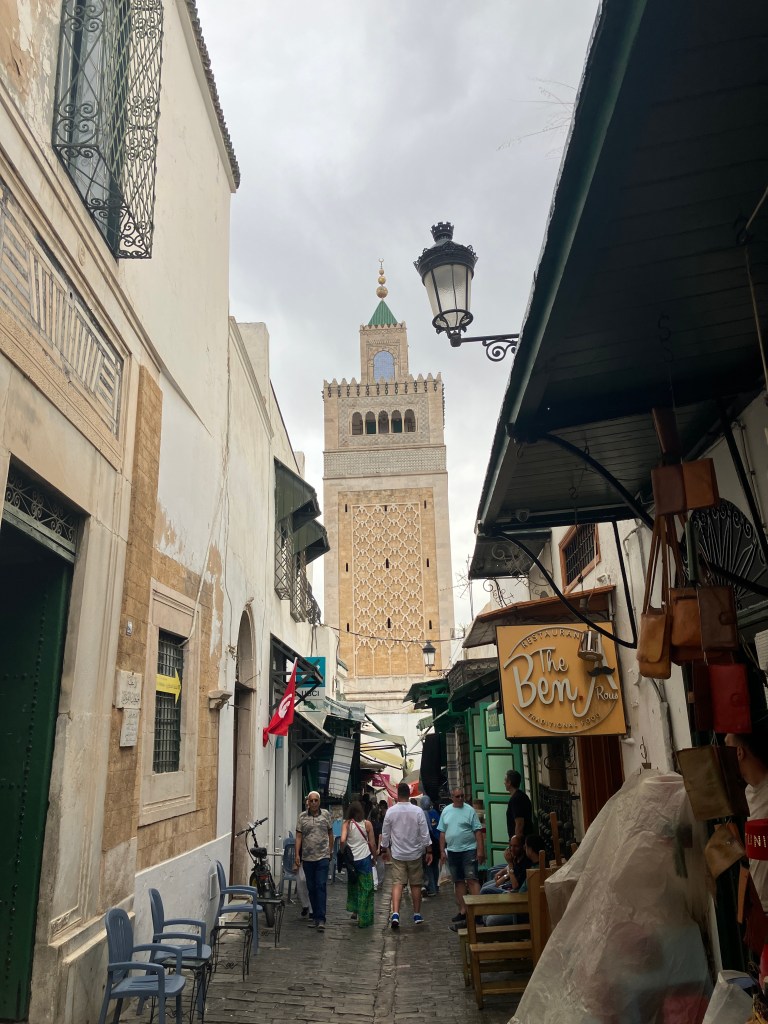
I was equal parts charmed and confused. The more confused I was, the more charmed I became. The walls were all white and much of the trim on windows and doors were shades of turquoise, pastel, and cobalt blue. Wisteria flower-vines crawled up the side of buildings. But unlike most European old towns, this was not tourist friendly. Much of it was just genuinely old with regular people living in it. Some effort had gone into it, but in no way did it feel polished.
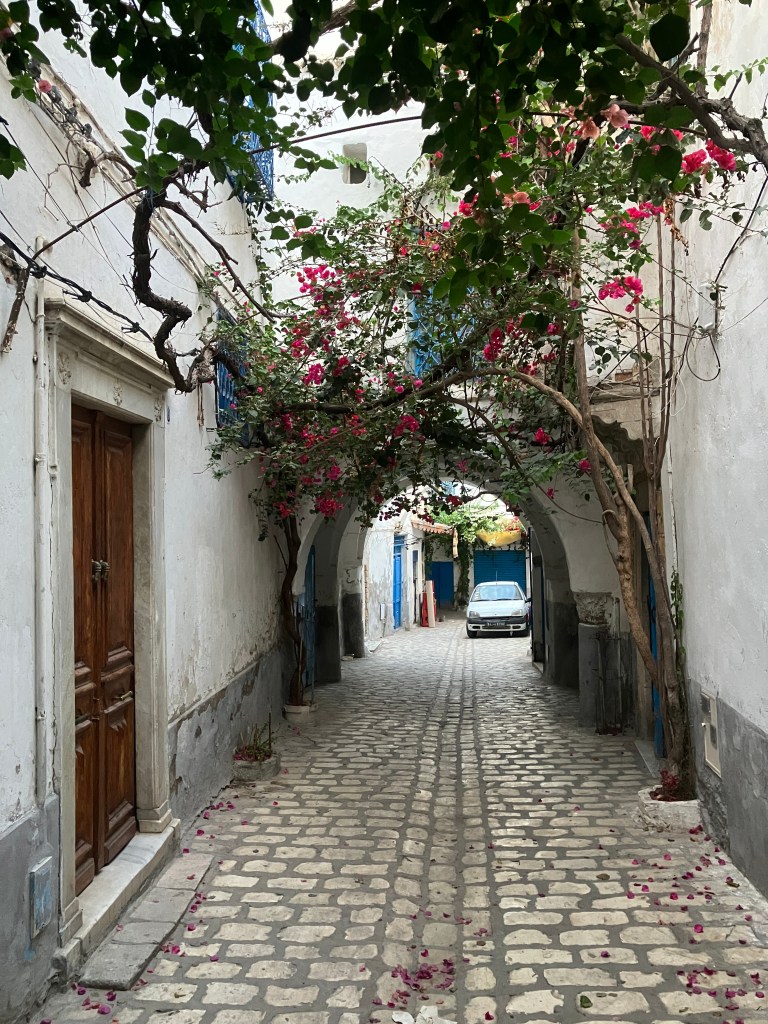
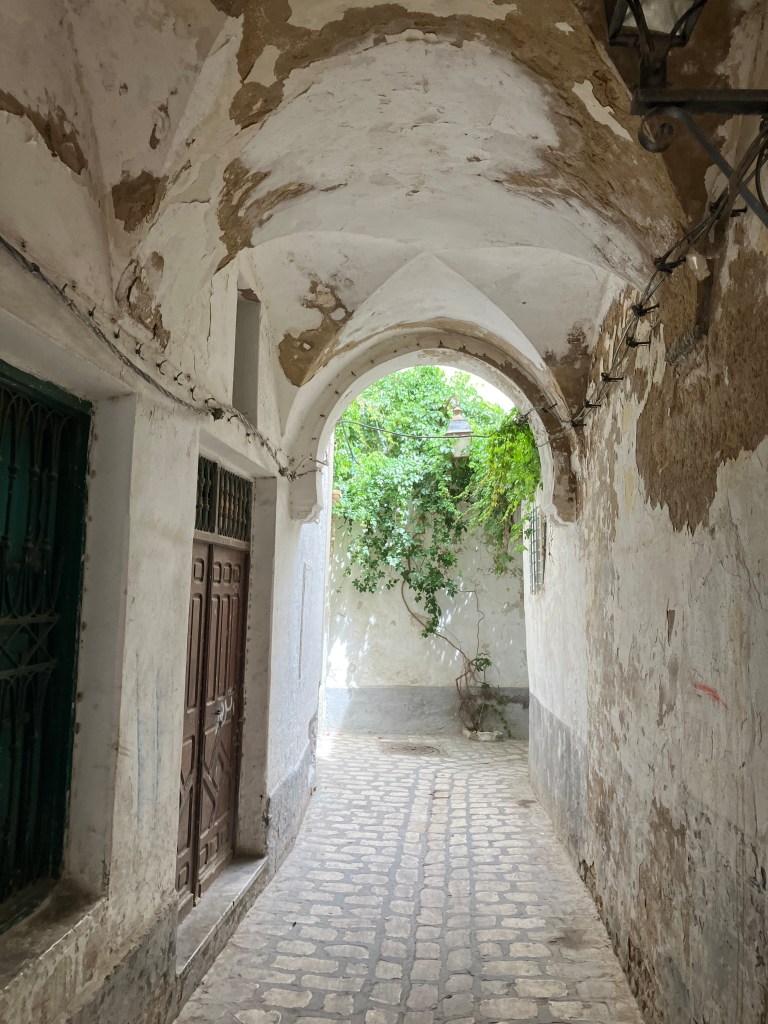
Down one of the alleys I was walking I heard commotion at the end of it. A lady seemed to be in a fierce argument in a language I didn’t understand with a person I could not see. Cautiously, I approached. Around the bend of the alley I saw the woman, still yelling, at four cats. She had a rag or something that she was flinging in anger while the cats jumped and meowed around her. It was also a dead end, so I stared awkwardly for a moment until she saw me then I turned tail and tried another route.
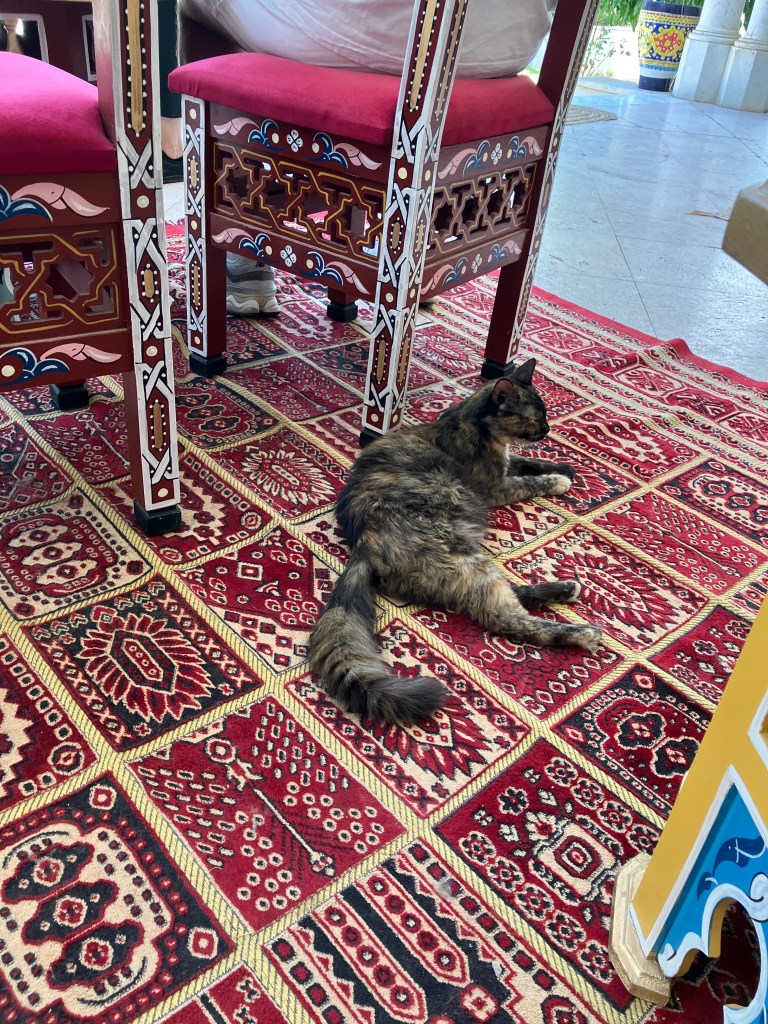
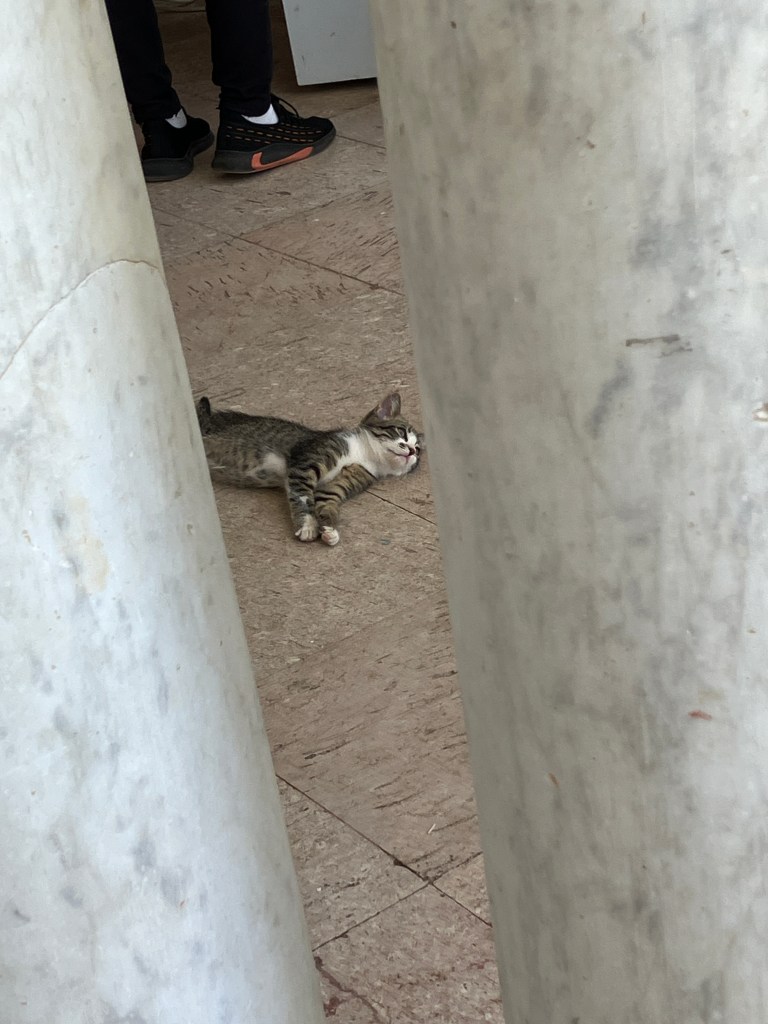
At some point that day I escaped the old town. I was back on normal streets with actual cars and road signs. Out there I walked for a while, enjoying being out of the shadows of the narrow alleys. But before long I was lured back in.

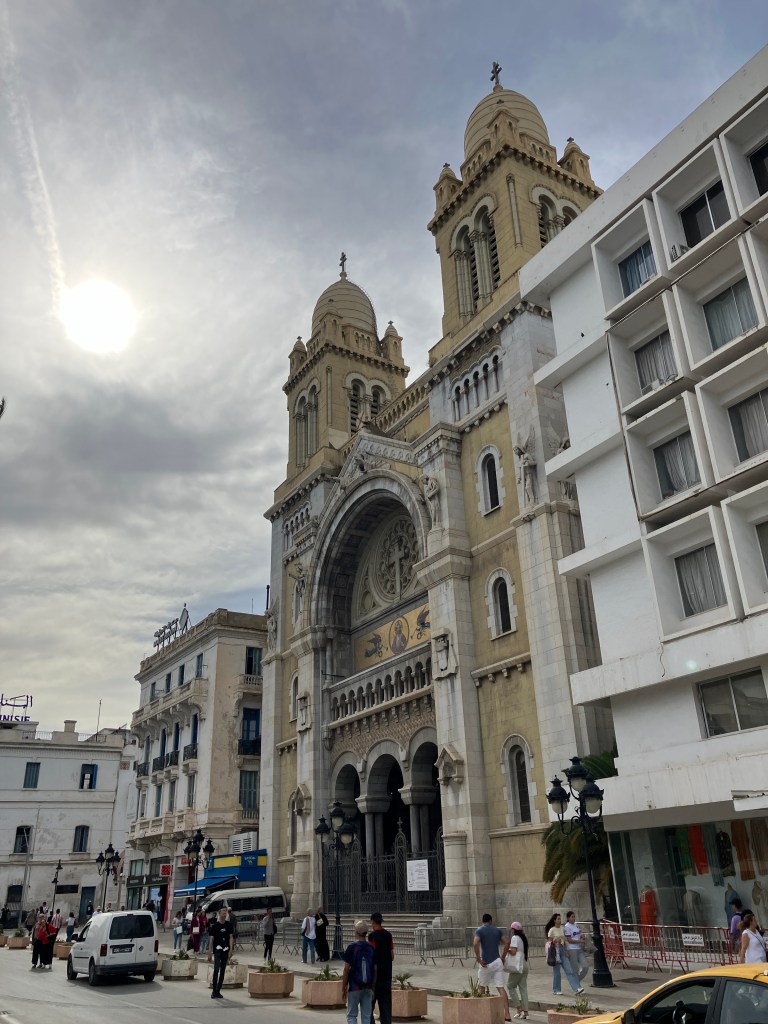
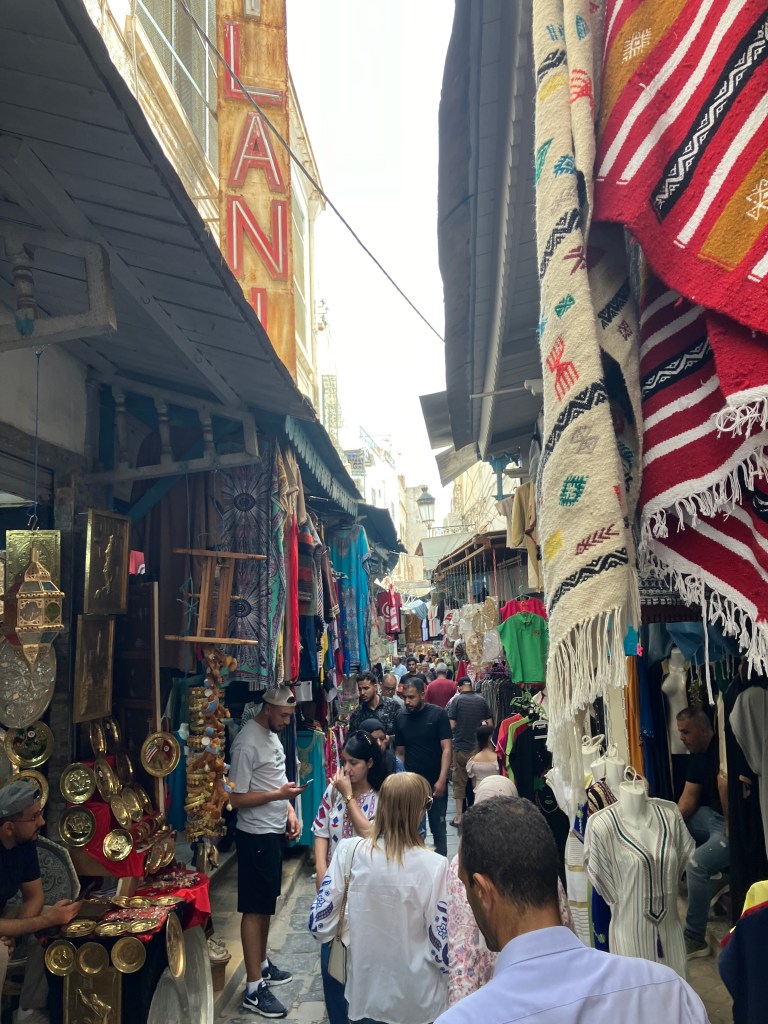
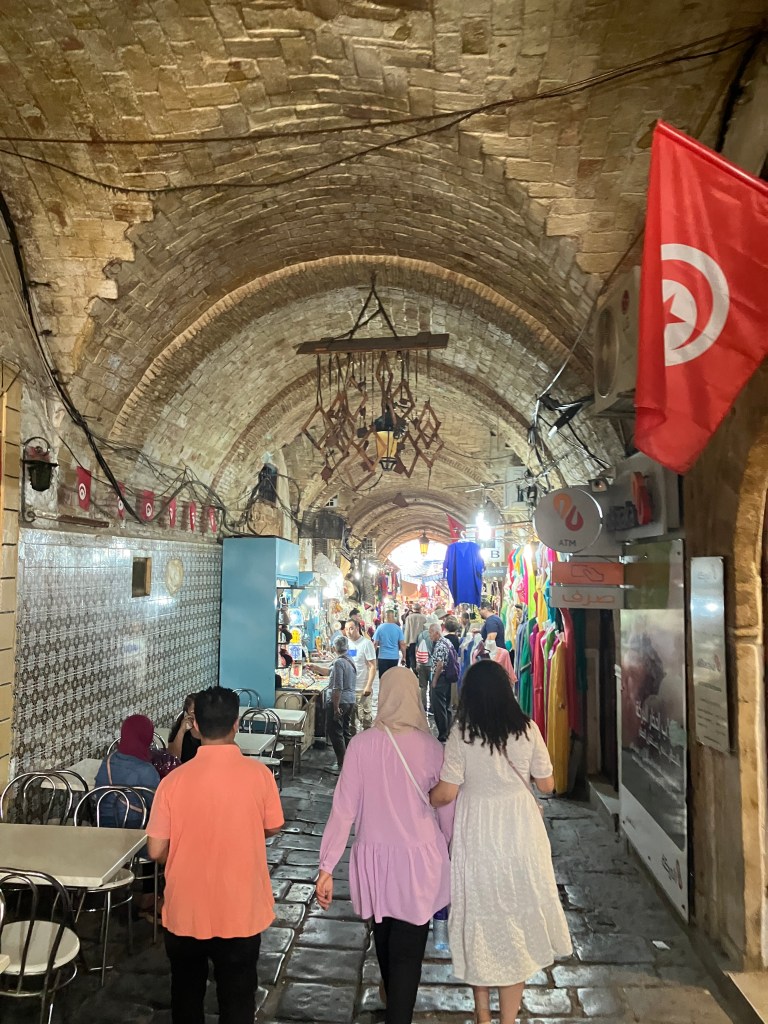
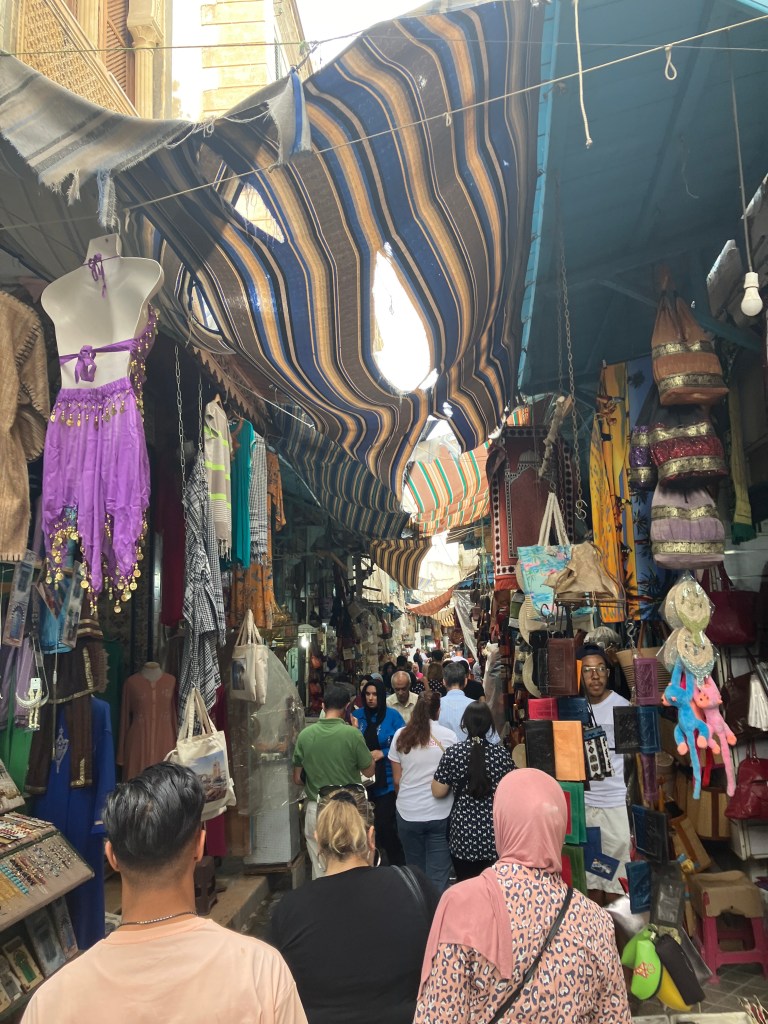
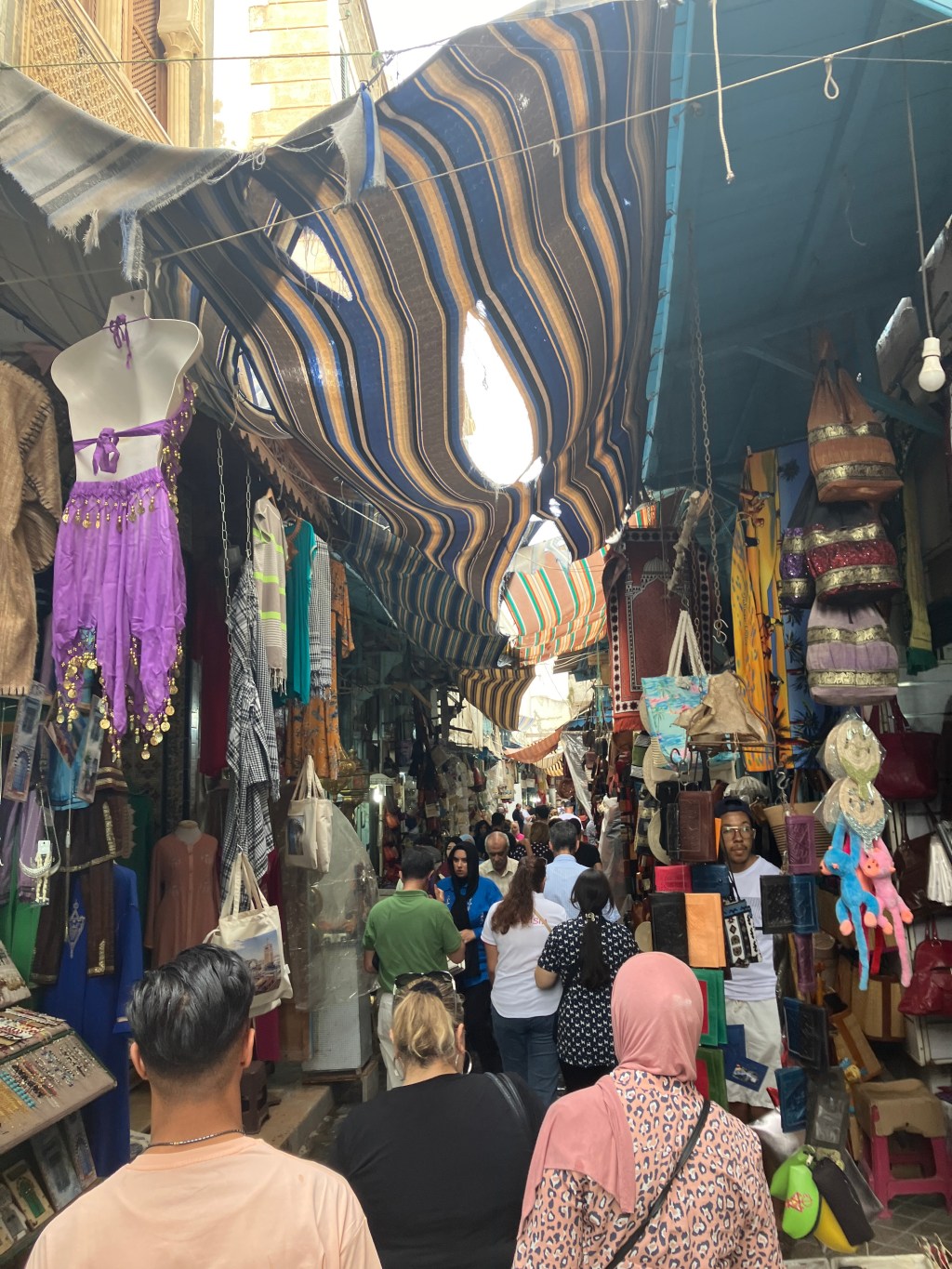
What seemed to be the main corridor of the old town was also the marketplace. A pathway probably no wider than ten feet across was bustling with people. Shops and stalls took up half that width. Leaving the other five feet for hundreds of people in two way traffic. Smells of incense and roasted lamb swirled around me as I dipped, ducked, dived, and dodged my way through the endless sea of people. If I made eye contact with any shop keeper, even for a quarter second, they would jump out of their chair in excitement to try and reel me in. The energy and the claustrophobia was equal parts stressful and exciting.
Outside the narrow streets I came to a larger, open market where they were setting up for the day. There I saw cages of live chickens, and immediately next to them, a display case full of chicken meat. Seems a little cruel for the chickens, or maybe I’m too sheltered.
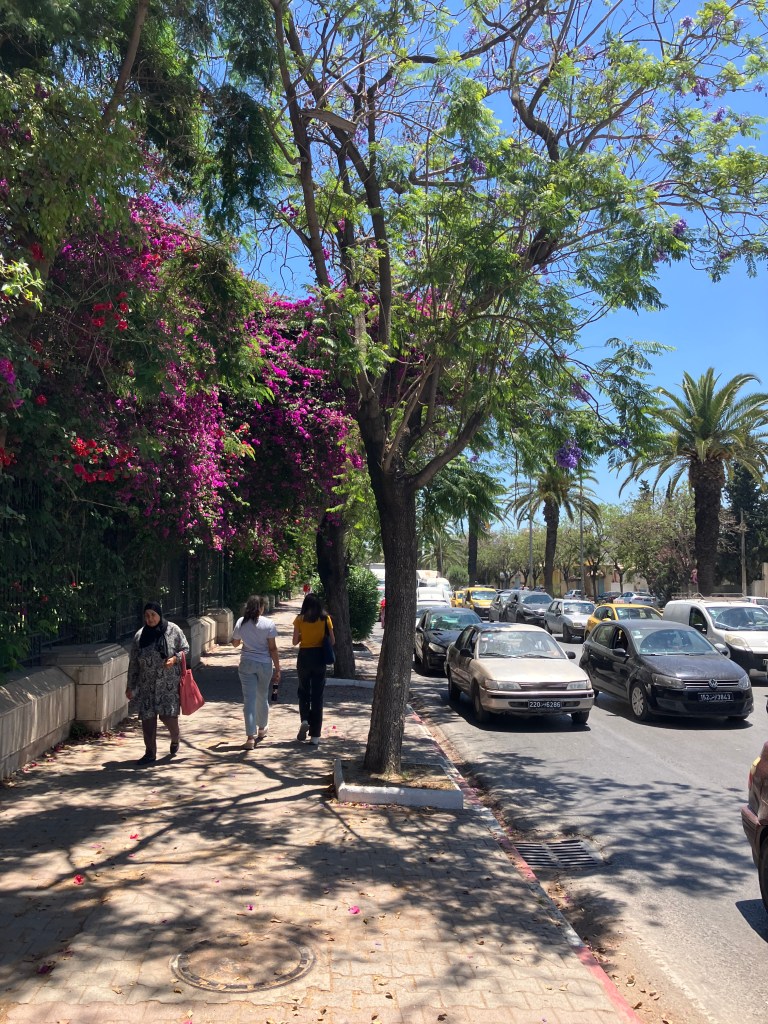
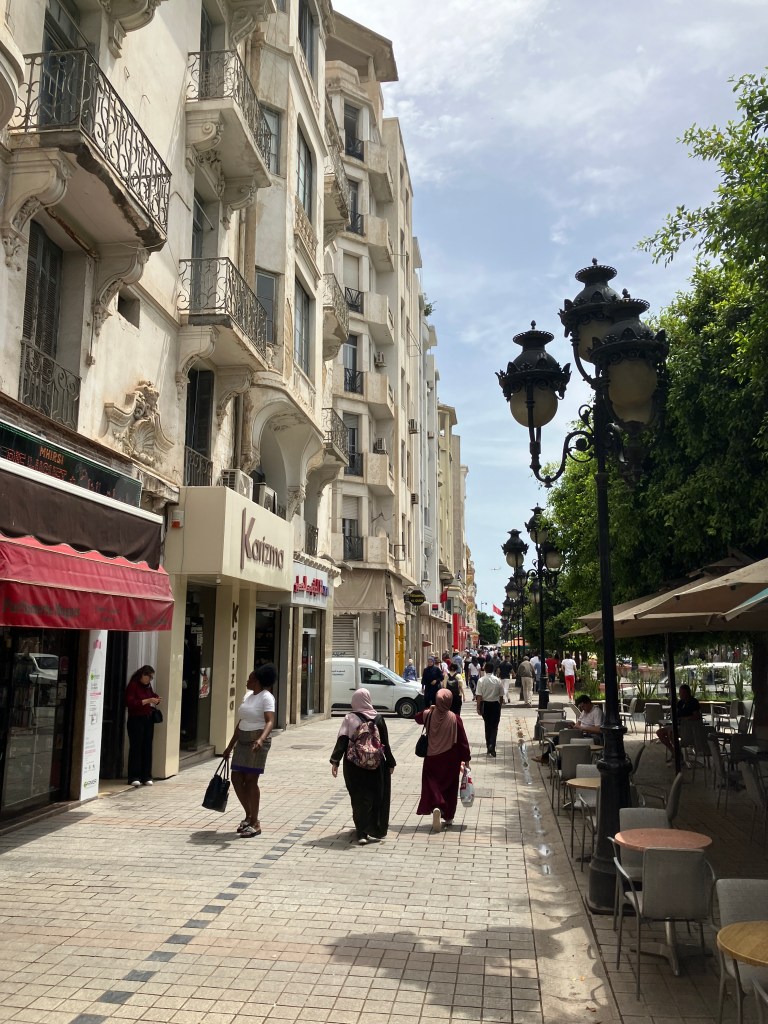
That night I went out looking for dinner. After about 20 minutes I threw in the towel on spontaneity and opened Google Maps. Which also wasn’t much help. After some time I arrived at what I thought was a spot for a restaurant. No signs in the alley that would indicate a restaurant was there. Just some large double doors cracked open a bit. Taking a chance, I crack it open to peer inside. Suddenly a man springs out and greets me.
“Restaurant?” I ask.
“Yes!” he exclaims with a smile.
So I walk in to find a corridor with a metal detector. I hesitate, but he continues to beckon me through. I set off the metal detector with my phone and keys. The man just says, “Do not worry my friend!” And I follow him in.
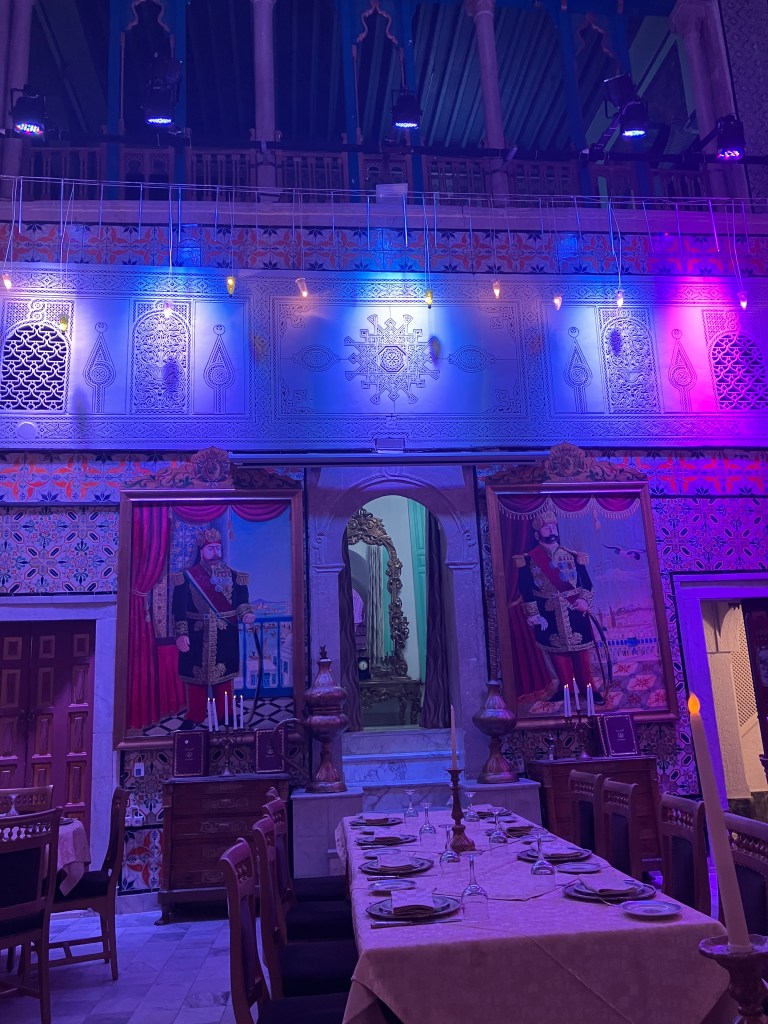
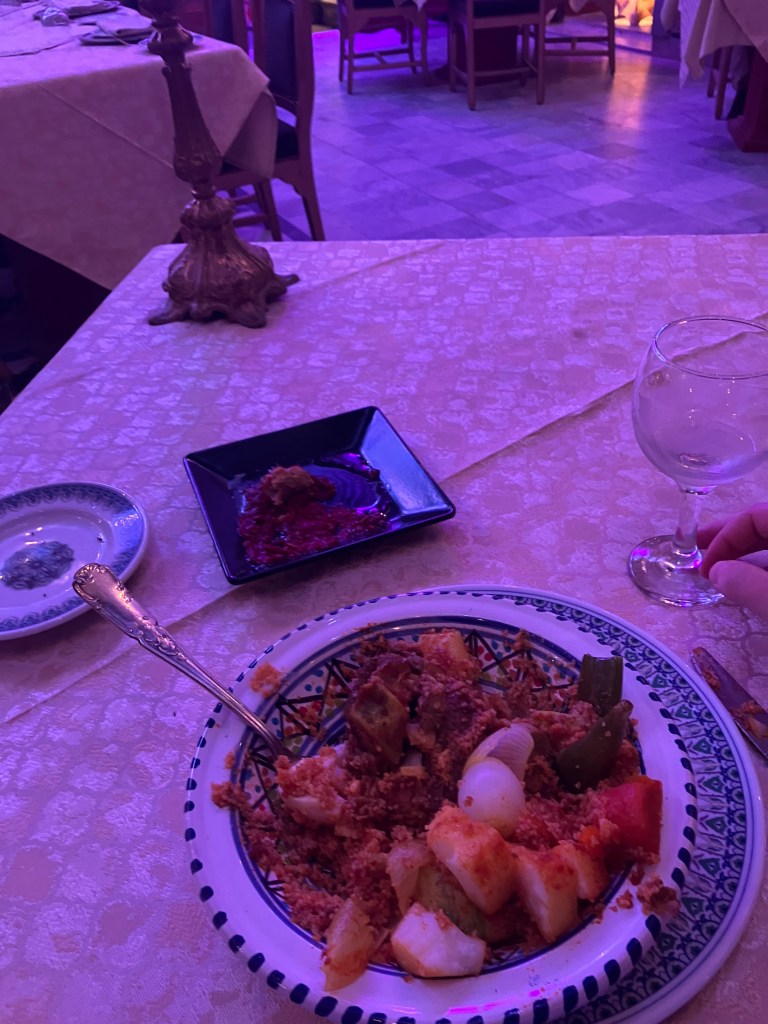
He led me to a grand room with high ceilings decorated with paintings and mirrors. Ornate golden decorations and picture frames made it all feel very regal but also a little tacky. I was one of three occupied tables. A man with a guitar played beautiful tunes while I ate my lamb couscous. All in all, quite a lovely experience.
Not all my meals were like that, but finding a meal was always like that. Google maps, usually old reliable, was a non-factor for restaurants in Tunisia.
The next day I would see the ancient ruins of Carthage. For those that don’t know, Carthage, capital of the Phoenicians, long ago was Rome’s greatest rival. This was only a twenty minute drive from the old town of Tunis. I highly encourage you to read about it or watch some youtube videos. I could spend several blog posts on Carthage and Roman history, but here are the quick hits:
- The Phoenicians/Carthaginians were savvy traders and once the world’s greatest sailors.
- The modern alphabet was invented by the Phoenicians, hence Phonetic spelling.
- Rome saw them as their greatest threat in the Mediterranean – and the world.
- Particularly they feared one man: Hannibal Barca.
- Considered to be one of the greatest generals in human history, Hannibal sought revenge for the death of his father at the hands of the Romans.
- Hannibal led an army, including war elephants, over the Alps into northern Italy at a time when those mountains were thought to be impassable.
- For fifteen years Hannibal never lost battle in the Italian Peninsula with no supply line or any logistical help from Carthage.
- The only way Rome defeated him was by laying siege to Carthage itself and drawing Hannibal out back across the Mediterranean.
- After finally defeating Hannibal, Rome, terrified of a Carthaginian resurgence, burned the city down to its very foundation and sold all its citizens as slaves to the far reaches of the empire.
- Later, realizing it was a pretty good spot for a city, Rome built its own on top of the ruins of old Carthage.
- A few centuries later Rome falls, leaving more ruins. And so it goes.
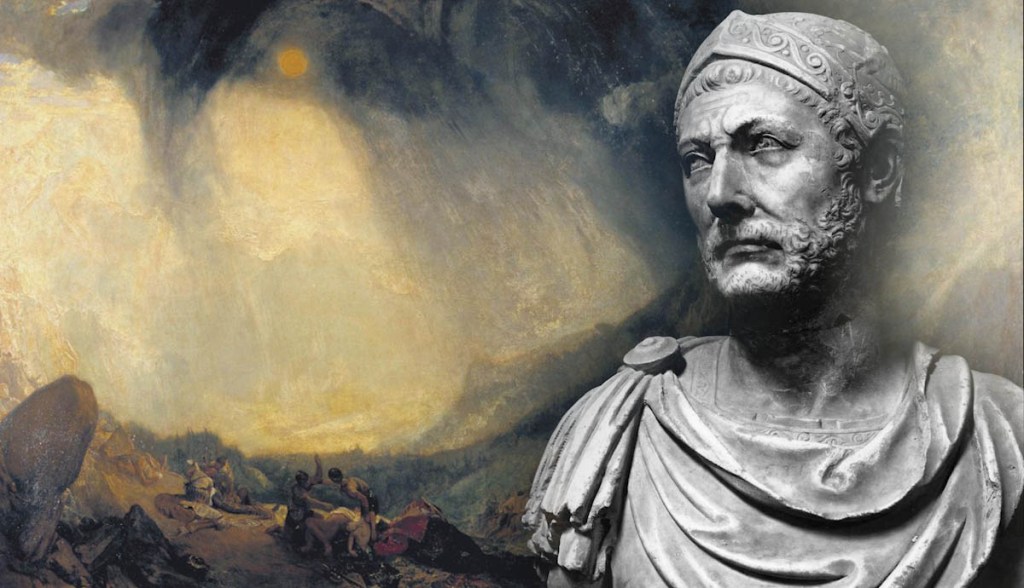
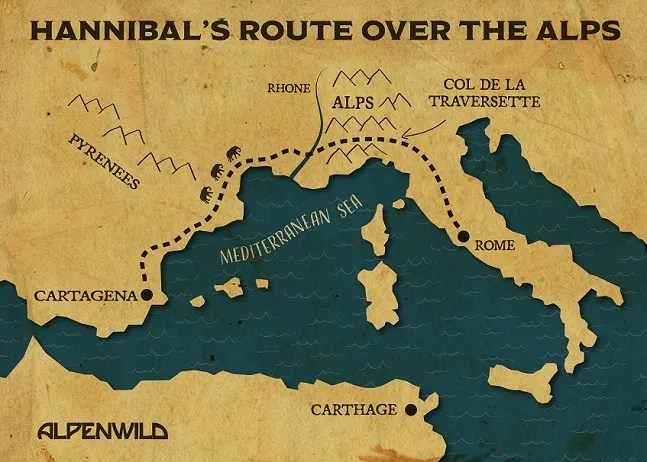
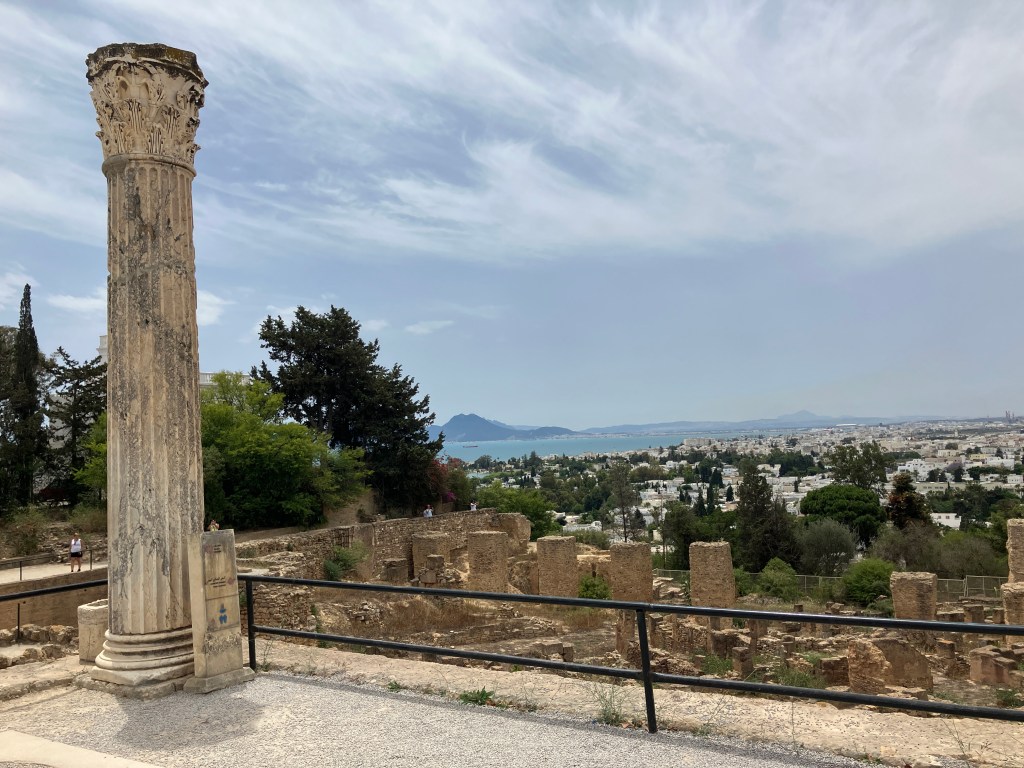
So naturally, I had to see the birthplace of the man who went toe-to-toe with the greatest military the world had ever seen in 200 BCE. The site of the oldest ruins sat on a hilltop overlooking modern Tunis. Right on the coast, Mediterranean climate, views for miles, they knew what they were doing. There is, unfortunately, little left of the original Carthage. As I mentioned, the Romans very intentionally tried to erase them from history. Not much besides some stairs and a few stone columns.
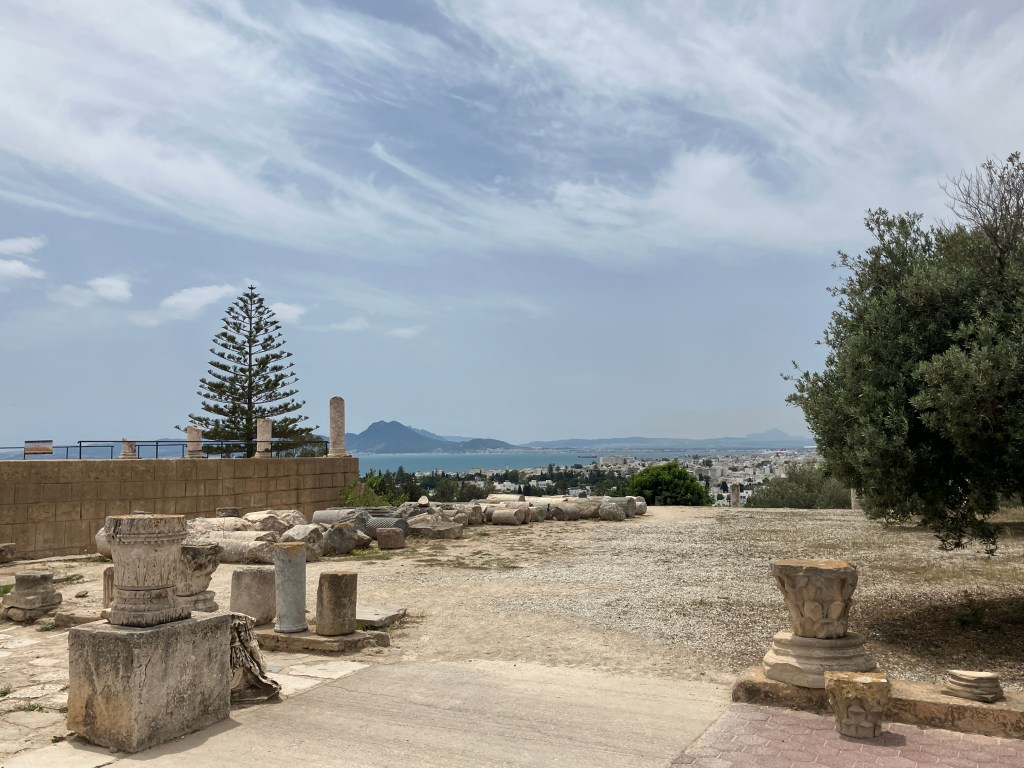
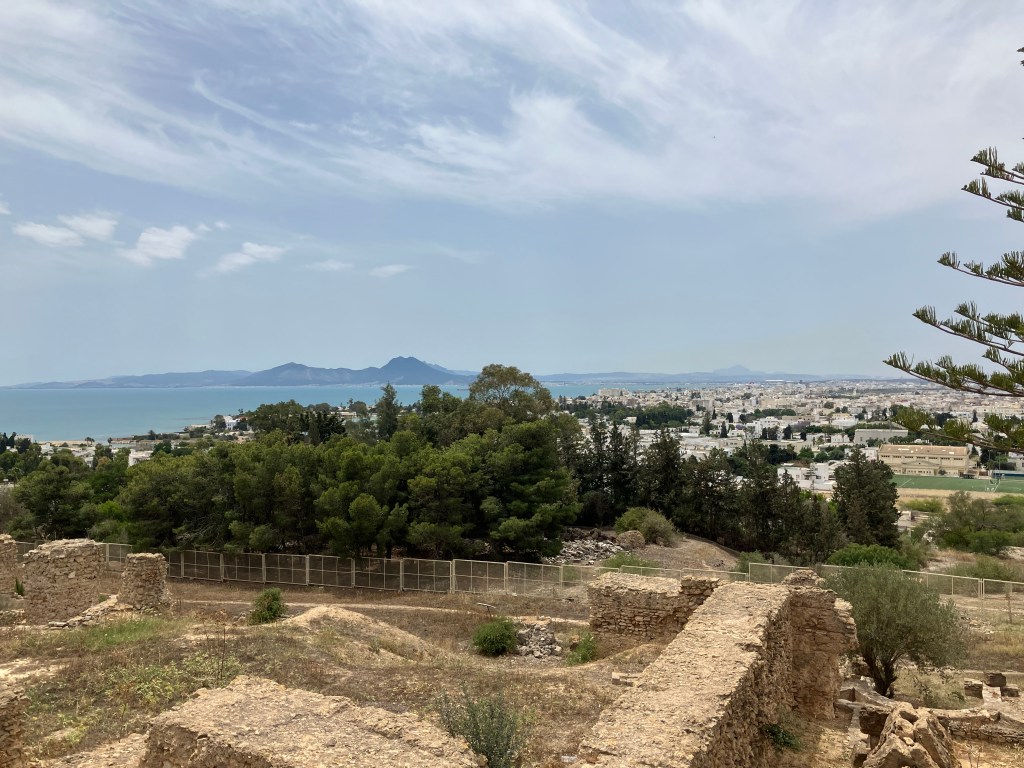
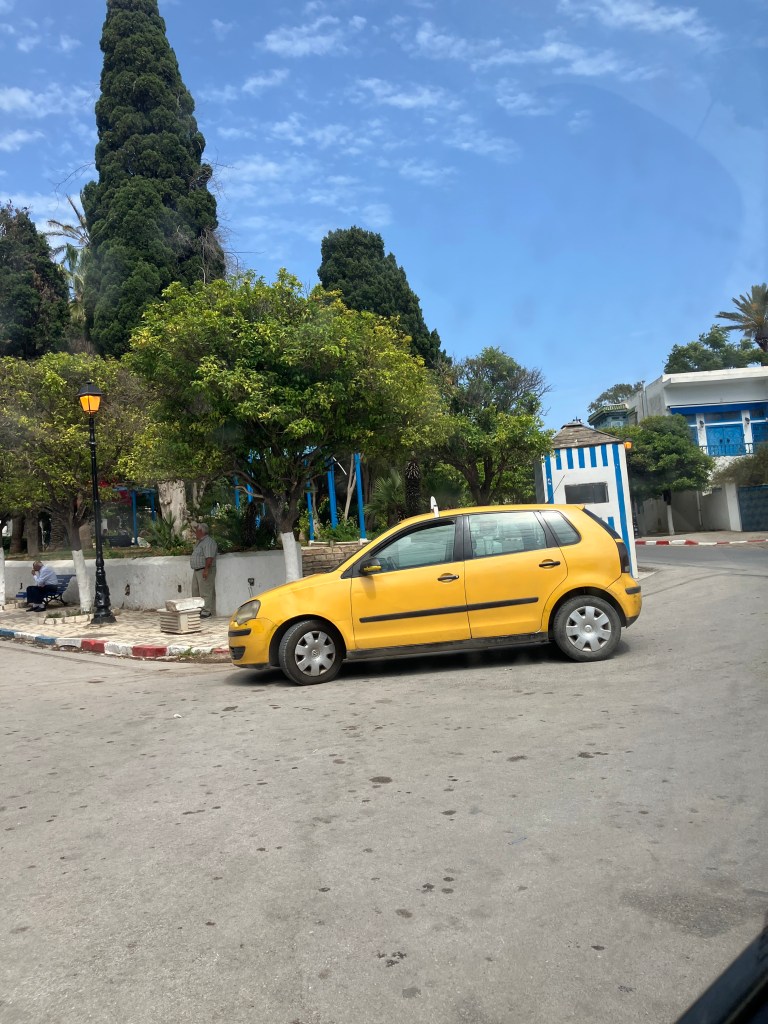
There were several ancient Roman sites around the area that I planned to visit that day. As I began my walk, a man in a taxi saw me and pulled along side me. At first I tried to ignore him, but he was one of the better English speakers I encountered. He asked where I was going and I told him I was walking to see the other ruins. He said it was too far to walk, and if I paid him $40 he would drive me around to all the sites all day. I was of course wary of being scammed, but it was hot out, and he seemed nice enough.
He wasn’t lying, each site would have been a very long walk, and it turned out to be a great deal. He drove me to each site, told me the name of it, then waited in the car until I was done walking around. I suppose $40 might be more than he makes in a whole day. Anyway, his name was Mohamed, he has two daughters, and was overall very friendly.
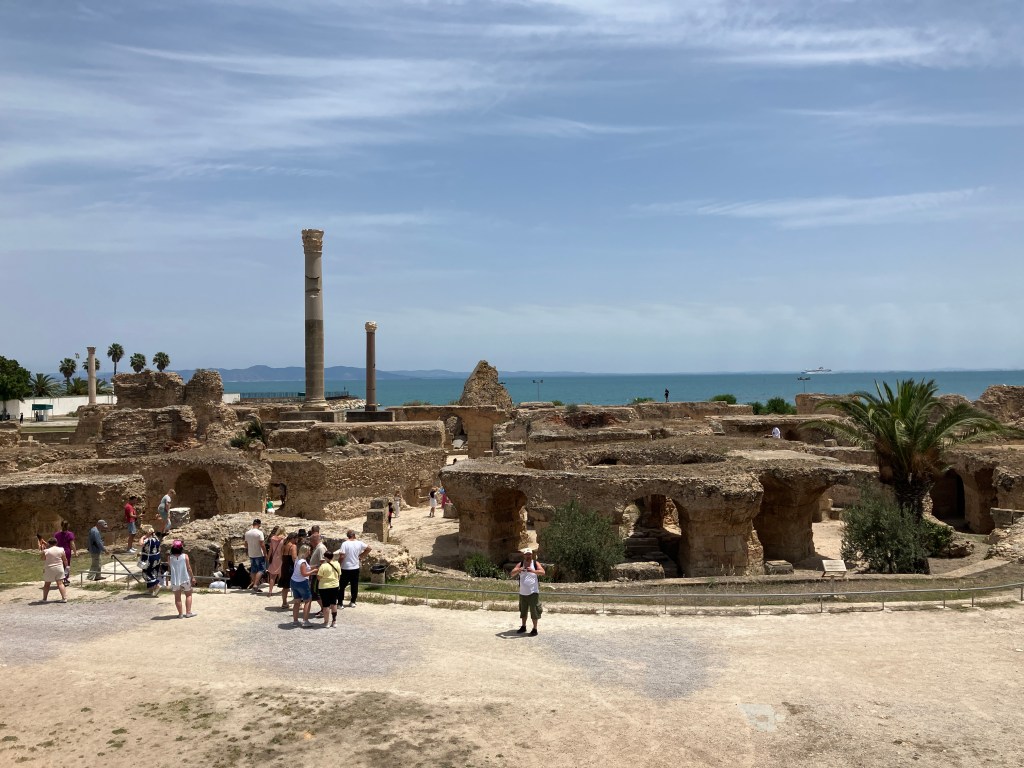
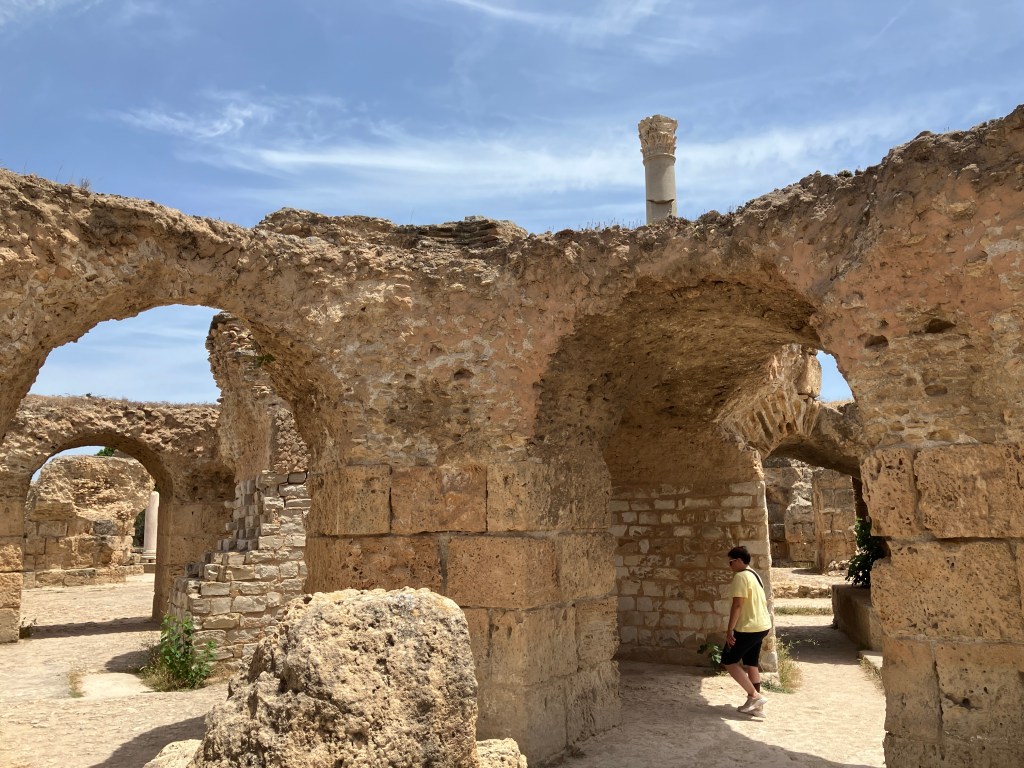
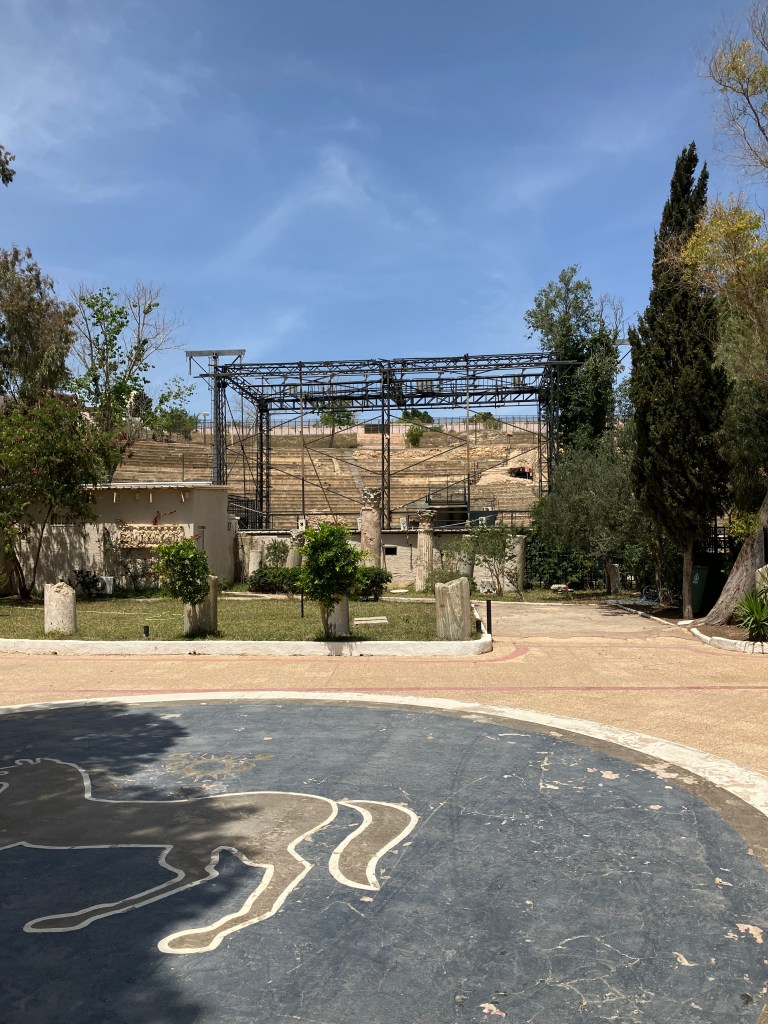
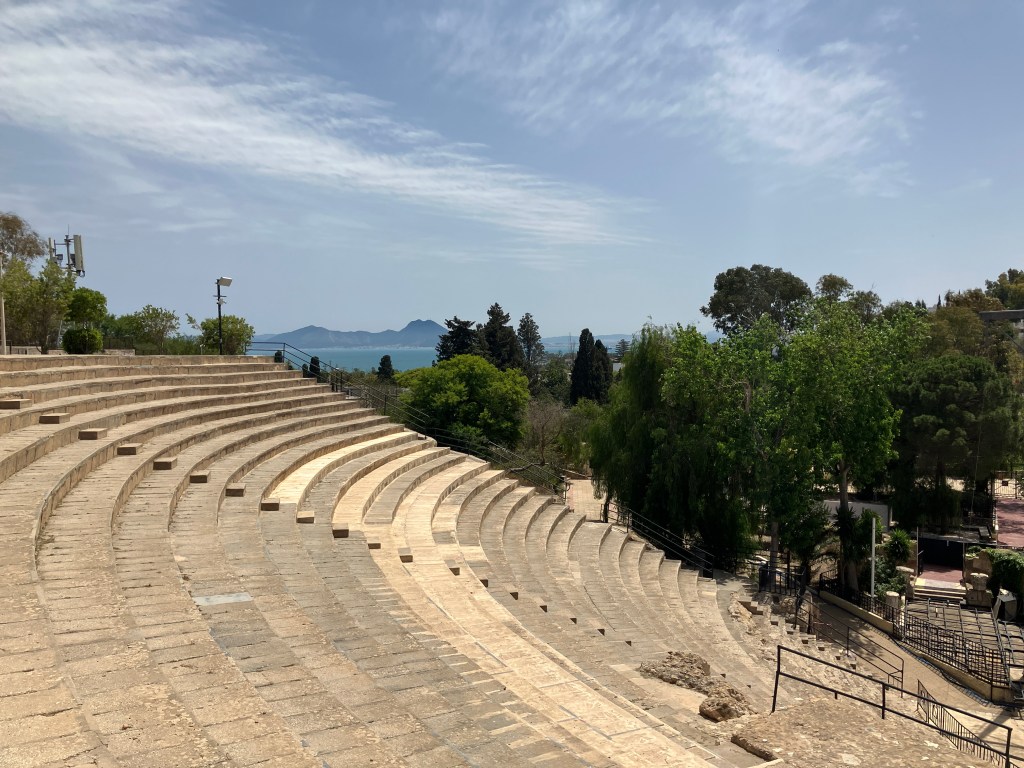
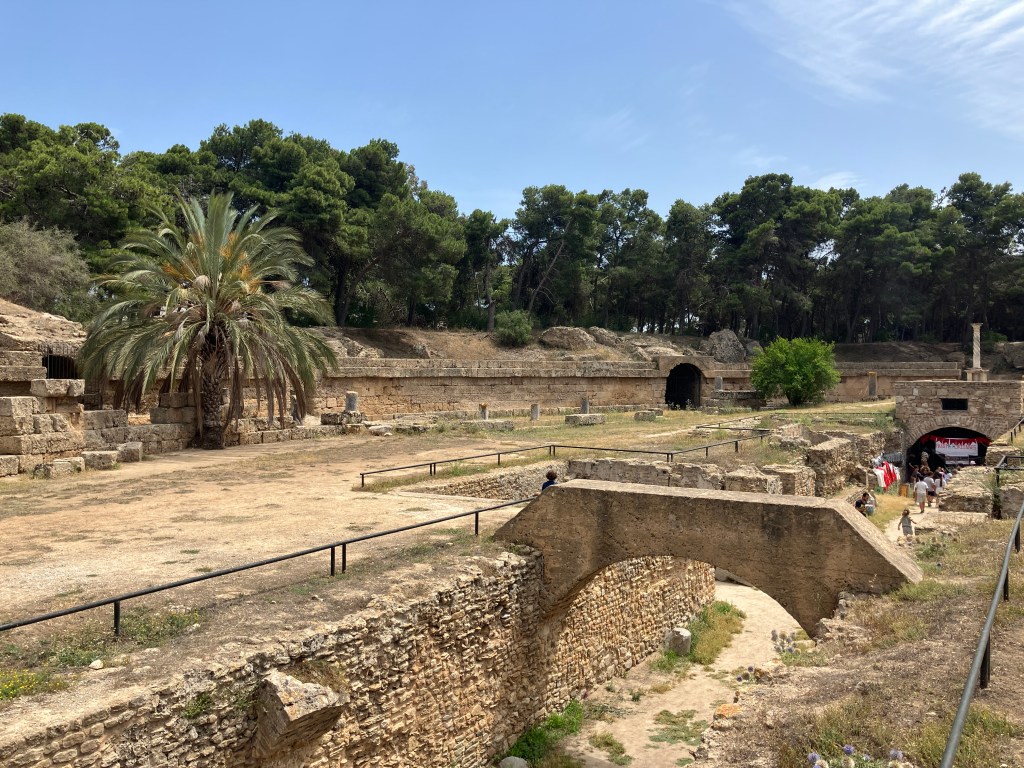
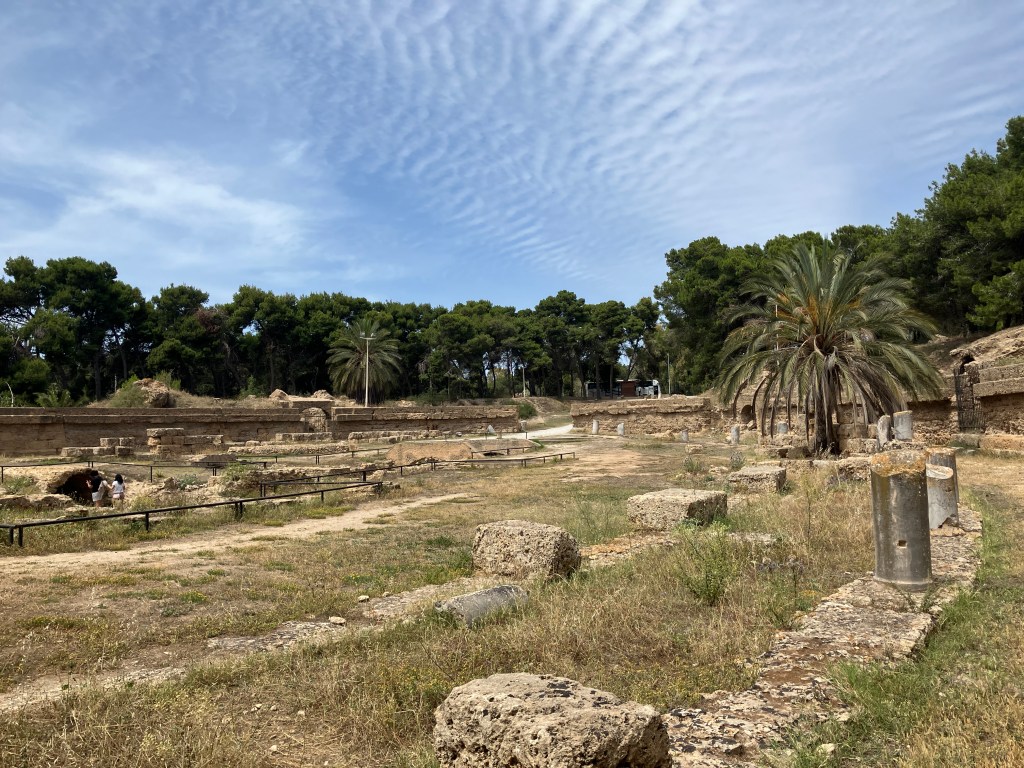
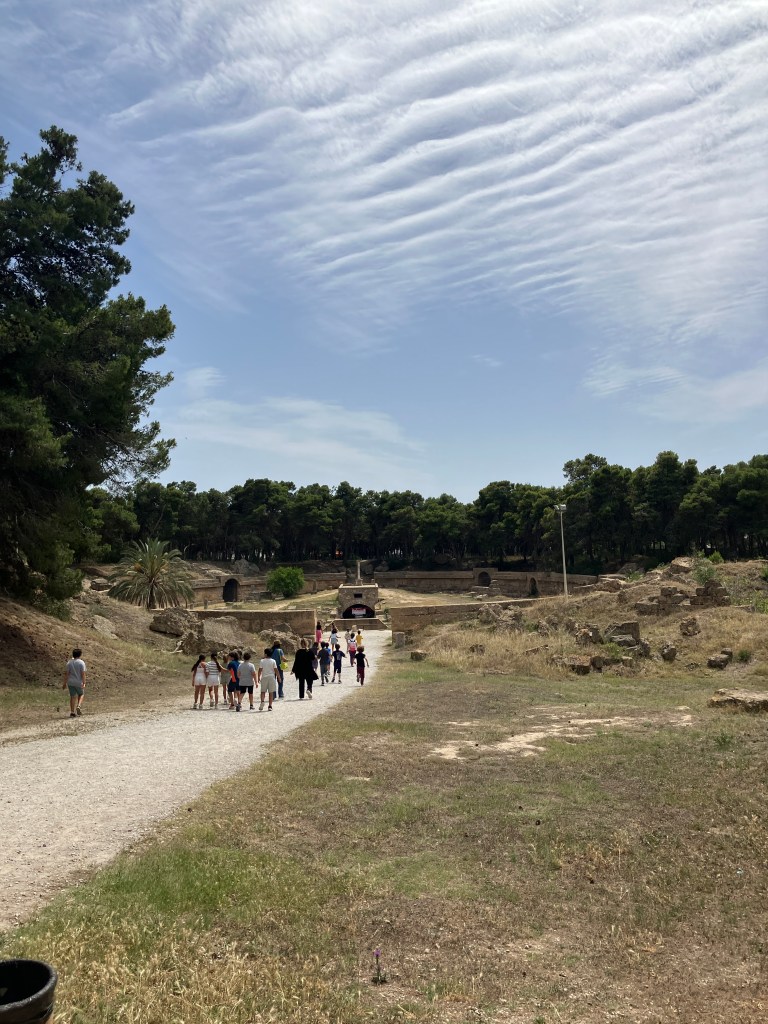
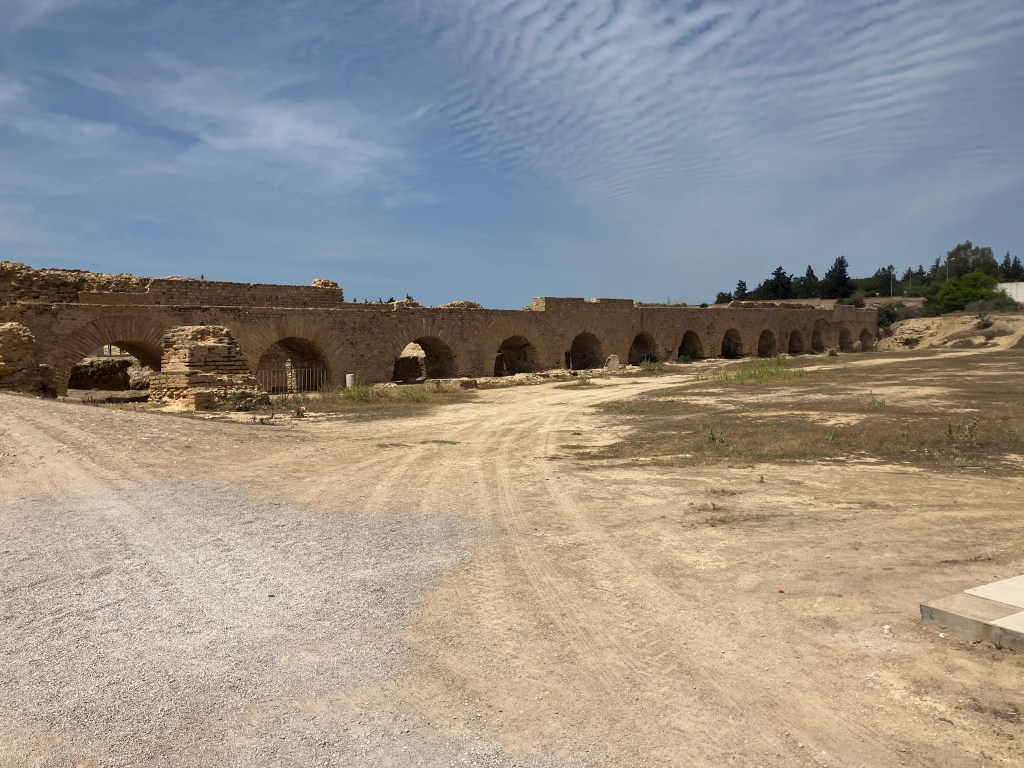
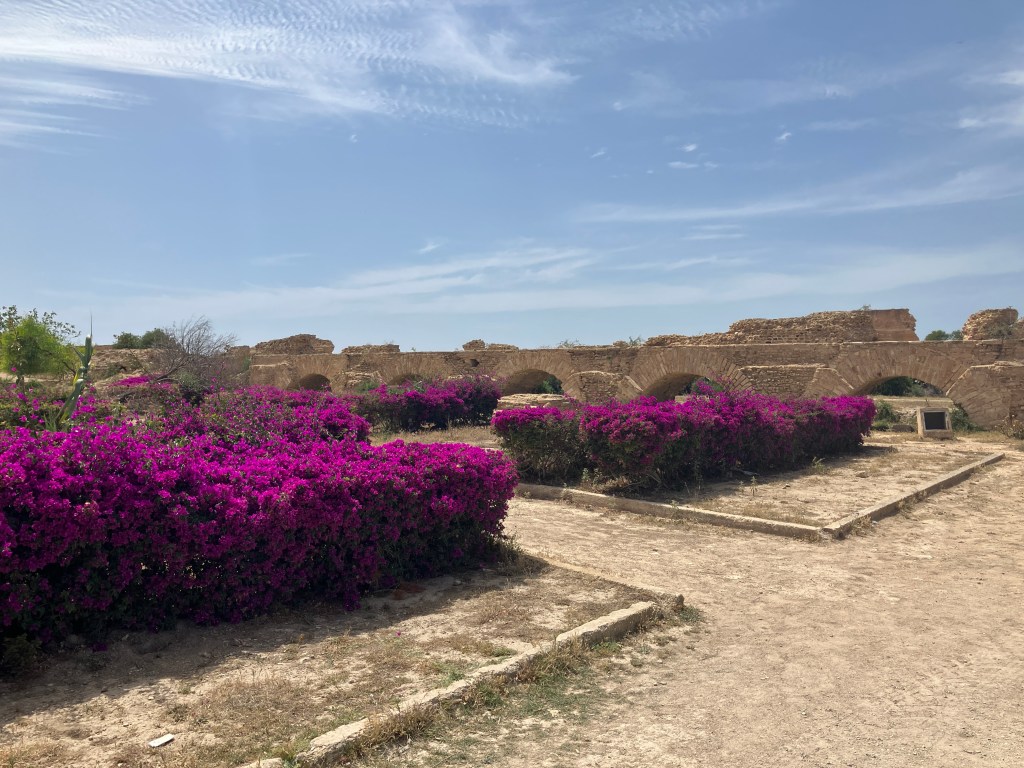
First were the old Roman baths. It’s hard to picture what it was like, because the arches covered a large area and were all sizes. I suppose it was a large complex with many rooms and many sizes of baths where people just hung out. I also saw some old Roman villas, a Lion fighting pit, an aqueduct, the old harbor of Carthage, and an amphitheater that is still in use today (shout out Roman engineering). They were in varying degrees of decay, with the amphitheater probably in the best condition. But all were enough to spark the imagination of what life was like 2,000 years ago.
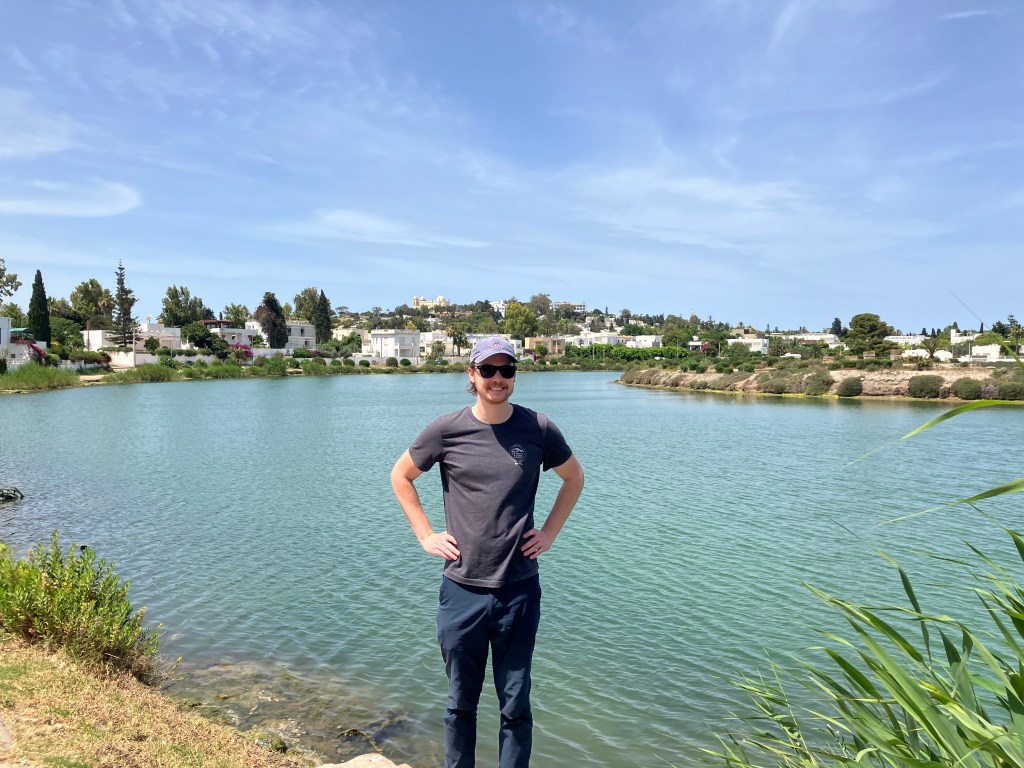
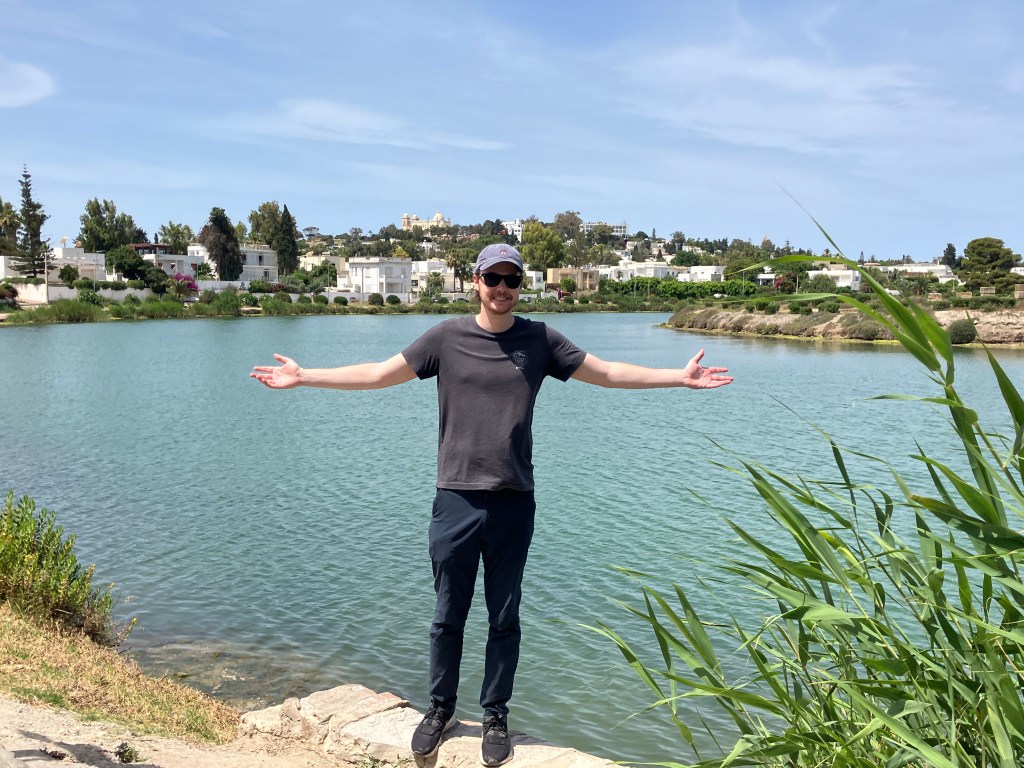
Around one or two in the afternoon, he dropped me off at the top of a large hill overlooking all of Tunis. I tipped him well and thanked him and then walked into what I would describe as Tunisia’s Santorini. The buildings covering the hillside were all white with blue trim, almost uniformly. Beautiful flowers and well-maintained vines hung from windowsills and wrapped around archways. Most of the streets were narrow cobblestone with room enough only for bikes and pedestrians. People milled about but it was not crowded. Vendors sold their artwork and clothes and jewelry on the front doors of their shops. The day was bright and the sky matched the blues of the doors, windows, tables, and chairs.
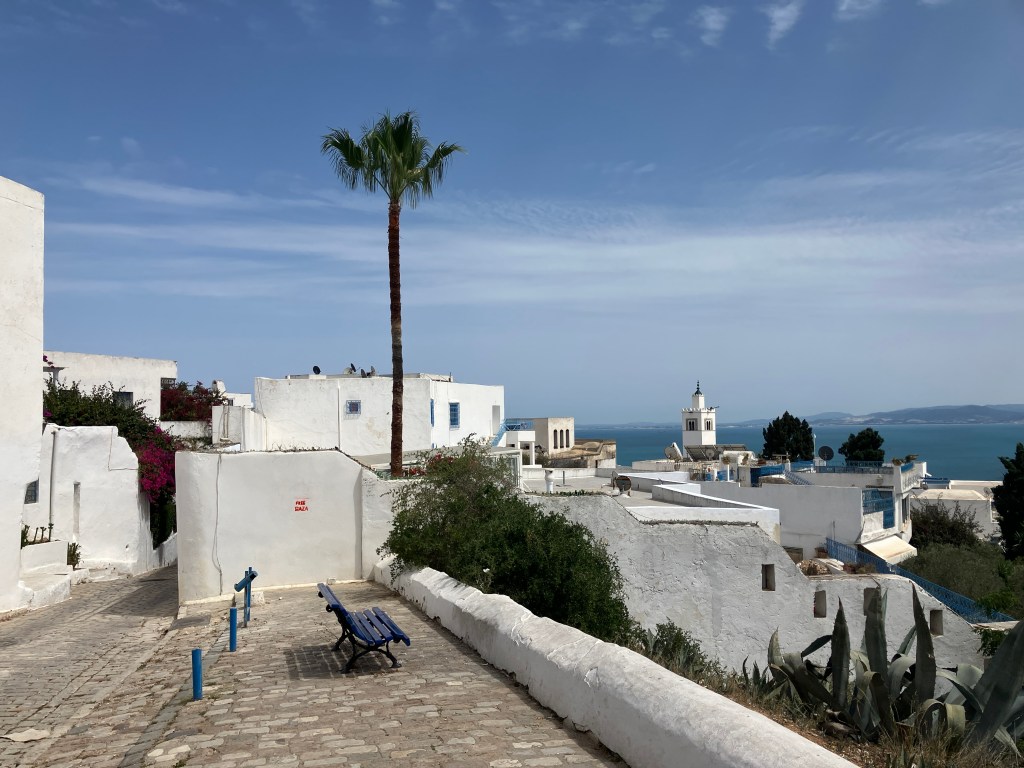
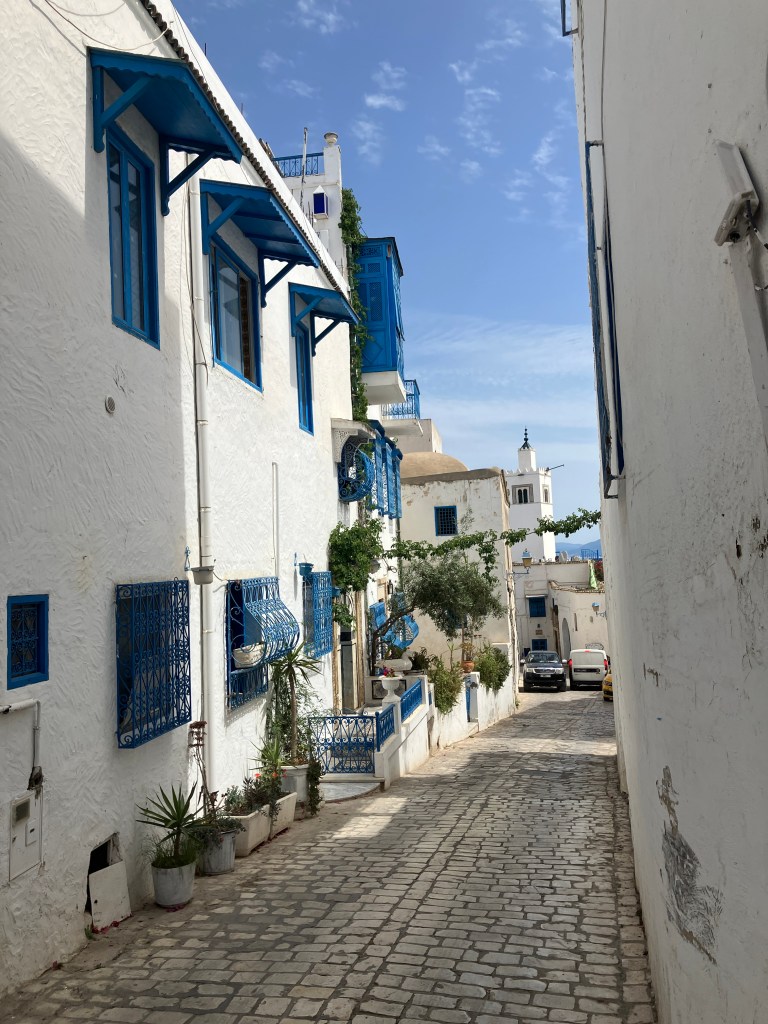
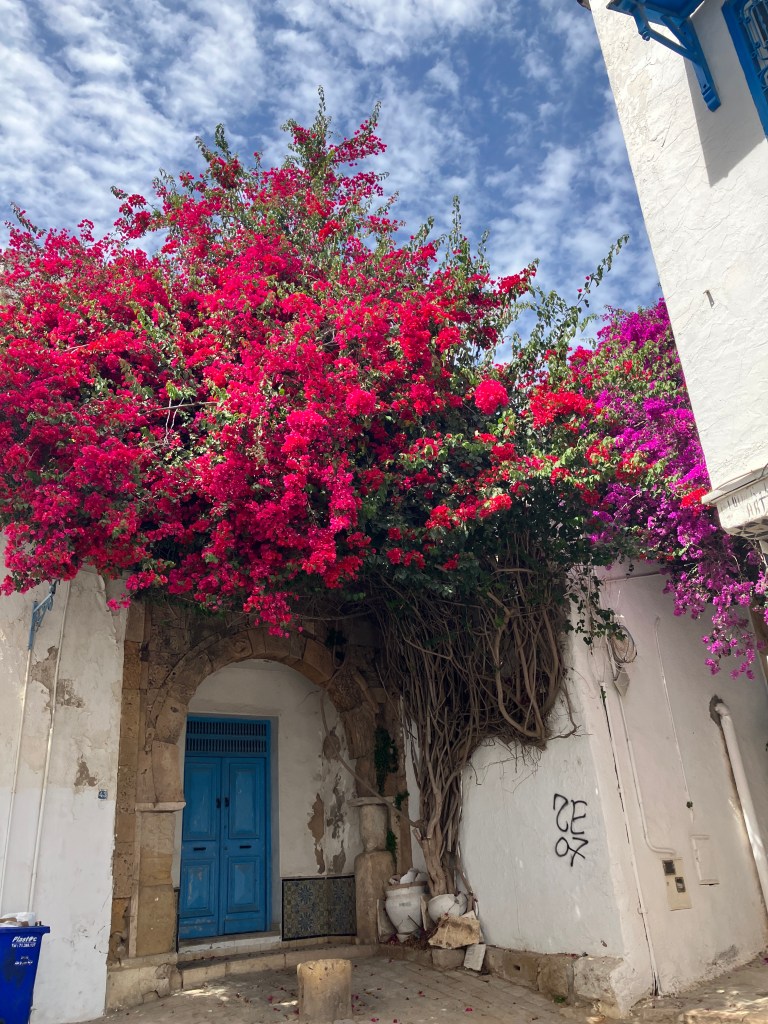
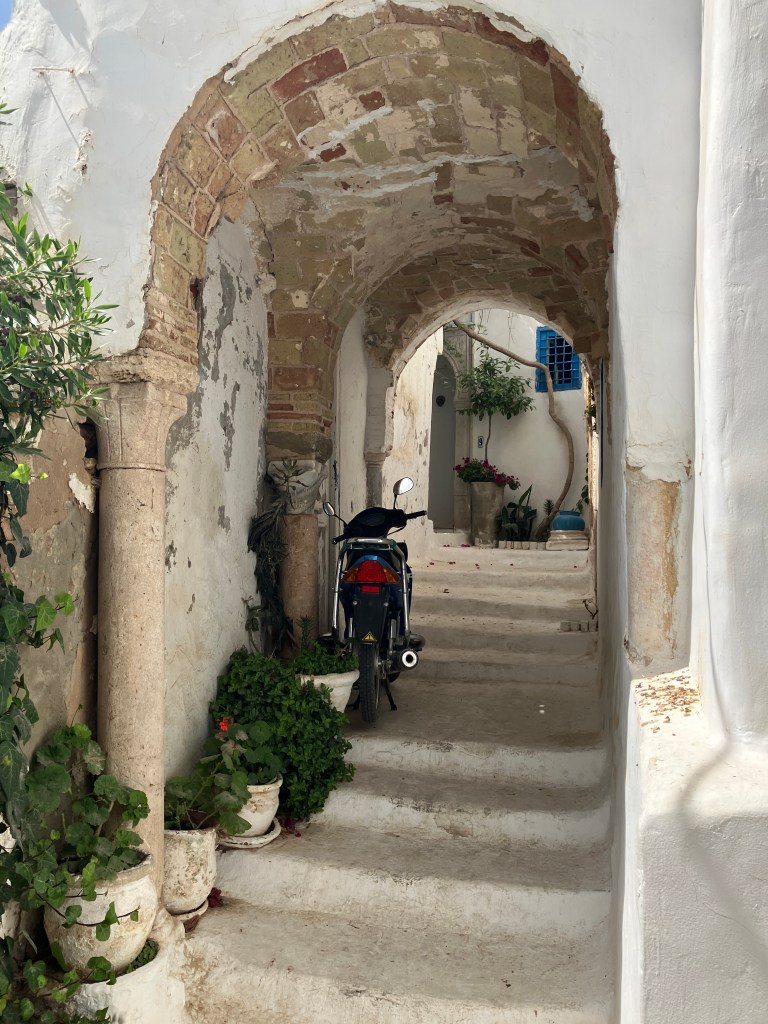
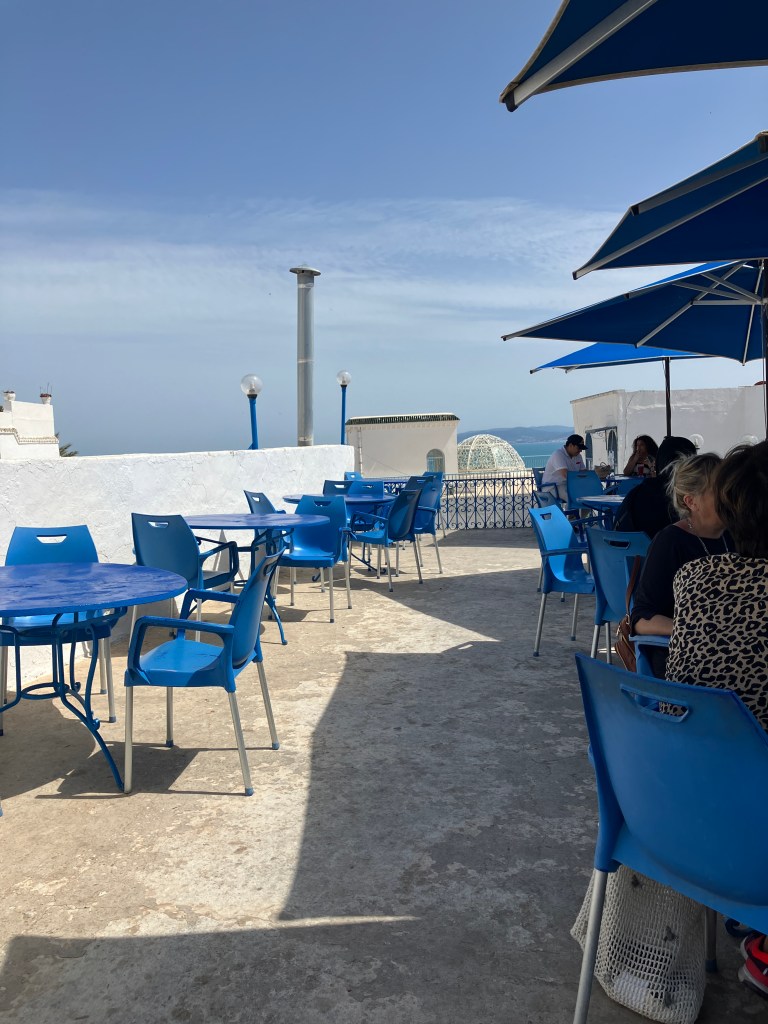
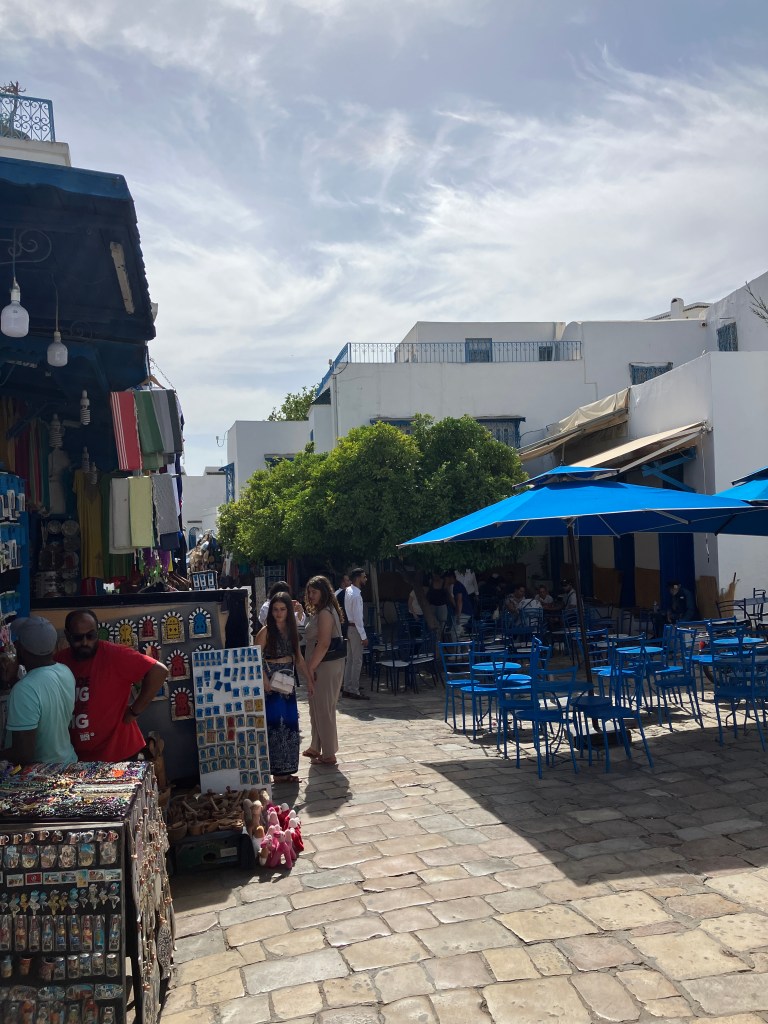
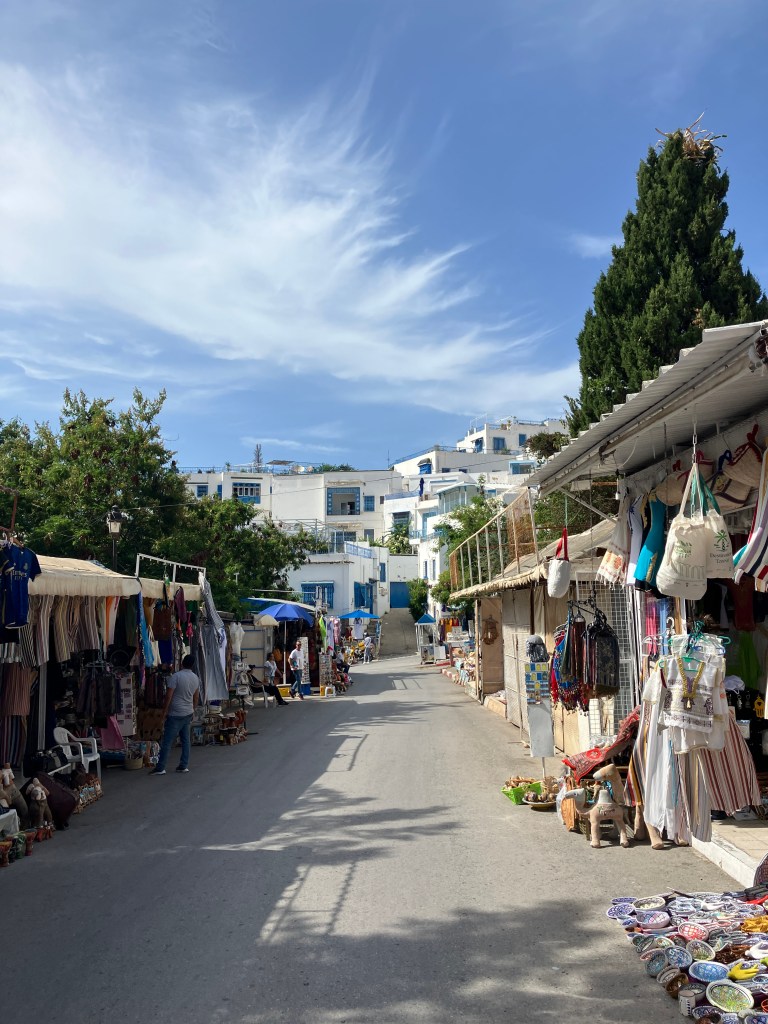
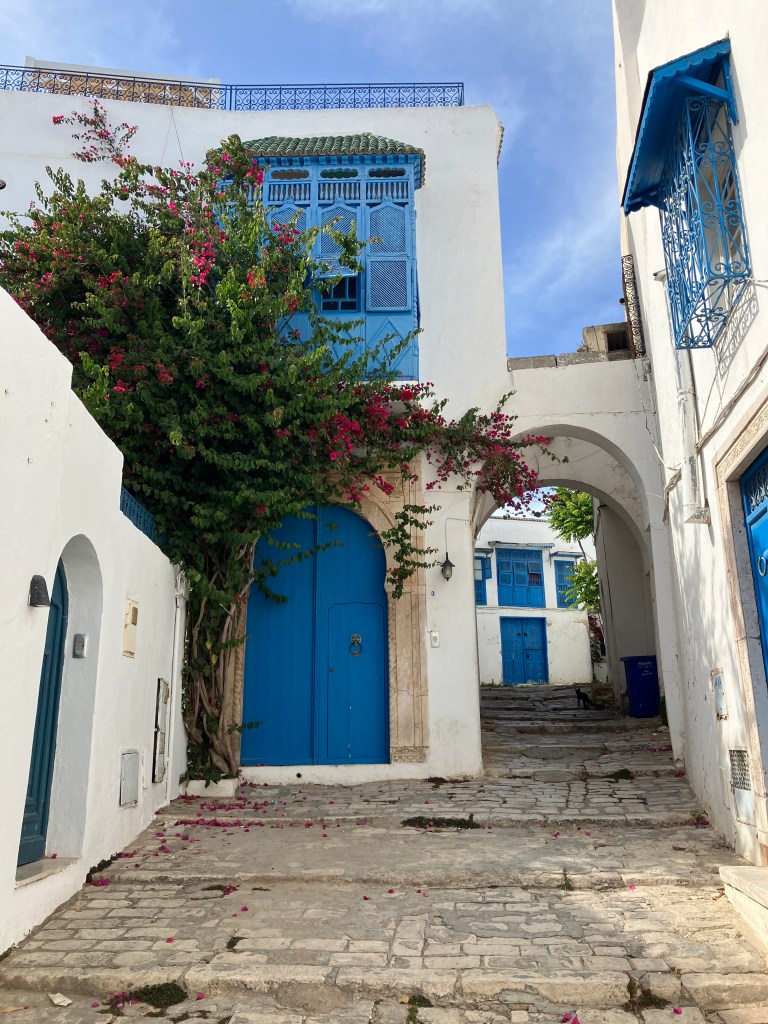
The neighborhood is called Sidi Bou Said. I ate lunch on the rooftop of a place recommended by Mohamed. A hint of a breeze cooled each spoonful of cous cous before it reached my mouth. All I could see was the calm ocean and the rooftops of Sidi Bou Said. Accompanying me during lunch was a opportunistic cat who got more than a few pieces of chicken out of me. It was lovely day.
That evening I had dinner at the hotel. I would have caved at the first McDonald’s had I seen one. But the hotel was the easiest place for a meal that night. I daydreamed of Big Macs as I picked the fish bones out of my teeth from my fish filet. Every piece of meat in nearly every meal I ate was 50% bones. Tunisia made me realize how much I take for granted. How simple food in the US is. The beer I ordered was a paltry 8 ounces. So naturally I ordered another. This drew a thinly veiled look of judgement from the waiter.
I could only laugh. I’m sure he has his vices too. But sitting alone in that empty restaurant I felt very far from home.


 The Odysseys of an Average Person
Leave a comment