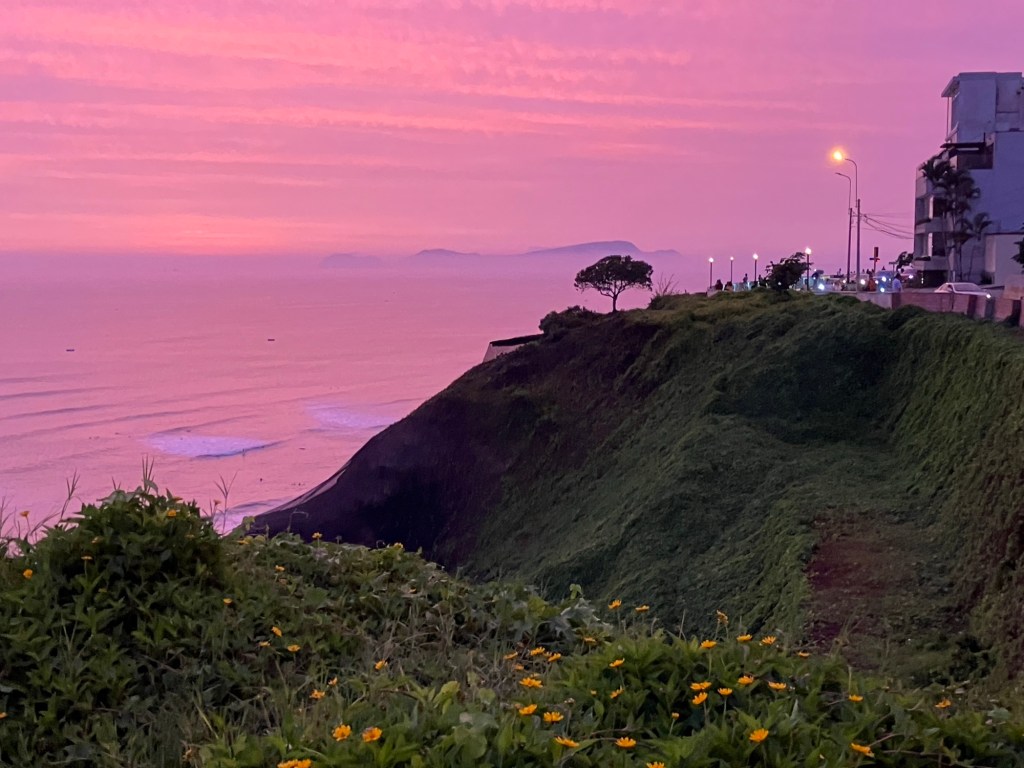
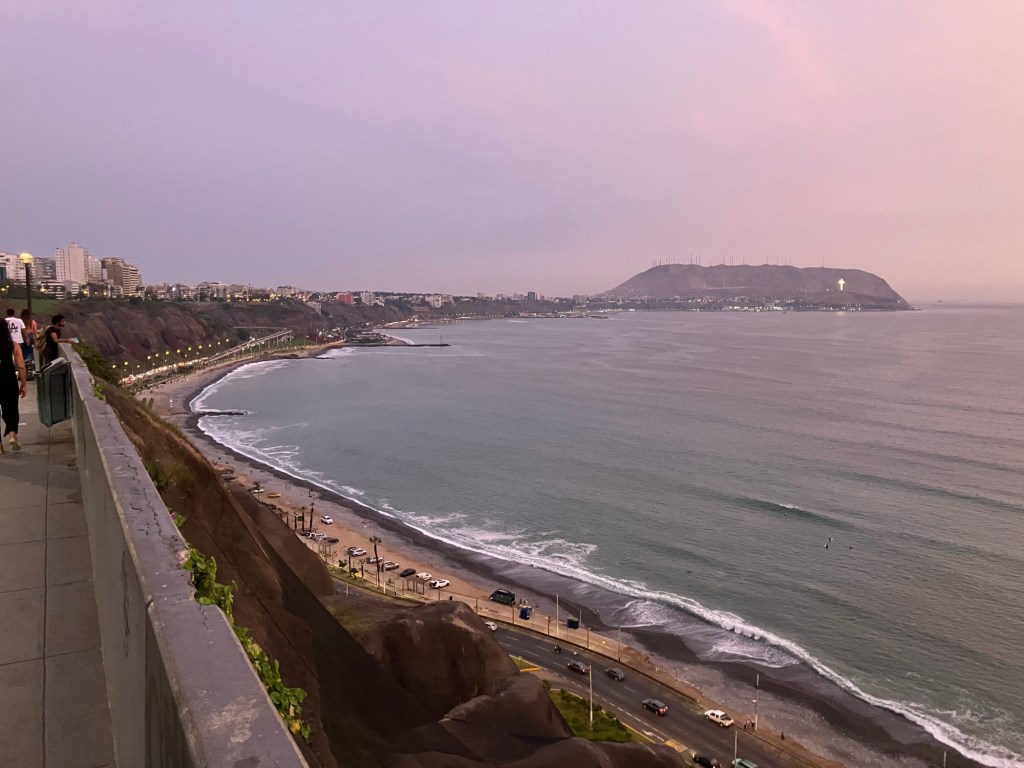
Did you know Lima, Peru is the second largest desert city in the world behind Cairo? I didn’t. 12 million people. I did little to no research about Peru before I went. I didn’t know that Lima gets only nine hours of rain per year and they have no gutters or drainage in the streets. No buildings have slanted roofs. Not a single blade of grass grows on the barren hills outside the city limits. The city rests in a constant smog on the cliffs overlooking the ocean. The infrastructure is limited. Most of the buildings are lackluster. Everyone drives like their wife is in labor.
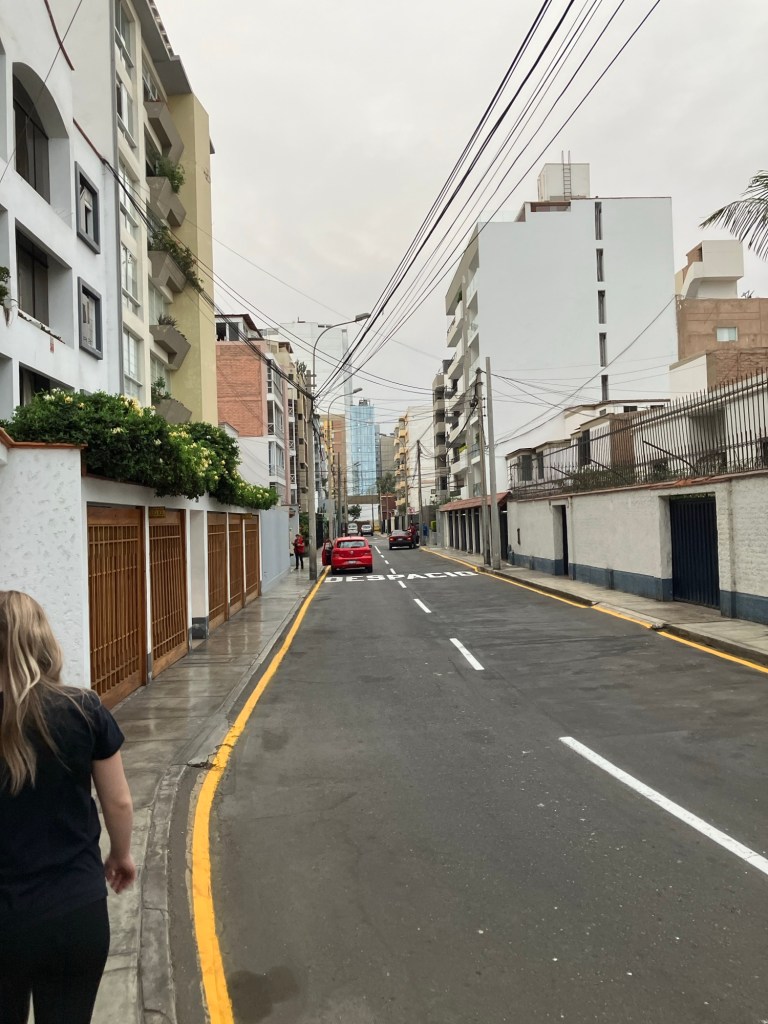

Let’s talk about the driving before we dive in. These are the most insane drivers, rivalling Vietnam. Like if a Peruvian was driving in the US and cut you off the way they normally drive, you would be thinking about what an asshole that guy was weeks later. There is no “right of way”. You are either physically occupying space or you aren’t. Honking doesn’t mean “hey don’t do that”, it means “hey I’m about to do that so get the hell out of the way”. One cab driver I had was unsatisfied with the traffic he saw in front of him, so took a detour through a construction site. Like threaded the needle between cones and warning signs and zipped by a bunch of confused and angry workers. I suppose when everyone drives crazy, then no one does.
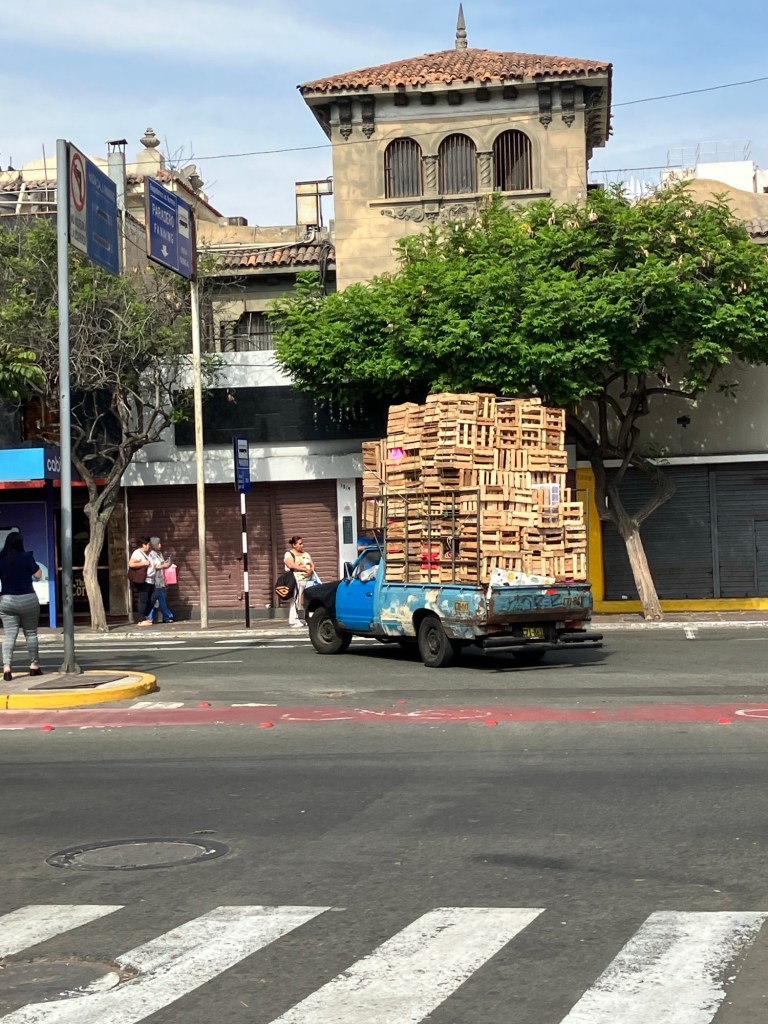
Drivers and architecture aside, there is a depth of aura beneath the surface of the city. And I don’t necessarily mean the catacombs. If you were dropped into a city like this with no prior knowledge, kind of like we did to ourselves, it could appear chaotic and even unpleasant. It does not boast majestic landmarks or towering skyscrapers or a polished shine. But the more time you spend there, the more it grows on you. Did you also know that Lima currently has three of the top ten restaurants in the world? The food is incredible. The history is long and fascinating. The people are ethnically diverse but universally friendly. Like, rivalling Ireland in terms of friendliness. I’m still trying to reconcile this with their driving behavior.
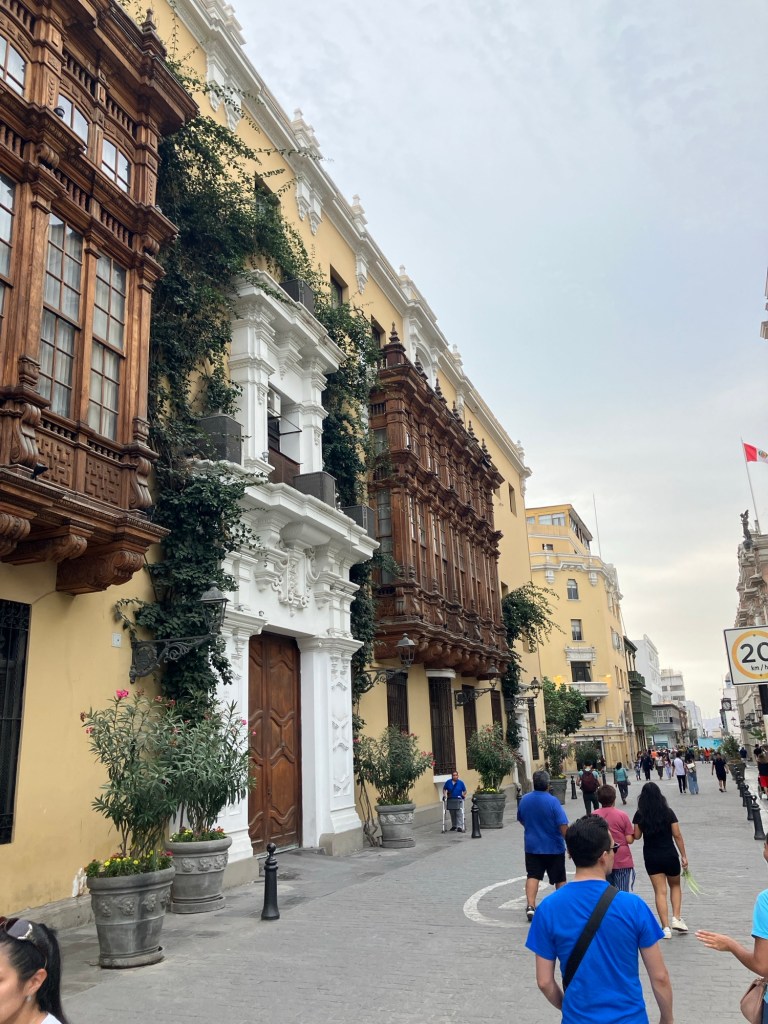
Monika and I stayed in Lima for about three weeks. Our airbnb had no AC, which I was pretty upset by until I learned that almost no buildings in Peru have AC. It took me about two and a half weeks before I got used to waking up drenched in sweat. I mentioned the lackluster architecture in many parts of the city, which initially makes it difficult to assess the relative safety of a neighborhood. Are the loose wires hanging in the streets and paint peeling off of walls a symptom of this neighborhood or the entire city? What is a bug and what is a feature? What I quickly found is that the people around you will clue you in. Mothers pushing kids in strollers. Old ladies walking arm in arm. People going for jogs at night. Turns out we were in one of the nicest neighborhoods in the city: Miraflores.
And I don’t mean to rag on Lima based on looks alone. There are plenty of cities in the US with good infrastructure that totally suck. But that’s kind of my point with Lima. All the character is beneath the surface. Taking your first bite of Ceviche in a dingy restaurant is like the girl taking off her glasses in a movie revealing she was hot the whole time.
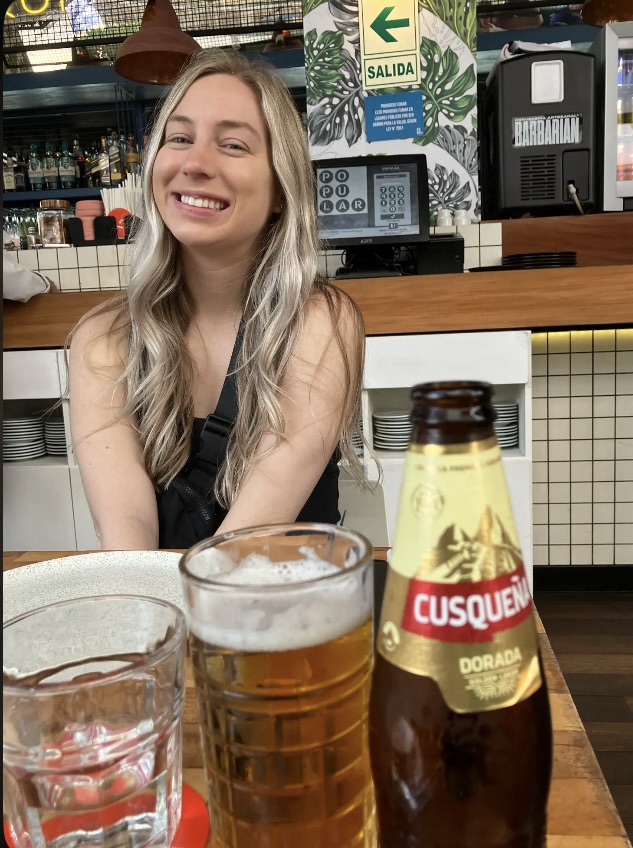
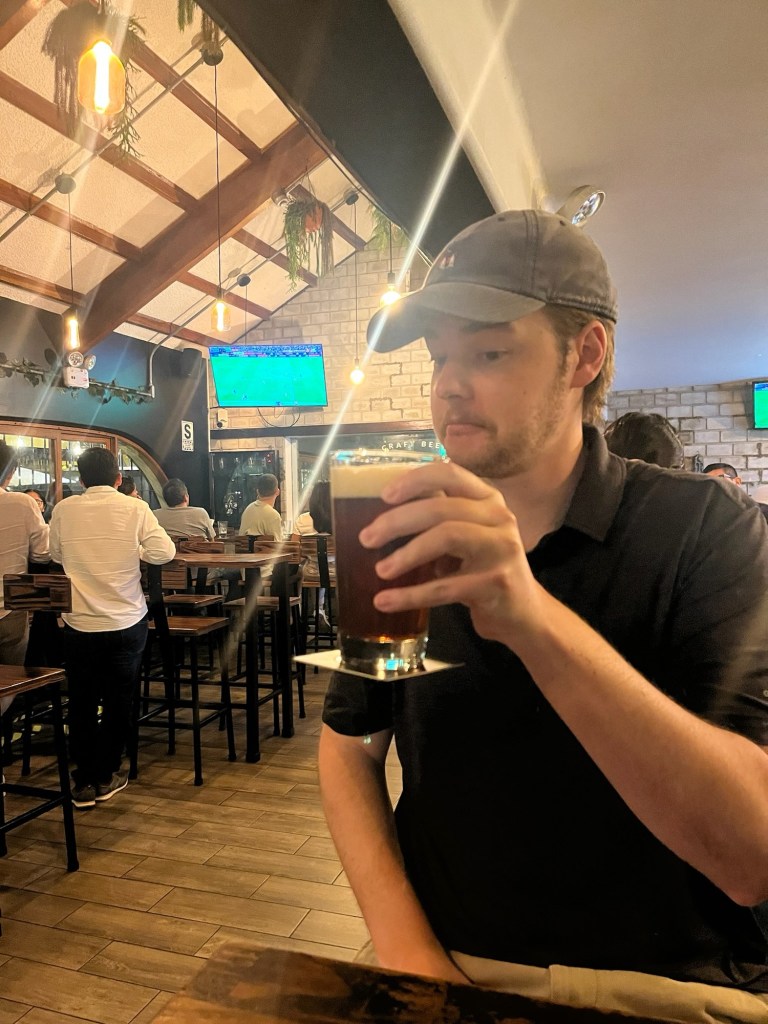
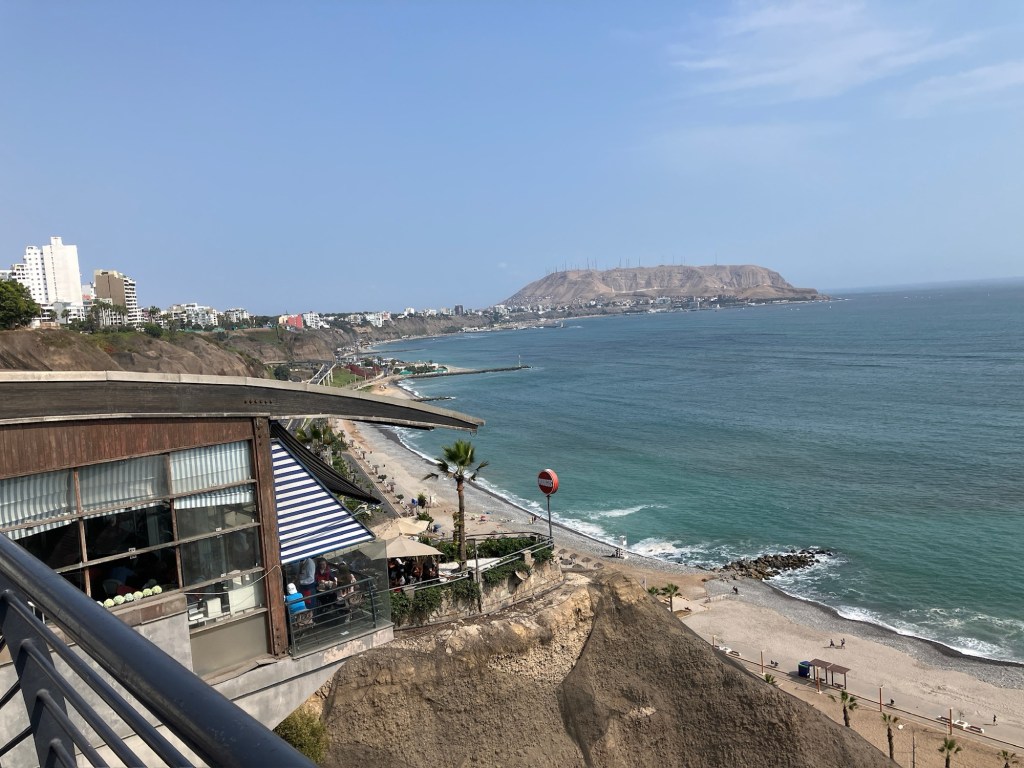

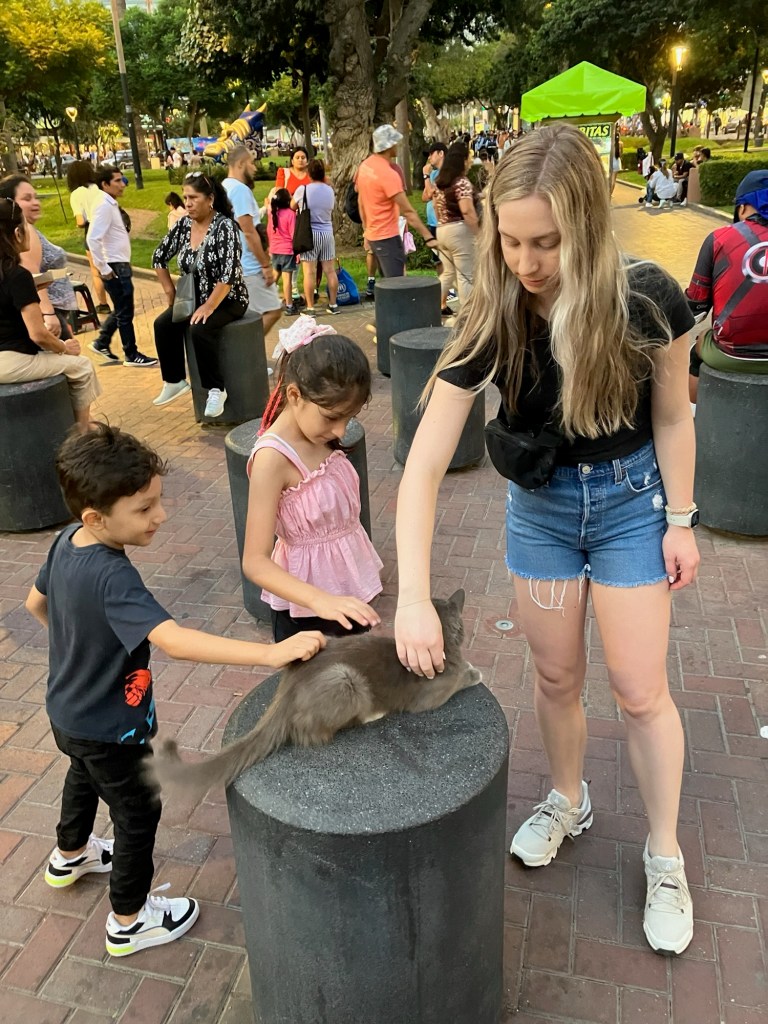
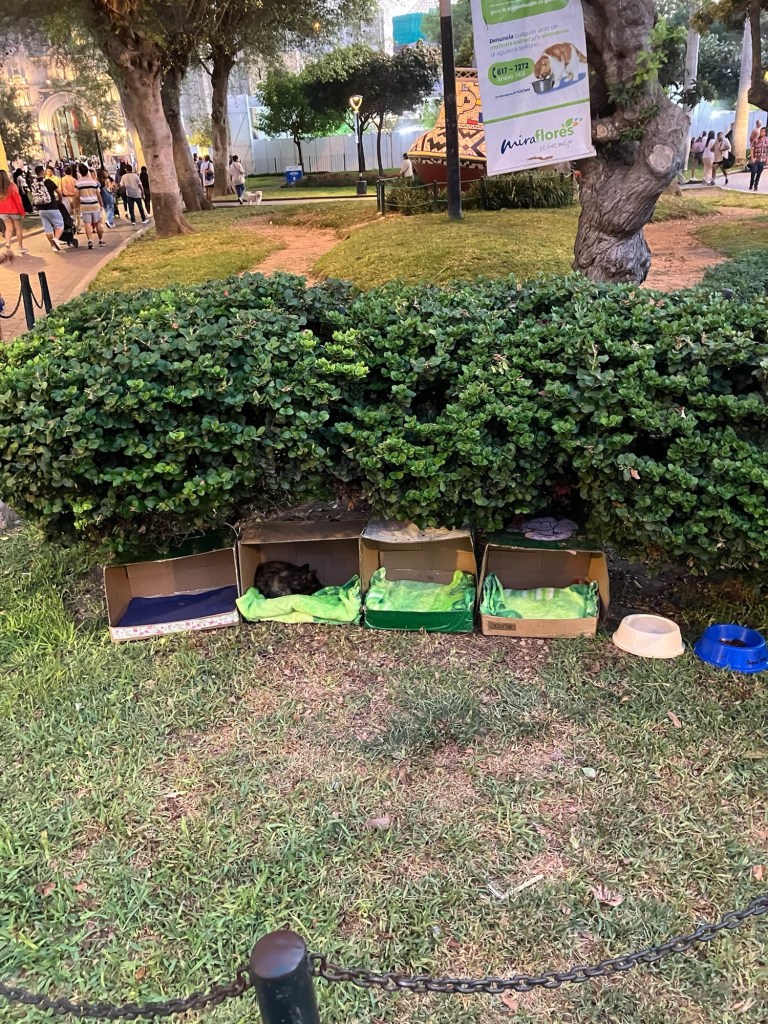
We worked remotely most of the time we were there, but had some opportunities to explore. We went out to eat plenty and I was instantly sold on the food. Even if I struggled through stomach issues for the first week. We could walk to almost everything we needed. Our townhouse was a block away from the coast in the Miraflores neighborhood. There was an outdoor mall built into the cliff face five minutes from us. John F. Kennedy Jr. park (apparently he was the ambassador to Peru at one point) ten minutes north of us was filled with friendly cats and artists selling paintings and jewelry. Nearby that we naturally found an Irish pub. The tap water was undrinkable so I made several trips per week to one of four bodegas within two blocks of us for giant 5 gallon jugs. Upon proofreading the previous sentence I found it confusing but opted not to change it.

Coming from a wealthy country certainly has its perks, because Peru was fairly cheap by comparison. Not like 25 cents per beer cheap, but like $2-3 per beer cheap. Going out to eat for two was about $30 with a drink each. Not exactly living like royalty but pretty good compared to the US these days. What was even cheaper were Ubers: about $2 across town. Also our airbnb was about $60 per night. Again, this was a multi-story town home in the nicest part of town. So you budget-conscious travelers can find even better deals I’m sure.
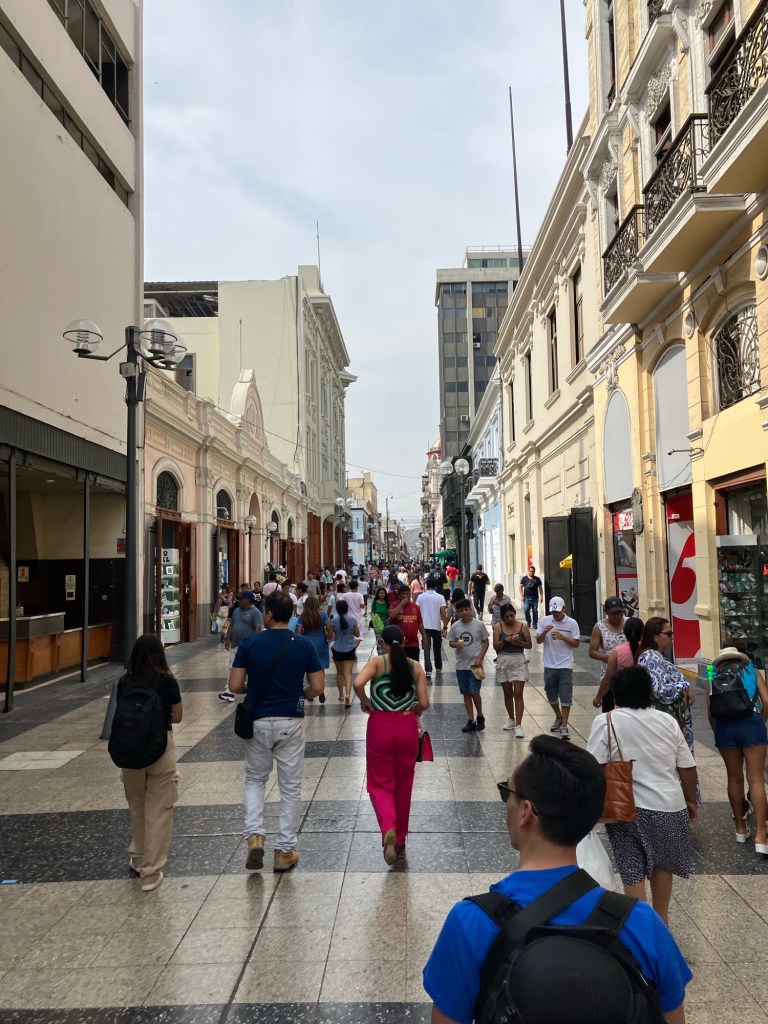
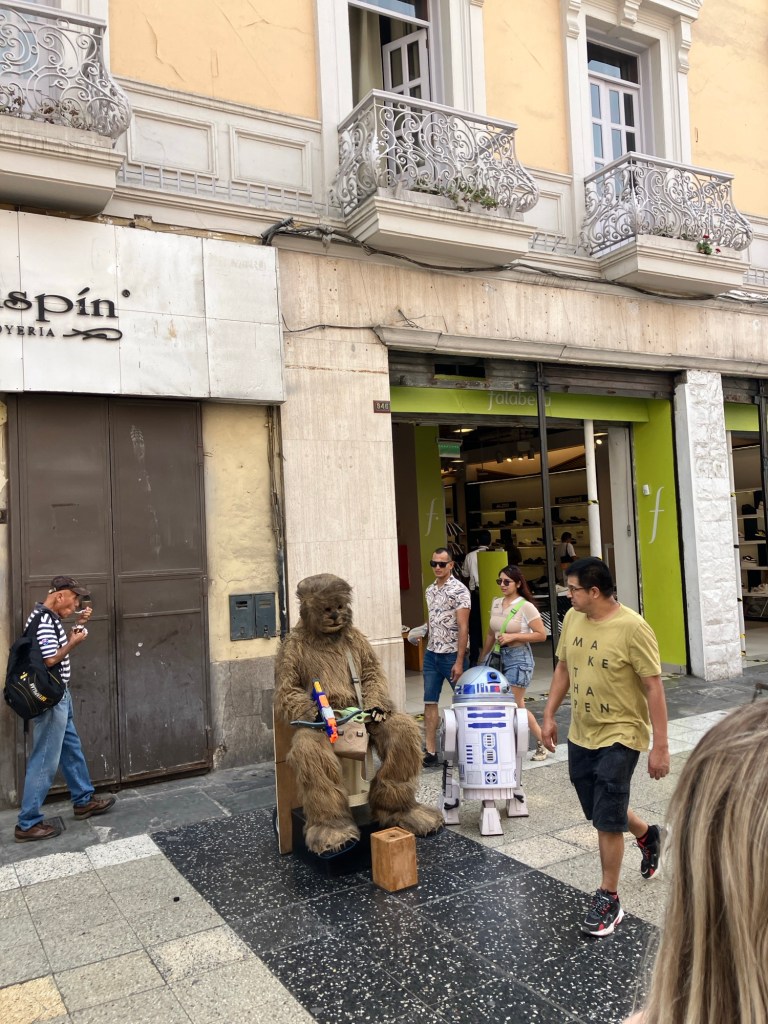
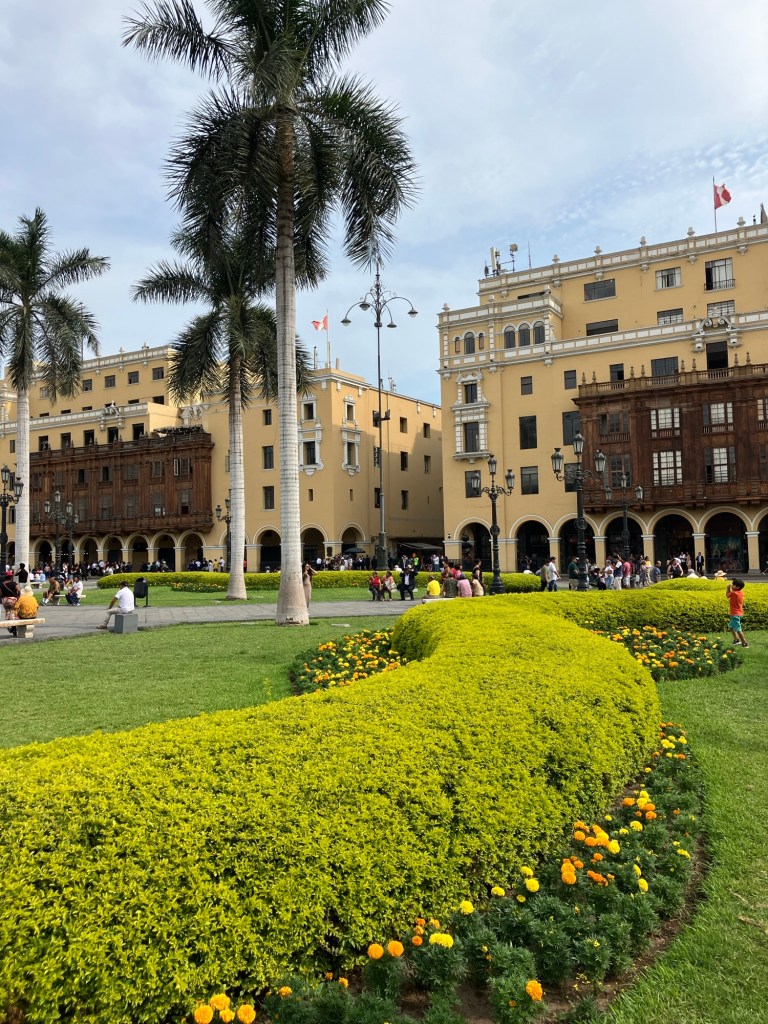
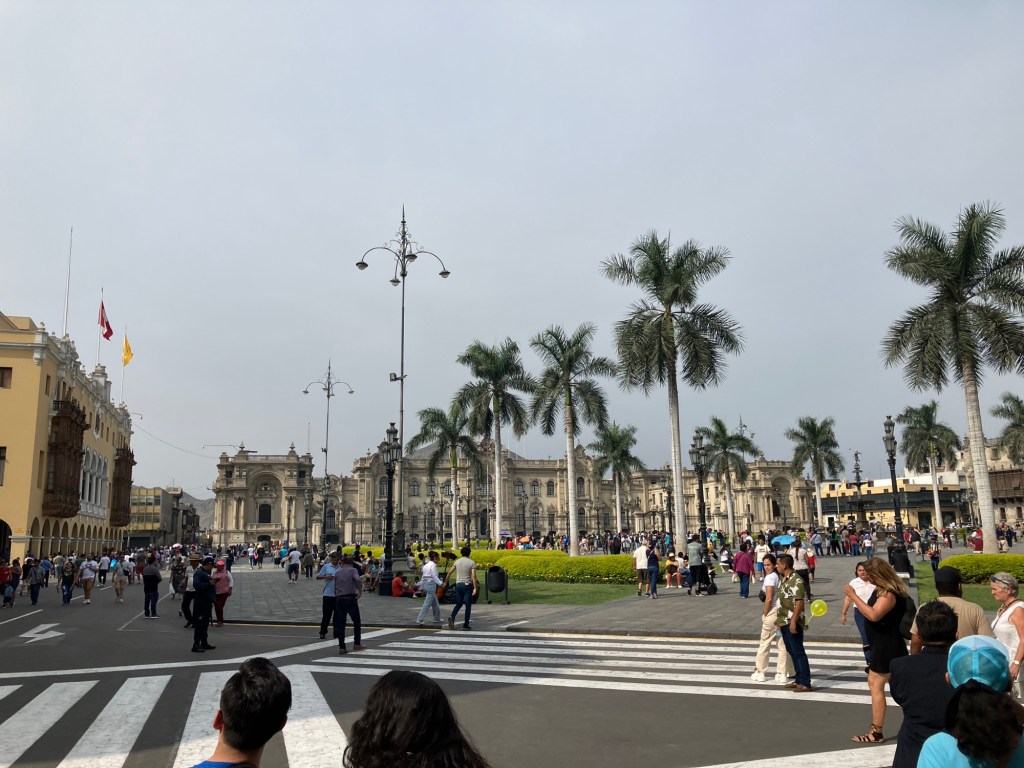
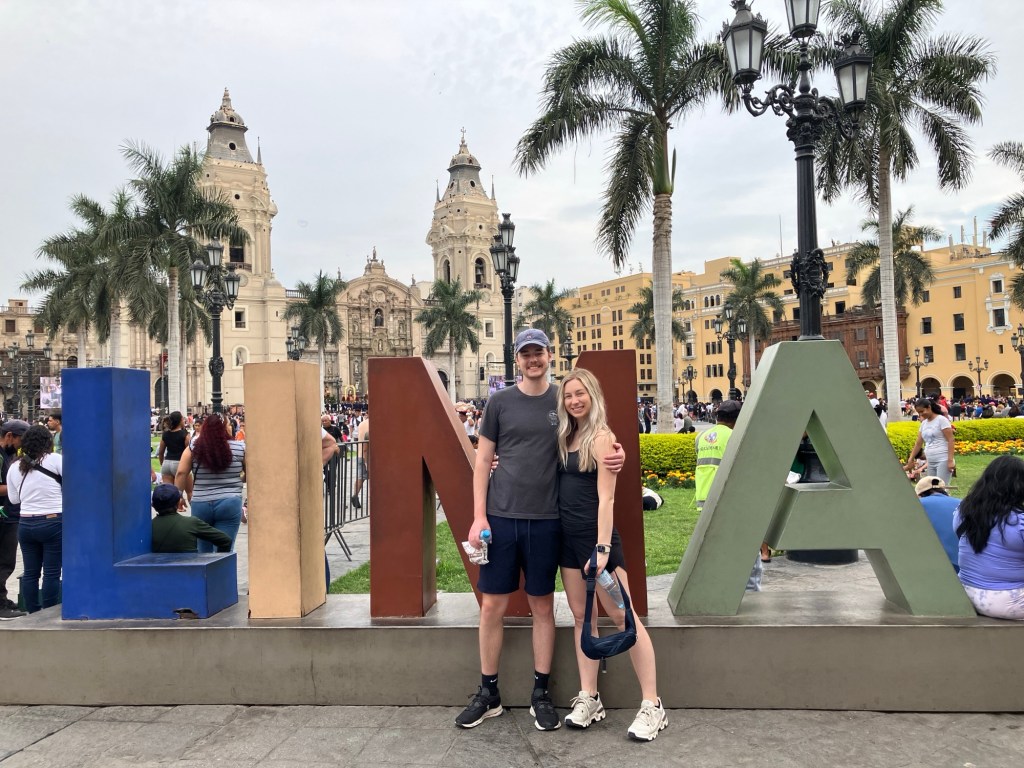
One day we did a walking tour through the old town and into the main plaza. We ate churros, nodded in unison as the significance of some local church was explained to us, and watch our tour guide get hit on by a metallic-painted street performer. Our path led us through a busy walking street to an enormous plaza. To put it in layman’s terms, about two football fields wide. On all four sides it was surrounded by colorful palaces that that had the style of a Caribbean dictator’s estate. This main plaza was buzzing with music and dancing. It was the Sunday kicking off Semana Santa; the week leading into Easter. Vibes were high, everyone was smiling and singing and posting videos to their instagram. Apparently Easter is a huge party and drinking weekend for Peru. Good of a reason to celebrate as any I suppose.
Near the plaza was the church of San Francisco. Not sure if it was the same saint for the California city or another Francisco. The outside of the church was a pretty typical Spanish colonial look, while the inside was partly a museum for many paintings. The walls were tiled with colorful mosaics and the ceiling in the main hall was a mesmeric geometric masterpiece. But perhaps most impressive was the library.
I’m not sure how to describe it, but picture an old wooden library in a historical fiction or fantasy movie where the main characters may go to consult a wise librarian or an eccentric wizard and that character fumbles through their scrolls and glides on their mobile ladder-on-rails to find the answers they seek. The library was beautiful, with an open ceiling to the second floor balcony that was illuminated by large west-facing windows. Books from all eras existed there, some hundreds of years old, and looked as if they would cartoonishly poof into dust if a single finger was laid upon them. Unfortunately, pictures were not allowed.
Beneath the church were the catacombs of Lima. Apparently over 25,000 people had been buried down there. Rather than assorted by person, bones seemed to be assorted by bone-type. Like stacks of femurs or stacks of whatever arm-bones are called. Skulls sat in a row or rested on top of other piles with their empty sockets haunting you as you passed. The clearance was low and I bumped my head a few times, so I’m not sure if it was head injury or restless spirits in-between realms that gave these tunnels an unsettling feeling. But then again, who would feel completely settled looking at piles of literal human bones?
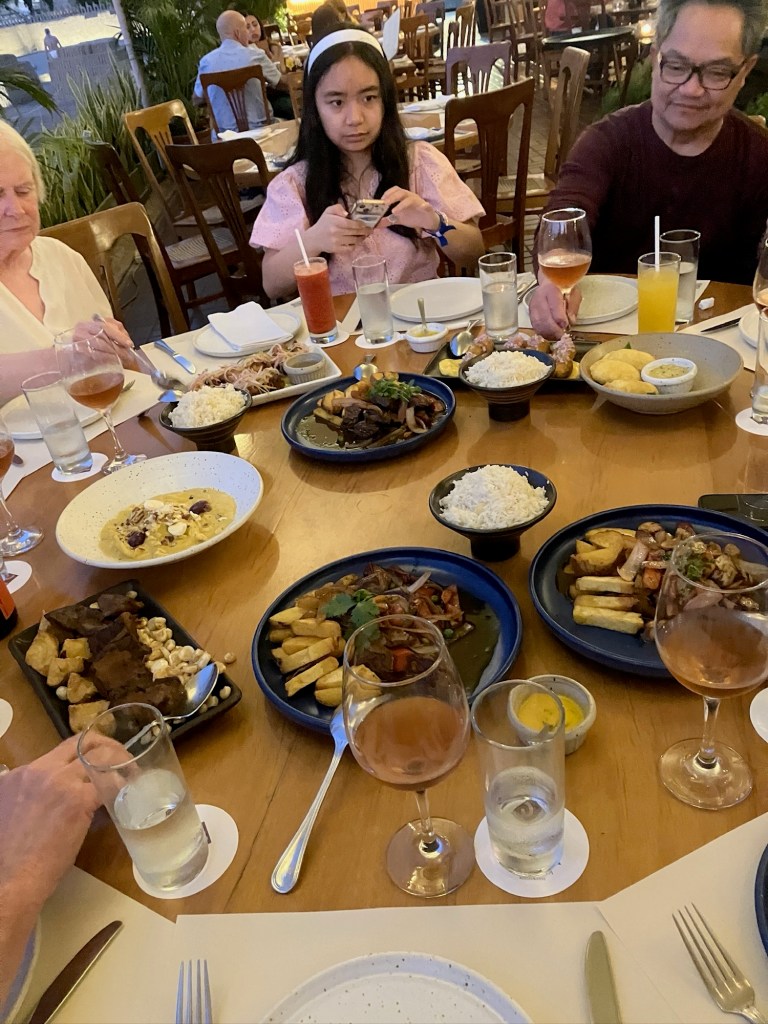
In addition to a walking tour we ventured on a food tour, which I would recommend as the best way to see the city. We were driven around to a restaurant on the beach, one adjacent to an ancient Incan temple, and some incredibly regular looking restaurants as well. The dishes were sublime, and so much variety. Ceviche is perhaps Peru’s most signature dish. We had all types of seafood. One place we cooked our own shrimp with a blowtorch. One place we tried cow heart. Wasn’t a fan, but had to try it.
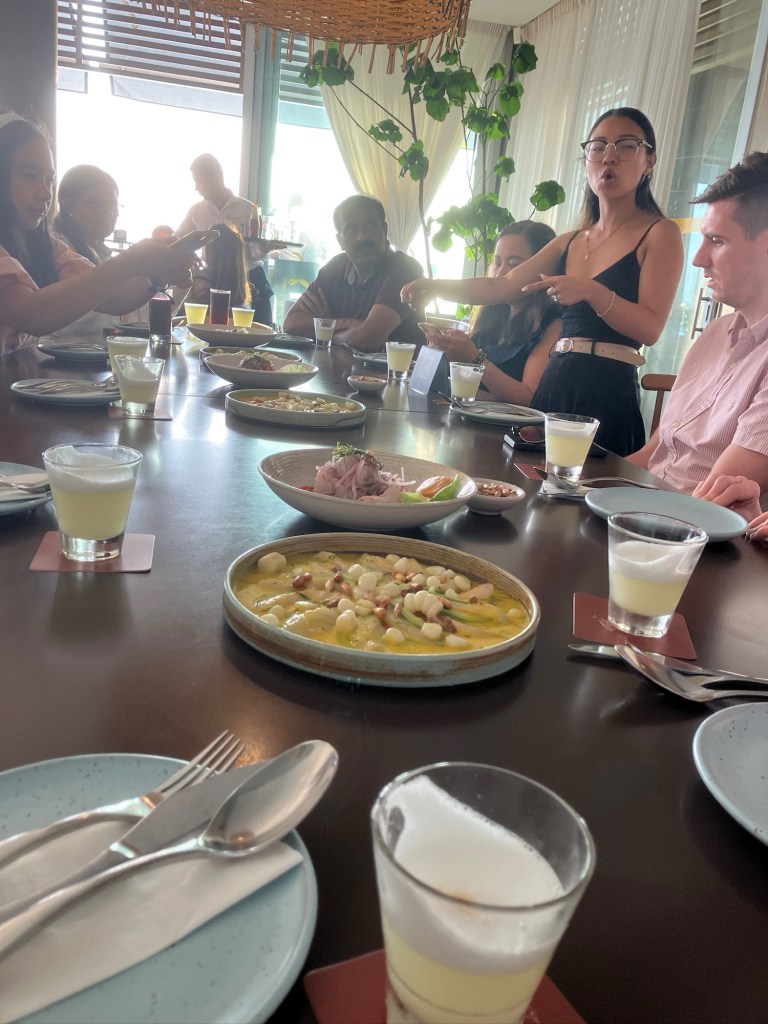
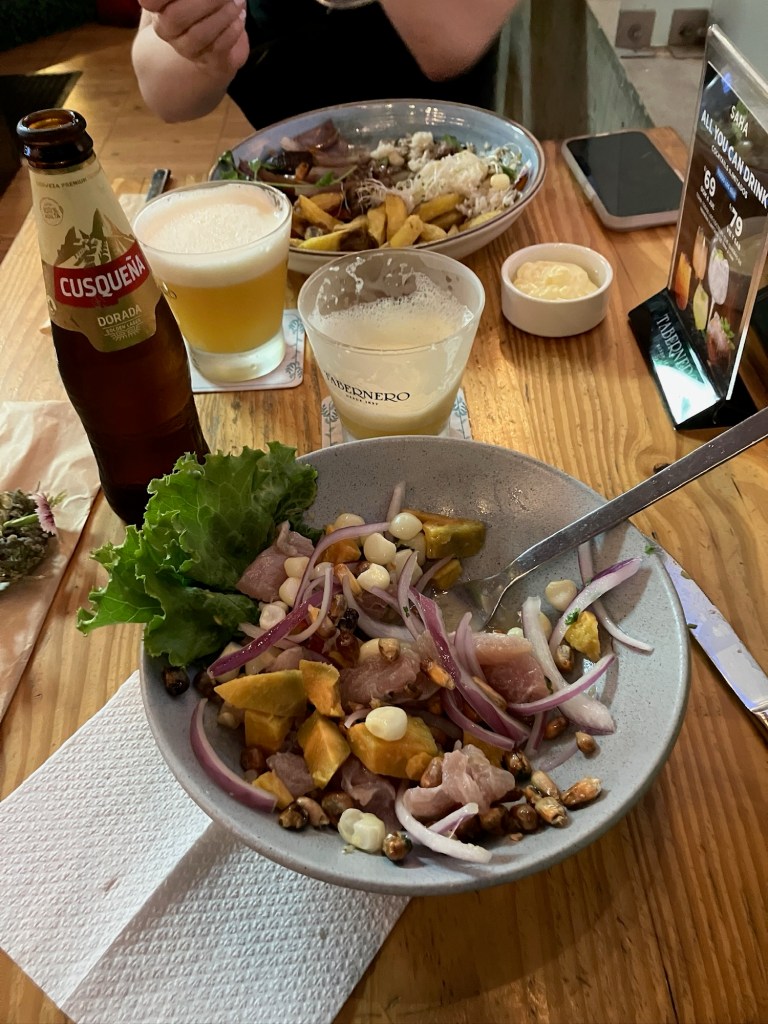
So we stayed in Lima for about two weeks. As I said, we worked most the time, but got out each day. The end of our time in Peru wouldn’t come until about a week and a half later. We planned on hiking to Machu Pichu, which would take five days. But first we need to get to Cusco, the old capital on the Incan Empire sitting in the Andes at 11,152 ft. Now we could take a one hour, cheap flight from Lima to get there (boring, lame, yawn), or we could take a four day bus trip south along the coast, sleeping one of the nights on the bus (amazing, thrilling, wow). Tough choice, but it was made easier by the fact that Monika had already booked everything we needed for the bus tour and it was non-refundable.
I think I’ll save the bus trip for my next post. I’m trying to raise the percentage of people who finish reading my long posts from 2% to hopefully 5%. I recommend Lima and Peru in general, especially if you’re a foodie. Again, don’t expect the public transit capabilities of Japan or the breathtaking architecture of Italy. Just walk a lot (do not attempt to drive), eat a lot (definitely do not drink the tap water), and talk to every person you can (even in terrible Spanish) for Peruvians are among the friendliest on Earth.



 The Odysseys of an Average Person
Leave a comment